
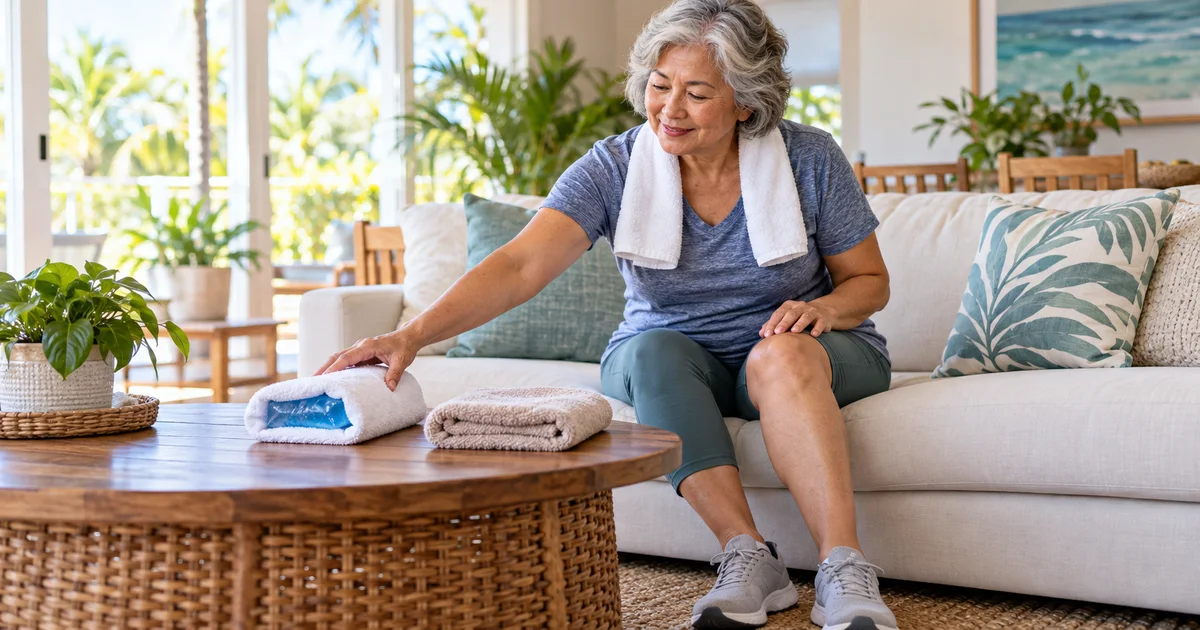
The short answer: match the tool to the symptom
Use cold when the main problem is postoperative soreness, swelling, or a temporary flare after walking or therapy. Consider gentle warmth only when the incision is healed enough for your team to allow it and the main problem is muscle tightness or stiffness rather than new swelling, redness, drainage, or increasing heat in the joint.
Neither treatment diagnoses the cause of pain. A cold pack should not be used to delay evaluation of a new calf problem, wound change, fall, or circulation symptom, and a heating pad should not be used to cover up a joint that is becoming hotter, redder, or more swollen.
Why cold is commonly used early after surgery
Joint replacement creates a normal healing response that includes pain, warmth, and swelling. Cold can reduce discomfort and may help a recently exercised joint feel calmer. The American Association of Hip and Knee Surgeons recommends cold therapy as one part of postoperative pain and swelling control, along with the rest of the plan from the surgical team. Review the AAHKS postoperative pain guidance.
Cold is a comfort and symptom-management tool, not a substitute for prescribed medicine, safe movement, elevation, or evaluation of a complication. The amount of swelling can rise temporarily after a more active day, but the overall recovery trend should gradually improve.
How long to use a cold pack
Follow the timing in your own discharge instructions. AAHKS gives a general example of 20 to 30 minutes of cold followed by at least 30 minutes off before reapplication. Other programs use shorter sessions. The right duration depends on the device, the thickness of the barrier, skin sensation, circulation, and your operation.
Place a cloth barrier between the cold source and skin. Do not fall asleep with a pack on, strap it tightly enough to affect circulation, or keep reapplying it to skin that has not returned to its usual color and temperature. More time is not automatically better.
A simple timing pattern around exercise
If your therapist or surgeon approves, gentle warmth may help tight muscles feel more comfortable before stretching or exercise, while cold may help settle soreness afterward. AAHKS home-exercise guidance describes warmth before stretching and ice after exercise as options rather than requirements. See the AAHKS knee-replacement exercise guide.
Temperature therapy should support movement, not replace it. A long heating session cannot restore motion by itself, and repeated icing does not correct an exercise dose that repeatedly produces a large flare. If every session leaves the joint much more painful or swollen, ask the rehabilitation team to adjust the plan.
When gentle warmth may be reasonable
Later in recovery, a warm shower, warm towel, or low gentle heat may help muscles around the hip or knee relax before movement. This is most reasonable when the wound is closed, there is no drainage or spreading redness, the joint is not increasingly hot or swollen, and you can accurately feel temperature in the area.
Ask before using heat directly over the operated joint, especially during the early postoperative period. Keep the temperature comfortably warm rather than hot, use a barrier, limit the session according to your team's advice, and check the skin. Stop if warmth increases swelling, throbbing, redness, dizziness, or pain.
Do not apply heat to a changing wound or hot swollen joint
A healing joint can feel warm, but a new increase in warmth with worsening pain, swelling, redness, drainage, wound opening, fever, chills, or sweats needs medical guidance. AAHKS lists persistent pain with swelling, warmth, drainage, or redness—with or without systemic symptoms—as signs that should prompt concern for infection. Review the AAHKS infection guidance.
Do not try to treat those changes with a heating pad, hot bath, or repeated cold sessions while waiting several days. Contact the surgical team promptly. Severe illness, confusion, fainting, breathing difficulty, or rapidly worsening symptoms require urgent or emergency care.
Protect numb or sensitive skin
Skin near a knee incision may remain numb or unusually sensitive because small sensory nerves cross the surgical field. Reduced sensation weakens the warning system that normally tells you a pack is too cold or a pad is too hot. Never place either directly on numb skin, and do not judge safety only by how it feels.
Use a barrier, inspect the entire area before and after treatment, and stop for persistent color change, blistering, increasing numbness, or skin pain. If you have neuropathy, diabetes-related sensory loss, poor circulation, fragile skin, or a history of cold or heat injury, ask the clinical team before using temperature therapy. The JRH scar numbness guide explains sensory changes and warning signs in more detail.
Cold-therapy machines are optional tools, not guarantees
Powered or circulating cold devices can be convenient, but they are not automatically superior to a correctly used wrapped cold pack for every outcome. A 2024 systematic review and meta-analysis found benefits from cryotherapy in some early rehabilitation measures while also reporting that the evidence varies across devices, protocols, and outcomes. Read the 2024 cryotherapy review.
Another systematic review found inconsistent evidence across pain, swelling, opioid use, and motion outcomes. Review the earlier systematic review. Choose a device for comfort, safe use, cost, and your surgeon's protocol—not because marketing promises a guaranteed recovery advantage.
Do not confuse normal warmth with a diagnosis
The operated knee or hip may feel warmer than the other side for a period during healing. Temperature alone cannot distinguish normal inflammation from infection, a blood clot, or another problem. The trend and accompanying symptoms matter: pain trajectory, swelling pattern, wound appearance, fever, calf symptoms, breathing symptoms, and function.
If swelling is the main concern, use the JRH swelling guide to compare expected patterns with clot, wound, infection, and circulation warning signs. Do not use heat on a leg with a new one-sided swelling pattern or massage a painful swollen calf.
Hip and knee replacement can need different placement
After knee replacement, cold is often positioned around the front and sides of the knee with the incision protected. After hip replacement, the surgical approach and dressing location affect where a pack can rest without pressing on the wound. Follow the placement demonstrated by the hospital or therapy team rather than copying a generic photo.
Avoid prolonged pressure from a heavy pack over a fresh incision, bony prominence, or area with reduced sensation. If a device strap creates tingling, a cool foot, discoloration, or increasing pain, remove or loosen it as instructed and contact the clinical team if symptoms do not promptly resolve.
Hawaiʻi heat and travel can change the plan
Warm weather and long periods of sitting can make a recovering leg feel more swollen. Use air conditioning or shade, hydrate according to your medical plan, take safe movement breaks, and keep prescribed clot-prevention medicine on schedule. A cold pack may improve comfort after activity, but it does not prevent or treat a blood clot.
Neighbor-island patients should ask how to transport a reusable pack, whether a cold-therapy device is practical, and whom to call after hours. If swelling changes suddenly during or after travel, especially with calf pain, chest pain, or shortness of breath, seek prompt medical guidance rather than assuming the climate or flight is the only cause.
A practical ice-or-heat checklist
Use this checklist only after reviewing the instructions for your operation and wound.
- Choose cold for swelling, postoperative soreness, or a flare after activity unless your team says otherwise
- Consider gentle warmth only for stiffness or muscle tightness when the wound and clinical plan allow it
- Use a cloth barrier and the session length in your discharge instructions
- Never sleep with a cold pack or heating pad in place
- Do not apply heat over a fresh, draining, increasingly red, or increasingly hot incision
- Avoid direct cold or heat on numb skin and inspect the skin after every session
- Stop for persistent color change, blistering, increasing numbness, worsening swelling, throbbing, or pain
- Do not use temperature therapy to delay a call about wound, calf, circulation, fall, or breathing symptoms
When to call instead of treating at home
Contact the surgical team promptly for increasing drainage, wound opening, spreading redness, fever, rapidly worsening pain, new weakness, a fall with loss of function, or swelling that changes suddenly. New calf pain or tenderness with one-sided swelling needs prompt medical guidance. A foot that becomes cold, pale, blue, unusually dark, numb, weak, or difficult to move also needs urgent assessment.
Call 911 for chest pain, sudden shortness of breath, fainting, coughing up blood, severe breathing difficulty, or signs of stroke. Do not drive yourself for emergency care, and do not keep alternating ice and heat while waiting to see whether emergency symptoms pass.
Build a plan for your symptoms, not a generic calendar
The best choice depends on what you are treating, how far you are from surgery, whether the incision is healed, and whether sensation and circulation are normal. Bring your cold pack or heating device to a therapy visit if you are unsure about placement, temperature, or timing.
If pain, swelling, or stiffness is repeatedly blocking progress, schedule an orthopedic consultation. A focused review can separate an activity-dose problem from a wound, nerve, circulation, implant, or rehabilitation issue and help you use temperature therapy safely.
Sources and further reading
- American Association of Hip and Knee Surgeons: How to Relieve Pain After Hip or Knee Surgery
- AAHKS: Home Therapy Exercises After Total Knee Replacement
- AAHKS: Infection and Your Knee Replacement
- Cryotherapy for Rehabilitation After Total Knee Arthroplasty: systematic review and meta-analysis
- The Role of Cryotherapy After Total Knee Arthroplasty: systematic review
Medically reviewed by Paul Norio Morton, MD, FAAOS, FAAHKS. Last reviewed: . This article is for education only and isn’t a substitute for an exam and personalized advice — schedule a consultation to discuss your situation.