

What these protocols are
These are the written, phase-by-phase rehabilitation guides Dr. Morton uses for the conditions he treats: hip and knee replacement (before and after surgery), tendon injuries around the hip and knee, and non-operative arthritis care. Each protocol lays out the goals of every phase, the exercises that serve those goals, the milestones that unlock the next phase, and the things to avoid along the way. Nothing in them is generic — they reflect how Dr. Morton actually operates and what he expects recovery to look like.
They exist so that you, your physical therapist, and the surgical team are never guessing. Whether your therapist practices in Honolulu, Kona, or on the mainland, the protocol travels with you and keeps everyone aligned on the same plan. The milestone structure is deliberate: two patients having the same operation heal at different speeds, and a protocol tied to milestones adapts to your knee or hip instead of forcing your recovery onto someone else's schedule.
Before surgery: prehab pays off
The stronger you walk into the operating room, the faster you walk out of recovery. Pre-operative protocols focus on quadriceps and hip strengthening, range of motion, and practicing the exact exercises you will use after surgery — quad sets, heel slides, sit-to-stands — so nothing is new on the hardest days. A simple daily walking program counts too; whatever endurance you build now is endurance you keep. Prehab also covers the practical side: sizing a walker or crutches, planning stairs, and preparing your home.
Prehab is one pillar of the rapid-recovery protocol that lets most of Dr. Morton's patients stand and walk the day of surgery. A few weeks of preparation is one of the few recovery variables entirely in your control.
After hip or knee replacement
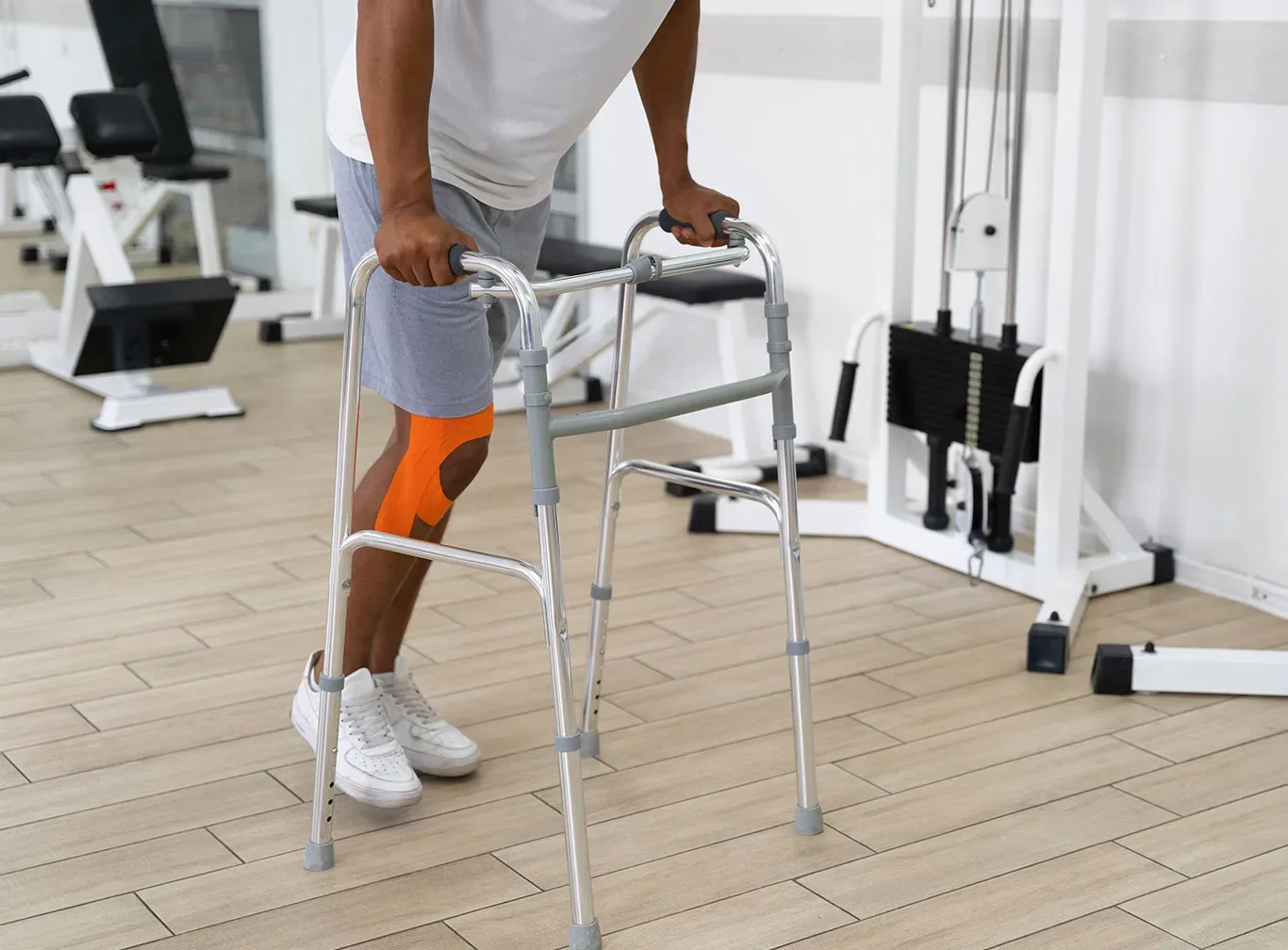
Post-operative protocols move through phases: walking on the day of surgery; swelling control and range of motion in the first two weeks; progressive strength and gait work through roughly week six; then a graded return to the activities you had surgery to get back. Early on, the exercises are unglamorous and essential — ankle pumps, quad sets, heel slides, short frequent walks — paired with elevation and ice to keep swelling down, because a swollen joint is a stiff joint. Progression is milestone-based — you advance when your knee straightens, your quad fires, your gait normalizes — not because a calendar page turned.
Approach matters, too. Muscle-sparing techniques such as the subvastus knee approach and the direct anterior hip change the starting point: anterior hip patients usually have no hip precautions at all. The week-by-week picture lives in the recovery guides linked below.
Non-operative protocols
Not every protocol ends in an operating room. Structured programs for hip and knee arthritis and tendon injuries build strength around the joint, restore motion, and often delay or avoid surgery altogether. A typical arthritis program pairs progressive strengthening with activity modification and, where appropriate, weight management — the combination that consistently outperforms any single treatment on its own.
These follow the same milestone logic: measurable goals, progressive loading, and a clear definition of what success looks like — plus an honest checkpoint for when conservative care has been given a fair trial and it is time to talk about next steps. Committing to a program for a defined stretch, then reassessing with real measurements, beats drifting through years of on-again, off-again exercises.
How to use them with your therapist
Choose any licensed physical therapist convenient to your home — on O‘ahu, a neighbor island, or the mainland. Bring the protocol to your first visit, and your therapist can call or fax the office with any question about progression, precautions, or an unexpected finding. Therapists are the eyes on the ground in this arrangement, and Dr. Morton treats them that way: if something in the protocol does not fit what a therapist is seeing, a phone call is always welcome. Between clinic visits, telehealth check-ins keep Dr. Morton in the loop for patients in Hawai‘i, which matters especially for neighbor island patients who rehab far from Honolulu; outside Hawai‘i, follow-up is coordinated with the patient's local physician and therapist.
To get a copy, call the office at (808) 439-6201 or email Contact@pacificboneandjoint.com: the team sends the current protocol for your procedure on request, by email or fax, and shares it directly with your therapist. If you have not yet been seen, an orthopedic consultation is where your specific plan gets built.
Medically reviewed by Paul N. Morton, MD, FAAOS, FAAHKS — board-certified orthopedic surgeon, fellowship-trained in adult hip & knee reconstruction and orthopedic trauma.
This page is for education only and isn’t a substitute for an exam and personalized advice — schedule a consultation to discuss your situation.