

Recovery is designed before surgery, not after
Rapid recovery starts weeks out. Prehab builds the quad and glute strength you'll lean on; medical optimization tunes blood sugar, nutrition, and any anemia (see pre-op optimization and nutrition); and education sets expectations so day-of-surgery walking is a plan you've rehearsed, not a surprise. Patients who know the protocol recover faster — confidence is a clinical variable.
Surgery that leaves less to recover from
The operation itself is the biggest lever:
- Subvastus knee and anterior hip approaches — muscle spared is strength kept
- No tourniquet — less thigh pain, swelling, and quad inhibition
- Robotic precision — minimal soft-tissue disruption per unit of correction
- Opioid-sparing anesthesia — regional blocks and local anesthetic mean you wake up comfortable and clear-headed enough to walk
Hours later: up and walking
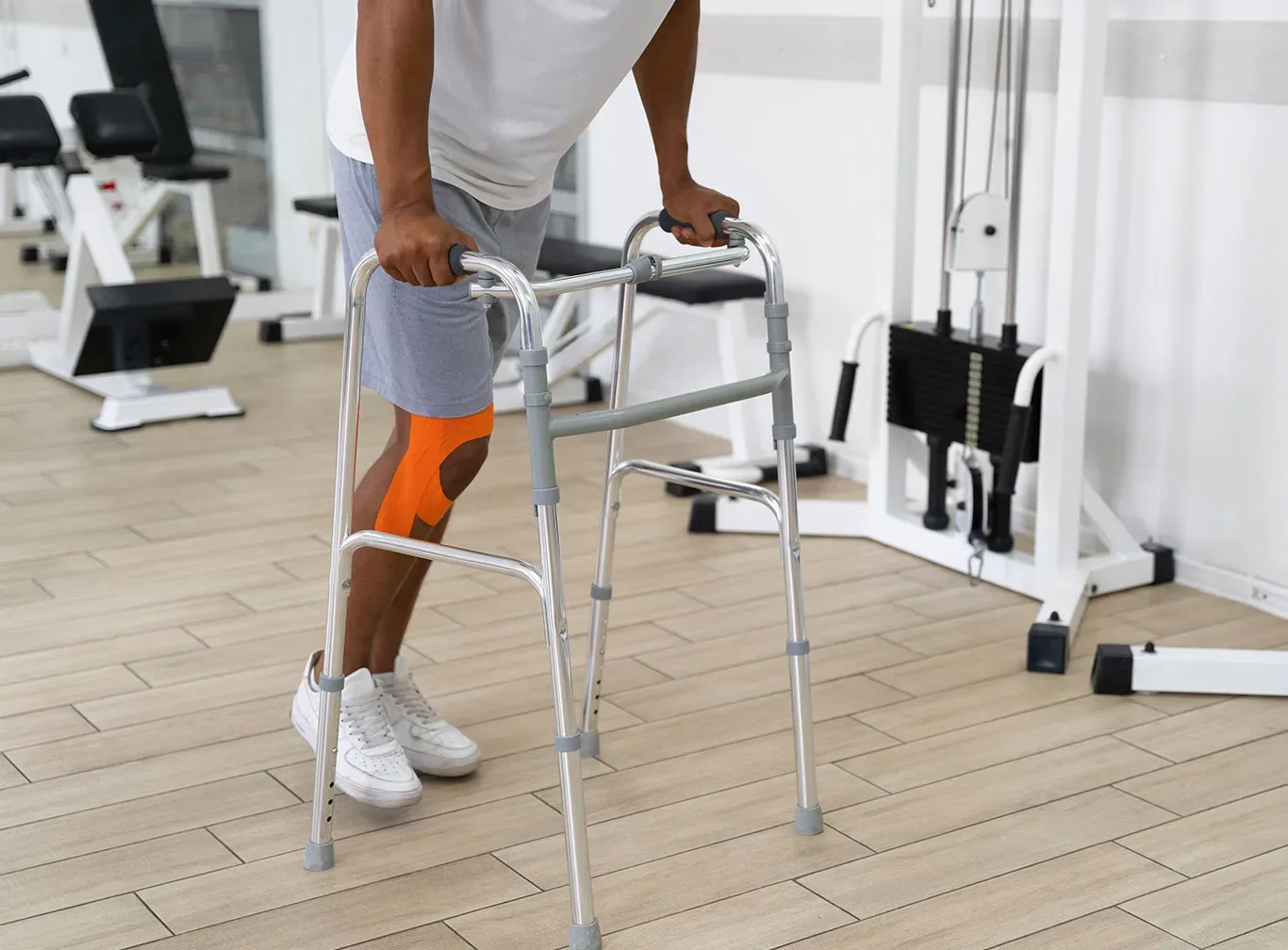
The same afternoon as surgery, a physical therapist has most patients standing, then walking with a walker — not as a stunt, but as medicine: early walking pumps out swelling, prevents clots, and tells your nervous system the joint is safe to use. Qualified patients go home the same day through the outpatient program; others stay one night. Either way, the hospital-bed era is over.
The first two weeks: momentum
At home, the protocol runs on scheduled non-opioid medication, ice and elevation, a walking cadence that increases daily, and early gentle range-of-motion work. Most patients ditch the walker within one to two weeks, drive at about two to six weeks on average (completely off narcotics, reaction time back; sooner for a left hip or knee with an automatic), and hit week six pleasantly surprised. Full timelines live in the knee recovery guide and hip recovery guide.
- Day 0
Stand and walk
The same afternoon as surgery, a physical therapist has most patients standing, then walking with a walker.
- Within 24 hours
Home
Qualified patients go home the same day through the outpatient program; others stay one night.
- Weeks 1–2
Walker retired
Non-opioid medication on schedule, ice and elevation, and a walking cadence that increases daily — most patients ditch the walker within one to two weeks.
- Weeks 2–4
Back behind the wheel
Driving returns at about two to six weeks on average — completely off narcotics, with reaction time back; sooner for a left hip or knee with an automatic.
- Week 6
Back to living
Most patients hit week six pleasantly surprised. Every timeline here is a typical course — yours depends on your health, your joint, and your rehab.
Who qualifies for the fastest track
Same-day discharge fits patients with reasonably controlled health conditions, a support person at home, and the motivation to work the protocol — a majority of joint replacement patients, it turns out. Others simply run the same playbook with one supervised night added. The pace is personalized; the philosophy — move early, medicate smart, recover at home — is universal. Traveling patients get the same protocol wrapped in the fly-in program.
Medically reviewed by Paul Norio Morton, MD, FAAOS, FAAHKS. Last reviewed: . This article is for education only and isn’t a substitute for an exam and personalized advice — schedule a consultation to discuss your situation.