
Tourniquet-free knee replacement in Honolulu — the short answer
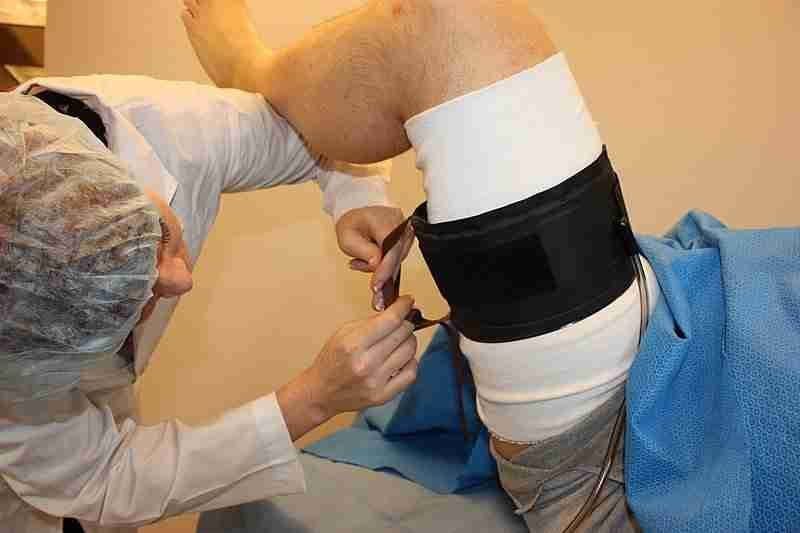
Tourniquet-free knee replacement is a total knee replacement performed without the pressurized thigh cuff most surgeons inflate for the whole operation. It suits nearly every primary knee replacement, and matters most for patients with vascular disease or a history of blood clots. Dr. Morton controls bleeding as he goes instead — regional anesthesia, cautery, and tranexamic acid — so the quadriceps is never crushed. Patients report less thigh pain and earlier quad activation. Individual results vary.
- Tourniquet: none — Dr. Morton's standard technique, not an upgrade
- Blood loss: similar with or without a cuff in randomized trials; transfusion is rare either way
- Evidence: 41 randomized trials show more serious adverse events and more day-one pain with a tourniquet
- Walking: the day of surgery; many home within 24 hours
- Where: every venue he operates at, on O‘ahu and Hawai‘i Island
Why do most surgeons still use a tourniquet?
A tourniquet — a pressurized cuff inflated around the upper thigh — gives the surgeon a bloodless field, easier visualization, and a dry bone surface for cement. It is also simply how most surgeons were trained: the cuff goes on before the incision, stays inflated for the entire operation — often an hour or more — and comes off after the implants are in. For decades that was a reasonable trade, because the tools to control bleeding any other way didn't exist.
They exist now. Modern anesthesia, meticulous surgical technique, and medications that reduce surgical bleeding have made every one of the tourniquet's advantages achievable without it. The question worth asking is no longer whether surgery is possible without the cuff — it's what the cuff costs the patient. Dr. Morton performs knee replacement tourniquet-free as his standard technique, not as a special request.
The hidden cost of the tourniquet
The cuff does its job by crushing the soft tissue beneath it. For the length of the operation, the muscle, nerves, and vessels of the thigh are compressed at high pressure and starved of blood flow — and the muscle taking the worst of it is the quadriceps, the exact muscle your recovery depends on. Research on tourniquet use in knee replacement links that compression to a familiar cluster of problems in recovery:
The research is unusually clear for a surgical-technique question. A systematic review and meta-analysis of 41 randomized controlled trials with 2,819 patients (Ahmed et al., The Bone & Joint Journal, 2021; also published as a Cochrane review, 2020) found that knee replacement with a tourniquet was associated with a 73% higher relative risk of serious adverse events, higher pain scores on the first day after surgery, and a slightly longer hospital stay. Overall blood loss did not differ between groups. The only finding in favor of the cuff was an operation about four minutes shorter — which is why the authors concluded that routine tourniquet use is difficult to justify.
- Deep thigh pain that can outlast the knee pain itself
- More swelling in the leg after surgery
- Quadriceps weakness and delayed muscle activation — the muscle your recovery depends on
- Nerve irritation, tingling, or temporary numbness
- Skin and soft-tissue injury under the cuff
- A possible contribution to blood clot risk
How Dr. Morton operates without one
On every total knee replacement, tourniquet-free surgery works by controlling bleeding at every step instead of postponing it. Regional anesthesia keeps blood pressure low and steady. Vessels are sealed with electrocautery as the surgery proceeds, rather than discovered after a cuff comes down. Tranexamic acid — a medication that reduces surgical bleeding and is now standard in modern joint replacement — keeps total blood loss low. Studies report that overall blood loss is similar with or without a tourniquet, and transfusion after knee replacement is rare either way.
The technique also pairs naturally with the rest of the protocol: cementless implants that bond directly to bone, the quad-sparing subvastus approach, and robotic planning — each one removing another source of pain or delay.
There is one more subtle benefit: without a cuff, bleeding is found and controlled during the operation, not discovered afterward in the recovery room. That means fewer surprises, less blood collecting in the joint, and a calmer first night.
- Anesthesia
Low, steady blood pressure
Regional anesthesia keeps blood pressure low and stable for the whole operation.
- Medication
Tranexamic acid
A medication that reduces surgical bleeding — now standard in modern joint replacement — keeps total blood loss low.
- During surgery
Vessels sealed as he goes
Bleeding is found and controlled with electrocautery during the operation, not discovered after a cuff comes down.
- Same day
A quad that fires
With no hour of compression to recover from, most patients stand and walk the day of surgery.
What recovery feels like without the cuff
Patients notice the difference in the first days, in the places the cuff would have been. The thigh is sore from surgery, not bruised from compression — so getting out of a chair, climbing a stair, and lifting the leg into bed all come easier. Because the quadriceps hasn't spent an hour without blood flow, it activates sooner, and the early milestones that depend on it — the straight-leg raise, confident steps with the walker, weaning to a cane — tend to arrive sooner too.
Physical therapists see it as well: less swelling to fight, a muscle that responds, and sessions spent building strength rather than coaxing a stunned quad back to life. None of this replaces the work of rehabilitation. It just means you start the work from a better place.
Who benefits — and is it safe?
Nearly every primary knee replacement patient benefits from skipping the tourniquet, because everyone benefits from a quadriceps that hasn't spent an hour under compression. The advantage is greatest for patients with peripheral vascular disease or prior vascular surgery, a history of blood clots, or larger thighs where cuff pressures run highest. If you've had bypass surgery or stents in the leg, avoiding the tourniquet isn't just more comfortable — it may be the safer plan, and it's worth raising with any surgeon you consult.
Safety is well established in experienced hands — the operation is the same knee replacement, performed with more attention to hemostasis. Combined with opioid-sparing pain control, it is one reason most of Dr. Morton's patients walk the day of surgery and many go home within 24 hours.
Dr. Morton uses this technique for every primary knee replacement he performs — at The Queen's Medical Center, Adventist Health Castle, and Hilo Community Surgery Center on the Big Island. Consultations are available in Honolulu (Ala Moana), West O‘ahu (Kunia), Hilo, or Kona: call (808) 439-6201 or book a consultation. Bring your X-rays if you have them; if not, they are taken at the same visit.
- Nearly every primary knee replacement — everyone benefits from a quadriceps that was never compressed
- Greatest benefit: peripheral vascular disease, prior stents or bypass in the leg, or a history of blood clots
- Greatest benefit: larger thighs, where cuff pressures run highest
- Still tourniquet-free: cemented knees — the bone surface is dried locally just before the implant is placed
Medically reviewed by Paul N. Morton, MD, FAAOS, FAAHKS — board-certified orthopedic surgeon, fellowship-trained in adult hip & knee reconstruction and orthopedic trauma. Last reviewed: .
This page is for education only and isn’t a substitute for an exam and personalized advice — schedule a consultation to discuss your situation.