
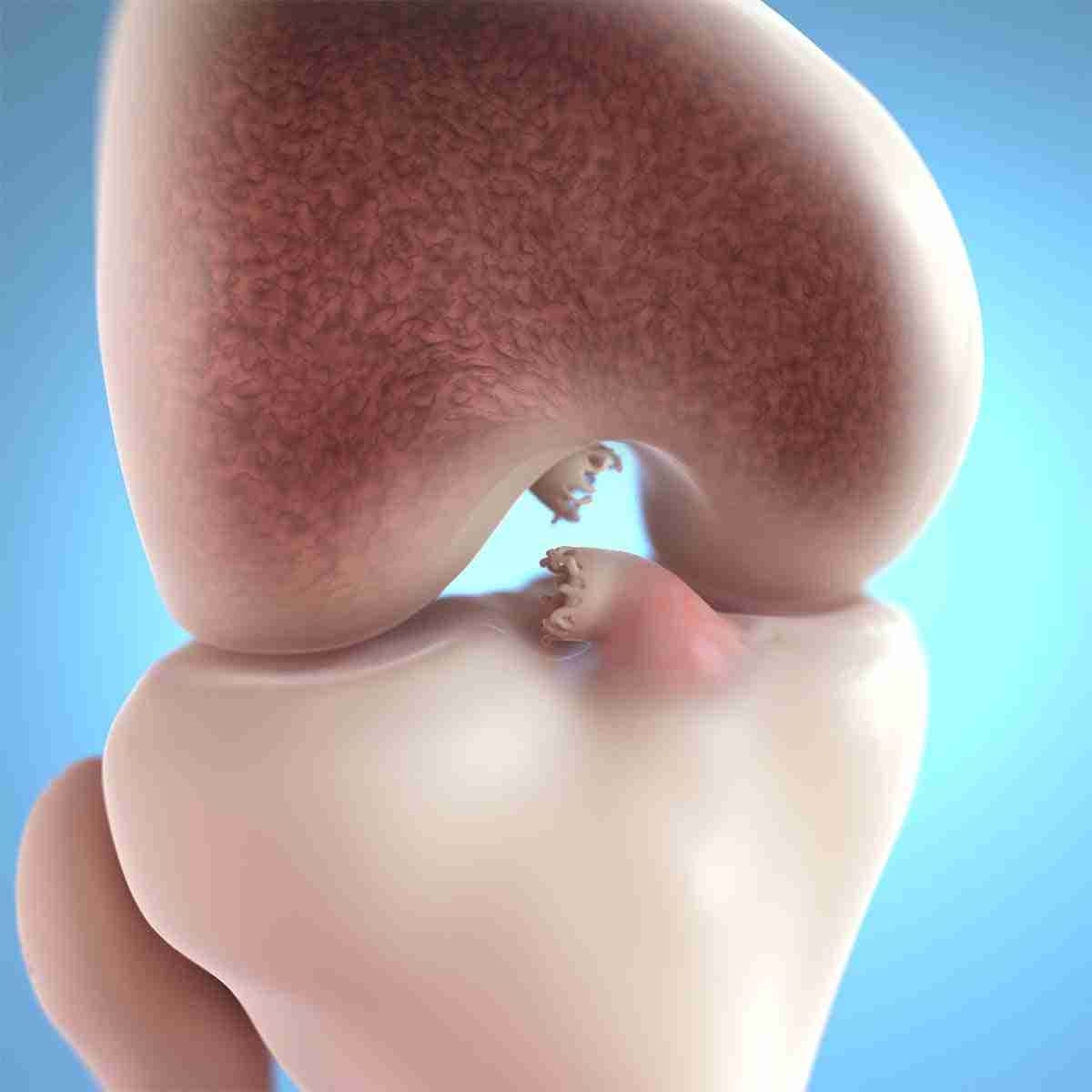
ACL reconstruction in Honolulu — the short answer
ACL reconstruction rebuilds a torn anterior cruciate ligament with a tendon graft (patellar, quadriceps, or hamstring) placed where your original ligament lived. It is for knees that give way, athletes who cut and pivot, and tears with a repairable meniscus. Dr. Morton performs it as outpatient arthroscopic surgery in Honolulu, saves the meniscus whenever possible, and clears return to sport by testing, typically 9–12 months. Individual results vary.
- Outpatient arthroscopic surgery, about an hour — home the same day
- Three autograft options plus donor tissue when appropriate; the AAOS 2022 guideline favors your own tissue in young, active patients
- ACL repair (BEAR®) is an option for select tears treated within 50 days of injury
- Crutches 1–2 weeks, running around 3–4 months, sport at 9–12 months — each step earned by testing
- Four clinics — Honolulu (Ala Moana), West O‘ahu (Kunia), Hilo, Kona — and in-practice physical therapy in Honolulu and Kunia
Are you a candidate for ACL surgery?
Not every torn ACL needs an operation, and the decision is made with you — around how you use your knee, what else is injured, and whether the knee stays stable in daily life. As a rule, reconstruction is usually recommended when:
- You play a cutting, pivoting, or jumping sport — soccer, basketball, football, volleyball, jiu-jitsu — and intend to return to it
- The knee gives way during normal activity, not just on the field
- There is an associated meniscus tear that can be repaired — repairable tears become unrepairable with time and repeated instability
- Your work or daily life is physically demanding — ladders, uneven ground, carrying loads — where an unstable knee is a safety problem
- Rehab first may be reasonable if: your activities are straight-line (walking, cycling, swimming, lap running), the knee stays stable day to day, and there is no repairable meniscus tear — with reconstruction still available later if instability appears
What the ACL does — and why a tear changes everything
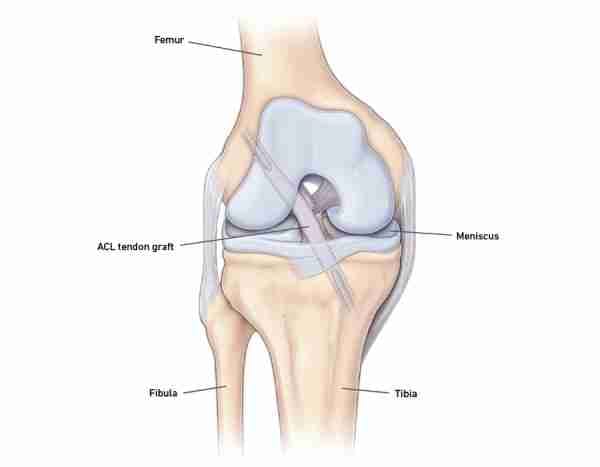
The knee is a meeting place of bones, cartilage, and ligaments. The thigh bone (femur) meets the two lower-leg bones (tibia and fibula), with the kneecap (patella) gliding across the front. The ends of the bones are capped in smooth cartilage so the joint glides freely with every step.
Stability comes from four main ligaments. The anterior cruciate ligament (ACL) is the most well-known — and the most commonly injured ligament in the knee. Its job is to keep the shin bone from sliding forward beneath the femur. Its partners — the posterior cruciate ligament (PCL), the medial collateral ligament (MCL), and the lateral collateral ligament (LCL) — each brace the knee against a different direction of force. Lose the ACL, and the knee loses its front-to-back anchor. That is the instability patients describe as a knee they can no longer trust.
How ACL tears happen
Most people associate ACL injuries with sports — and most do happen there — but there is more than one way to tear this ligament. The classic athletic mechanism is non-contact: the foot planted, the knee caving slightly inward, and a sudden cut, landing, or deceleration that loads the ligament past its limit. In Hawai‘i that means soccer, basketball, football, and volleyball, but also jiu-jitsu, an awkward landing on a trail, a paddling transfer onto a slippery dock, or a surf wipeout with the leg pinned.
Athletes usually describe a pop they heard or felt, then swelling within a few hours — bleeding inside the joint, and one of the most reliable signs that something structural tore. Female athletes tear their ACLs at several times the rate of male athletes in comparable sports, which is why neuromuscular prevention programs matter so much in women's soccer, basketball, and volleyball (more on ACL injuries in sports). The main mechanisms:
- Cutting and pivoting — running or landing from a jump, then changing direction, with the knee rotating and bending sideways: the classic non-contact mechanism
- A direct blow to the side of the knee — a tackle or collision, often injuring the MCL and meniscus at the same time
- High-energy trauma — motor vehicle collisions and similar impacts, where other ligaments and fractures are common companions
What it feels like — and how it's diagnosed
Most patients remember the moment: a distinct "pop," swelling within hours, and the sense that the knee is no longer stable underneath them. Walking is usually still possible — it's squatting, pivoting, and anything demanding real stability that becomes difficult.
At your first visit, Dr. Morton starts with an X-ray to rule out fractures and other injuries sustained at the same time, then examines the knee for instability — the Lachman test, gently checking how far the shin slides forward on the thigh, is the most reliable maneuver and works even in a swollen knee. Based on that exam, you'll decide together whether an MRI is needed. An MRI confirms the ACL tear and reveals the companion injuries an exam can't fully see — other ligament damage, cartilage injury, or a meniscus tear. If you're on the Leeward side, Wiki Wiki Orthopedics — the practice's walk-in orthopedic urgent care in Kunia — can X-ray and triage a freshly injured knee the same week, and connects directly to Dr. Morton.
Do all ACL tears need surgery?
No — and the honest answer starts there. In the first days after injury, the priority is simple: rest, ice, compression, and elevation. ACL surgery is almost never an emergency; reconstruction typically happens a few weeks to months after the injury, once swelling settles and motion returns — and some patients reasonably choose not to operate at all. The one true clock is ACL repair: the BEAR® implant must be placed within 50 days of injury, so early evaluation keeps that option open.
Whether to operate depends on the extent of the injury and, above all, on your activities and goals. Rehab-first is evidence-supported, not a compromise: in the Swedish KANON randomized trial (Frobell et al., NEJM 2010; BMJ 2013), young active adults treated with structured rehab and reconstruction only if instability persisted had outcomes similar to early reconstruction at two and five years — though about half of the rehab-first group eventually chose surgery. For athletes and active people who cut, pivot, and jump, an ACL-deficient knee that gives way isn't just unstable — every giving-way episode risks the meniscus and cartilage that protect the knee from post-traumatic arthritis. Reconstruction is about restoring a knee you can trust, and protecting its future.
Why a torn ACL can't simply be stitched back together
For decades, surgeons tried sewing torn ACLs back together — and the repairs failed. The knee's own synovial fluid washes away the blood clot a healing ligament needs, so stitched repairs were slowly resorbed. That failure pushed surgery toward reconstruction: replacing the ligament with a tendon graft. Modern biology has reopened the door to true repair. For select tears, Dr. Morton offers BEAR® implant ACL restoration — a bridge-enhanced repair that protects the clot so your own ligament can heal. Here is how the two paths compare:
ACL repair (BEAR®) vs. reconstruction: which do I need?
| ACL repair (BEAR®) | ACL reconstruction | |
|---|---|---|
| What it does | Bridges the torn ends so your native ACL heals itself; the implant resorbs in about eight weeks | Removes the torn ACL and replaces it with a tendon graft (patellar, quadriceps, hamstring, or donor) |
| Who qualifies | Complete tear on MRI, an ACL stump still attached to the tibia, skeletally mature and at least 14, surgery within 50 days of injury | Nearly any complete tear, at any interval after injury — including failed repairs |
| Graft harvest | None — no donor-site pain, hamstring strength preserved | Autograft harvest (or donor tissue) with graft-specific trade-offs |
| What the evidence shows | Non-inferior knee scores and stability vs. hamstring autograft at 2 years in the BEAR II trial; re-injury needing a second surgery 14% vs. 6% (not statistically significant, young cohort) | The long-established standard, with decades of outcome data across graft types |
| Return to sport | Typically 9–12 months on a BEAR-specific protocol | Typically 9–12 months, gated by strength and hop testing |
Candidacy for repair depends on tear pattern and timing, so it is evaluated case by case at consultation — and if a repair ever fails, conversion to a standard reconstruction remains available. Individual results vary.
Graft choice: the decision that shapes your recovery
Your new ACL is fashioned from a tendon — usually your own (an autograft), occasionally a donor's (an allograft) — and each option has a personality. The science offers clear trade-offs:
| Graft | Strengths | Trade-offs |
|---|---|---|
| Patellar tendon (BPTB) | The traditional gold standard — bone-to-bone healing and a low re-rupture risk; the graft of choice for many high-level pivoting athletes | Higher incidence of anterior knee pain; kneeling can stay tender |
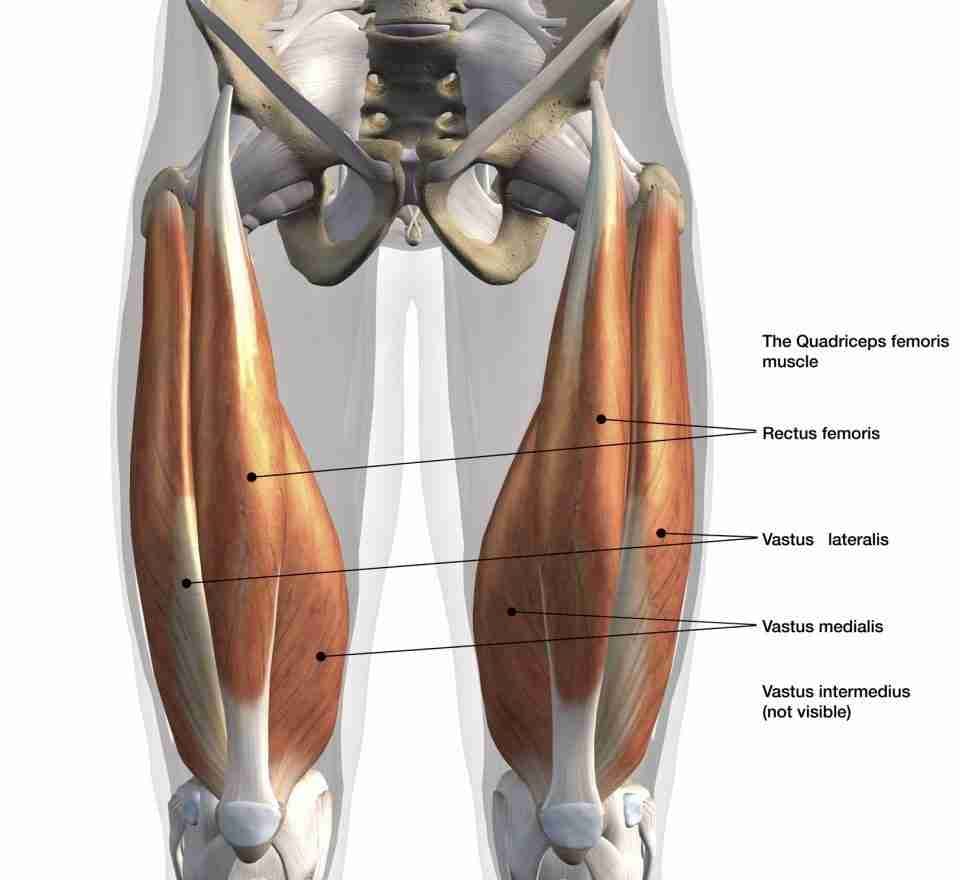
| Quadriceps tendon | Strength comparable to BPTB with less donor-site pain; a robust modern graft, increasingly favored | A newer option with a shorter track record than BPTB |
| Hamstring tendon | Less invasive harvest, less knee pain, quicker early recovery; a fit for many recreational athletes | Slightly higher re-rupture risk than BPTB and theoretically slower fixation into bone |
| Donor tissue (allograft) | No tendon is taken from your body, so no donor-site pain | Slower to incorporate, a small infection risk, and a higher re-rupture rate — especially in younger patients |
The AAOS 2022 Clinical Practice Guideline on ACL injuries favors your own tissue over donor tissue in young or active patients to lower graft failure, and notes the trade-off between patellar tendon (lower failure and infection risk) and hamstring (less kneeling pain). Fixation method varies with the graft chosen — bone-block grafts are typically fixed differently from soft-tissue grafts.
There is no one-graft-fits-all default. Dr. Morton matches the graft to your sport, age, anatomy, and goals — balancing re-rupture risk, recovery trajectory, and long-term comfort — so the decision is made with you, not for you.
The anatomic all-inside technique
Technique matters as much as graft. Dr. Morton reconstructs the ACL anatomically — placing the graft where your original ligament actually lived — because an anatomically positioned graft restores natural knee kinematics and is less likely to fail than one placed for surgical convenience.
He performs this with the all-inside technique: specialized instruments drill sockets from within the joint rather than full tunnels through the hard outer shell of the bone, with suspensory fixation on both ends of the graft. The result is less bone removal and smaller incisions. One randomized trial of 150 patients (Lubowitz et al., Arthroscopy 2013) reported lower pain scores with the all-inside technique — from the first day through two years — with knee-function scores, stability, and tunnel healing equal to the conventional full-tunnel method. The same success, with less to recover from; individual results vary. Fixation is adapted to the graft: soft-tissue grafts suit all-inside suspensory fixation, while bone-block patellar-tendon grafts are fixed accordingly.
Companion injuries are handled at the same operation: meniscus tears found at surgery are repaired whenever repairable — a preserved meniscus is the best arthritis insurance a knee can have — and cartilage or other ligament injuries are addressed as needed.
Surgery day, the pain plan, and the year that follows
ACL reconstruction is same-day surgery under general or regional anesthesia, and the operation itself takes about an hour. Long-acting local anesthetic is placed during surgery and every case is paired with an opioid-sparing multimodal pain plan, so narcotics play a minimal role. Expect one to two hours in the recovery room, then a loved one drives you home with the knee wrapped, iced, and elevated. The journey from injury to clearance follows a predictable arc:
- Injury week
Protect and diagnose
Rest, ice, compression, elevation. Exam and X-ray first, MRI when the exam calls for it. Early evaluation keeps the 50-day BEAR® window open.
- Weeks to months
Prehab
Swelling settles, full extension returns, and the quad wakes up before surgery — the prehab that sets up a smoother recovery.
- Surgery day
Outpatient reconstruction
About an hour under general or regional anesthesia; meniscus repaired at the same operation when repairable. Home the same day.
- Weeks 0–2
Calm the knee, walk
Straight knee, quad activation, weight-bearing with crutches and weaning within a week or two — longer if the meniscus was repaired.
- Months 3–4
Earn the right to run
Straight-line running begins only once quad strength, a quiet knee, and single-leg control check the boxes.
- Months 9–12
Testing-based return
Strength and hop-test benchmarks, not the calendar, clear you for cutting sport.
The risks, stated plainly
ACL reconstruction has a long track record, and most patients get back a knee they can trust. It is still surgery, and informed athletes make better decisions. The possible complications include:
- Graft re-tear — the risk is highest in athletes under 25 who return early to cutting sport; a meta-analysis of 19 studies (Wiggins et al., Am J Sports Med 2016) found nearly 1 in 4 young athletes returning to high-risk sport sustained a second ACL injury in either knee. Testing-based return is the countermeasure
- Tearing the other ACL — the same study found the opposite knee is at risk as often as the reconstructed one
- Stiffness (arthrofibrosis) — a knee that fights to straighten or bend; early motion and prehab before surgery are the defenses
- Graft-specific trade-offs — kneeling and front-of-knee pain with patellar tendon grafts; hamstring weakness with hamstring grafts
- Infection — uncommon in arthroscopic surgery, and slightly higher with donor tissue than your own
- Blood clots — deep vein thrombosis; early walking is a primary defense
- Hardware irritation — fixation buttons or screws occasionally bother the skin and can be removed later
- Post-traumatic arthritis — reconstruction restores stability but does not reset the long-term risk; in a Swedish cohort of female soccer players (Lohmander et al., Arthritis Rheum 2004), about half had radiographic knee arthritis 12 years after injury, whether or not they had reconstruction. Meniscus preservation and a strong quad are what you control (more)
Rehab and the return-to-sport decision
The surgery takes about an hour; the comeback takes months of disciplined work built around two things: joint mobility and strength. Expect early motion and quad activation immediately, walking without crutches in a week or two, running around three to four months, and sport-specific training in the back half of the year. If the meniscus was repaired at the same operation, the sutured tissue has to be protected too — expect a brace and protected weight-bearing for longer, and running a little later; biology cannot be rushed. Physical therapy is available through the practice's own PB&J Physical Therapy in Honolulu and Kunia, working from Dr. Morton's rehabilitation protocols; neighbor island patients' rehab is coordinated with therapists near home.
Return to competition isn't a date on a calendar — it's a set of strength and hop-test benchmarks your knee has to pass, typically 9–12 months after surgery. Rushing this step is how re-tears happen, especially in athletes under 25. Dr. Morton's program holds the line so your comeback sticks. The broader philosophy — fix the injury, protect the joint — runs through his sports and joint preservation program, and cartilage injuries found at surgery are treated on the same restoration ladder.
Injured this week? How to get seen in Honolulu
A knee that popped and swelled deserves eyes this week, not next month — partly because meniscus tears are more repairable early, and partly because BEAR® repair is only possible within 50 days of injury. Book a consultation online or call (808) 439-6201; acute injuries are prioritized. Dr. Morton sees patients at four clinics — Honolulu (Ala Moana), West O‘ahu (Kunia), Hilo, and Kona — and on the Leeward side, Wiki Wiki Orthopedics takes walk-ins with X-ray on site and hands off directly to his surgical practice.
What to bring: a photo ID, your insurance card, and any prior X-rays, MRI, or reports — bring your MRI if you already have one. Managed-care and Medicaid/Quest plans may require a referral from your primary care physician; the office checks before your visit. Neighbor island and traveling patients can begin by telehealth with local imaging when an in-person visit isn't practical, with surgery on a planned O‘ahu trip. You'll leave the first visit with a diagnosis, every option laid out — rehab, BEAR® repair, or reconstruction — and a plan that fits your sport.
References
- American Academy of Orthopaedic Surgeons. Clinical Practice Guideline Summary: Management of Anterior Cruciate Ligament Injuries (2022 update). J Am Acad Orthop Surg. 2023. Source
- Frobell RB, et al. A randomized trial of treatment for acute anterior cruciate ligament tears. N Engl J Med. 2010;363:331–342. Source; five-year outcome, BMJ. 2013;346:f232. Source
- Murray MM, et al. Bridge-enhanced anterior cruciate ligament repair is not inferior to autograft ACL reconstruction at 2 years: results of a prospective randomized clinical trial. Am J Sports Med. 2020;48(6):1305–1315. Source
- Lubowitz JH, et al. Randomized controlled trial comparing all-inside anterior cruciate ligament reconstruction technique with ACL reconstruction with a full tibial tunnel. Arthroscopy. 2013;29(7):1195–1200. Source
- Wiggins AJ, et al. Risk of secondary injury in younger athletes after anterior cruciate ligament reconstruction: a systematic review and meta-analysis. Am J Sports Med. 2016;44(7):1861–1876. Source
- Lohmander LS, et al. High prevalence of knee osteoarthritis, pain, and functional limitations in female soccer players twelve years after anterior cruciate ligament injury. Arthritis Rheum. 2004;50(10):3145–3152. Source
Medically reviewed by Paul N. Morton, MD, FAAOS, FAAHKS — board-certified orthopedic surgeon, fellowship-trained in adult hip & knee reconstruction and orthopedic trauma. Last reviewed: .
This page is for education only and isn’t a substitute for an exam and personalized advice — schedule a consultation to discuss your situation.