

BEAR® ACL repair — the short answer
BEAR® is a collagen implant placed between the torn ends of your ACL and soaked with your blood, so a healing clot can form where joint fluid would otherwise wash it away. It suits skeletally mature patients with a complete tear, an attached ACL stump, and surgery within 50 days. Dr. Morton performs it as outpatient surgery in Honolulu; sport returns at nine to twelve months. Individual results vary.
- Your own ligament heals — no tendon graft, no harvest site, hamstring strength preserved
- FDA De Novo authorization in December 2020, after a decade of laboratory work, a first-in-human trial, and a randomized trial
- Strict window: surgery within 50 days of injury, with an ACL stump still attached to the tibia
- BEAR II trial: knee scores and stability not inferior to hamstring autograft at 2 years; re-injury needing a second surgery 14% vs. 6% — not statistically significant, in a very young cohort
- If it fails, conversion to a standard reconstruction remains straightforward
Are you a candidate for BEAR® repair?
The BEAR® implant is authorized by the U.S. Food & Drug Administration for patients who meet all of the following criteria — and Dr. Morton confirms each one on your MRI and exam before recommending it:
- Skeletally mature and at least 14 years old
- A complete ACL rupture confirmed by MRI
- An ACL stump still attached to the tibia, with enough tissue quality to anchor the repair
- Surgery within 50 days of the injury
- It may not be the right fit if: the remnant is too short or frayed to hold suture, too much time has passed, or a displaced meniscus tear or other ligament injury needs a different operation — in which case ACL reconstruction is usually the better answer
Why a torn ACL can't simply be stitched back together
Most ligaments heal after injury. The ACL is the stubborn exception — and the reason is its environment. The ACL lives inside the knee joint, bathed in synovial fluid. The same lubricant that keeps the joint gliding smoothly also washes away the blood clot a torn ligament needs as scaffolding for repair.
Early surgeons tried simply suturing torn ACLs back together, and those repairs failed predictably: the body slowly broke down and absorbed the repair over time, a process called resorption. So surgery moved on from repairing the ligament to replacing it.
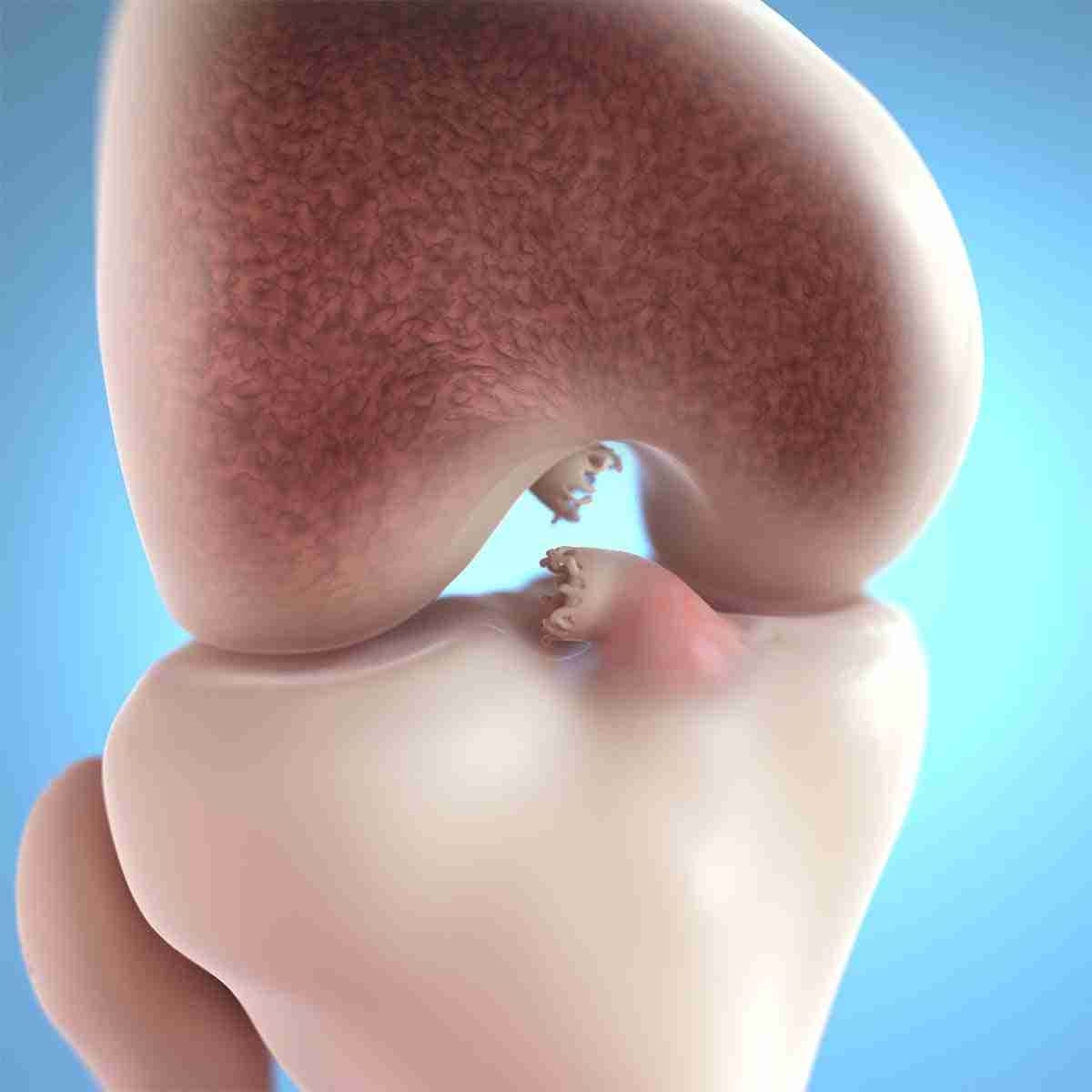
From replacement grafts to true healing: the evolution of ACL surgery
The first major breakthrough was the autograft — reconstructing the ACL with a tendon harvested from another part of your own leg. It was a real improvement, but not a perfect one: the transplanted tendon is not always as strong as the original ligament, and some risk of resorption remains, even if far smaller.
The allograft followed, using a tendon from a deceased donor. It spares you a second surgical site, but the body can still reject or resorb donor tissue, and allografts are weaker than autografts — with a higher failure rate, especially in younger patients.
| Approach | What it does | The catch |
|---|---|---|
| Primary suture repair | Reapproximates the torn tissue with stitches | Historically failed — synovial fluid dissolves the healing clot |
| ACL reconstruction | Removes the torn ACL and replaces it with a graft (autograft or allograft) | Effective, but your normal anatomy is never truly restored |
| BEAR implant | Bridges the gap between the torn ends so your native ACL heals itself | Requires an intact tibial stump and surgery within 50 days of injury |
What the BEAR implant is — and how it protects healing
The Bridge-Enhanced ACL Repair (BEAR) implant works with your own blood to heal the torn ends of the ACL back together. It is a decellularized, bovine-derived, type I collagen implant designed to hold and protect blood in the gap between the torn ligament ends, allowing the clot that healing requires to form — and shielding that clot from the synovial fluid that would otherwise infiltrate the area and break down the normal healing factors.
In short, the BEAR implant:
- Restores your native ACL rather than replacing it
- Bridges the gap between the torn ends of the ligament
- Is clinically effective for the majority of ACL tear types, from proximal to distal
- Resorbs completely in about eight weeks, leaving only your own healed tissue behind
How BEAR differs from ACL reconstruction
In a standard ACL reconstruction, the surgeon removes your torn ACL and replaces it with a graft. Reconstruction is effective and remains the long-established standard — but it has real trade-offs: a tendon must be harvested (or donor tissue used), your native anatomy is replaced rather than restored, and some people never return to their previous level of sport.
The BEAR® procedure preserves your remaining ACL tissue and helps the ligament itself heal, with no graft harvest. The postoperative course is different too: a BEAR-specific rehabilitation protocol protects the healing ligament through its early weeks, and hamstring strength — which is sacrificed when a hamstring graft is harvested — is preserved. Which operation is right depends on your tear pattern and timing, and Dr. Morton offers both, so the recommendation is matched to your knee rather than to a single technique.
How the BEAR procedure is performed
BEAR® is a minimally invasive, arthroscopic outpatient procedure under general or regional anesthesia, with an opioid-sparing pain plan — most patients go home the same day. The healing it sets in motion unfolds in stages, and physical therapy is available through the practice's own PB&J Physical Therapy in Honolulu and Kunia, so surgery and rehab stay under one coordinated team. The month-by-month arc mirrors the first year after ACL surgery, with a BEAR-specific protocol in the early weeks.
- Surgery day
Bridge
The implant is positioned between the torn ends of the ACL and combined with your own whole blood, forming a protected clot that bridges the gap.
- Weeks 1–8
Heal
The implant supports the body's natural repair machinery — cell migration and new tissue — while a BEAR-specific protocol protects the healing ligament.
- About 8 weeks
Resorb
The implant is fully resorbed and replaced by your own cells, collagen, and blood vessels; the new tissue keeps remodeling and strengthening.
- Months 2–9
Rehabilitate
Motion, quad and hamstring strength, then sport-specific training — with PB&J Physical Therapy in Honolulu or Kunia, or a therapist near home.
- Months 9–12
Return to sport
Cleared by strength and hop testing, typically nine months to one year after surgery.
What the BEAR II trial actually showed
BEAR® reached FDA authorization on the strength of a first-in-human safety study (BEAR I) and a prospective randomized trial (BEAR II, Murray et al., American Journal of Sports Medicine 2020). BEAR II enrolled 100 young, active patients — median age 17 — with complete midsubstance tears, operated within 45 days of injury, and randomized them to BEAR® or autograft reconstruction (almost all hamstring). At two years:
- Knee function and stability were non-inferior. Patient-reported IKDC scores (88.9 vs. 84.8) and instrumented side-to-side laxity (1.61 mm vs. 1.77 mm) met the prespecified non-inferiority margins — a finding of "not worse," not "better."
- Hamstring strength was clearly higher after BEAR® (98.2% of the other leg vs. 63.2%), because no hamstring tendon was harvested.
- Re-injury requiring a second ACL surgery was 14% after BEAR® vs. 6% after reconstruction. The difference was not statistically significant, and this was a very young, very active cohort — the group in which re-tear rates are highest after any ACL surgery — but it is the number to weigh honestly.
- Patients who converted from a failed BEAR® to reconstruction had two-year outcomes similar to patients who needed only one operation.
Beyond BEAR II: longer follow-up and the BEAR-MOON trial
Companion studies from the same trials reported earlier resolution of symptoms and higher psychological readiness to return to sport at six months after BEAR®, and a six-year follow-up of the small BEAR I cohort found outcomes similar to hamstring-graft reconstruction apart from preserved hamstring strength. A larger multicenter NIH-supported trial, BEAR-MOON, is comparing BEAR® with patellar-tendon autograft reconstruction in 150 adults aged 18–55; it is active but not yet reporting, with primary completion expected in 2027. Less post-traumatic arthritis after BEAR® has been shown only in animal studies so far. Individual results vary.
The potential benefits — framed by the evidence
Because BEAR® restores your own ligament instead of substituting a graft, its advantages span biology, strength, and practicality. Stated with the trial data behind them:
Healing your own ligament
- Helps your own ACL heal — no graft needed, and no autograft harvest site that has to heal alongside the knee
- No concerns about donor graft quality or disease transmission
- Restores the torn ACL to a quality and size similar to your uninjured ACL, with the potential for more normal joint mechanics
- Potential for less post-traumatic osteoarthritis — demonstrated only in animal studies so far
Strength and return to sport
- In BEAR II, markedly better hamstring strength and hamstring-to-quadriceps ratio at two years — no hamstring tendon is sacrificed
- In BEAR II, higher psychological readiness to return to sport at six months and earlier resolution of symptoms; return to sport itself still typically takes nine to twelve months
Practical advantages
- A simple outpatient arthroscopic procedure, effective across a broad range of tear types
- If a revision is ever needed, converting a failed BEAR® to reconstruction is more straightforward than revising a failed reconstruction, and BEAR II patients who converted did as well as those who needed one surgery
None of these is a guarantee. BEAR® is non-inferior to reconstruction on the outcomes that matter most, not proven superior, and individual results vary.
The risks, stated plainly
BEAR® is real surgery with real trade-offs, and an honest conversation covers them before the operation:
- Re-tear or failure to heal — 14% needed a second ACL surgery within two years in BEAR II, compared with 6% after reconstruction (not statistically significant); a failed repair is converted to a standard reconstruction
- Stiffness — a knee that fights to straighten or bend; the BEAR-specific protocol balances protection with early motion
- Infection and blood clots — the baseline risks of any knee surgery, uncommon in arthroscopic procedures
- Bovine collagen — the implant is derived from bovine tissue, so a known allergy to bovine products rules it out
- The 50-day clock — waiting too long, or a remnant that turns out too poor to hold suture at surgery, means switching to reconstruction, sometimes decided in the operating room
- Long-term unknowns — human data beyond a few years are still limited; the arthritis-prevention hope rests on animal studies for now
The research behind the BEAR implant
BEAR® is not a marketing concept — it reached FDA De Novo authorization in December 2020 through a decade of laboratory work, a first-in-human trial, and a prospective randomized clinical trial, and the follow-up literature keeps growing. Key publications include:
- Bridge-Enhanced Anterior Cruciate Ligament Restoration: 6-Year Results From the First-in-Human Cohort Study (2024)
- Quantitative MRI Biomarkers to Predict Risk of Reinjury Within 2 Years After Bridge-Enhanced ACL Restoration (2023)
- BEAR-MOON: a multicenter randomized non-inferiority trial of BEAR® vs. patellar-tendon autograft reconstruction (in progress)
- Bridge-Enhanced ACL Repair Is Not Inferior to Autograft ACL Reconstruction at 2 Years: Results of a Prospective Randomized Clinical Trial
- Psychological Readiness to Return to Sport at 6 Months Is Higher After Bridge-Enhanced ACL Restoration Than Autograft ACL Reconstruction
- Earlier Resolution of Symptoms and Return of Function After Bridge-Enhanced ACL Repair Compared With ACL Reconstruction
- Females Have Earlier Muscle Strength and Functional Recovery After Bridge-Enhanced ACL Repair
- Higher Physiologic Platelet Counts in Whole Blood Are Not Associated With Improved ACL Cross-sectional Area or Signal Intensity 6 Months After Bridge-Enhanced ACL Repair
- Changes in Cross-sectional Area and Signal Intensity of Healing ACLs and Grafts in the First 2 Years After Surgery
- Predictors of Healing Ligament Size and MRI Signal Intensity at 6 Months After Bridge-Enhanced ACL Repair
- Bridge-Enhanced ACL Repair: Two-Year Results of a First-in-Human Study
- Bench-to-Bedside: Bridge-Enhanced ACL Repair
- The Bridge-Enhanced ACL Repair (BEAR) Procedure: An Early Feasibility Cohort Study
BEAR® ACL repair in Honolulu — your first visit
Dr. Paul Morton is a board-certified, fellowship-trained knee surgeon at Pacific Bone & Joint who offers both ACL repair and every reconstruction option — so your treatment is matched to your tear, not to the only tool on the shelf. BEAR® and ACL reconstruction are performed as outpatient arthroscopic procedures in Honolulu.
Because the BEAR® implant must be placed within 50 days of injury, early evaluation is critical: book a consultation or call (808) 439-6201, and acute injuries are prioritized. You can be seen at four clinics — Honolulu (Ala Moana), West O‘ahu (Kunia), Hilo, and Kona — and on the Leeward side Wiki Wiki Orthopedics takes walk-ins with X-ray on site. Bring a photo ID, your insurance card, and any X-rays or MRI you already have; managed-care and Medicaid/Quest plans may need a referral from your primary care physician, which the office checks before your visit. When an in-person visit isn't practical — a neighbor island injury with the clock running — evaluation can begin by telehealth with an MRI done near home, so the 50-day window isn't lost to travel logistics.
Medically reviewed by Paul Norio Morton, MD, FAAOS, FAAHKS. Last reviewed: . This article is for education only and isn’t a substitute for an exam and personalized advice — schedule a consultation to discuss your situation.