
Why failed joints need a different kind of clinic
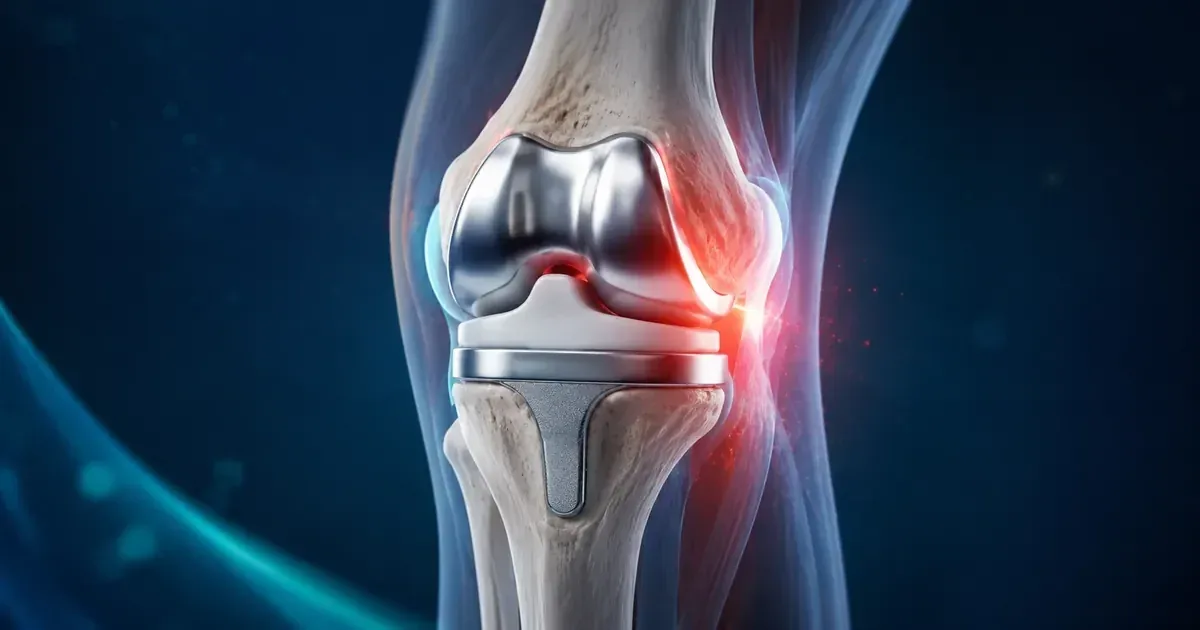
Up to 20% of knee replacement patients report some dissatisfaction — and behind persistent pain there's always a reason: loosening, low-grade infection, instability, metal reaction, referred spine or SI joint pain, tendon irritation, or component malposition. Finding it requires a systematic process most general clinics aren't built for. Re-operating without a diagnosis is how one failed surgery becomes two; this clinic's first rule is no revision without a reason.
The systematic workup
Every painful replacement moves through the same disciplined sequence:
- History and exam focused on failure patterns — start-up pain, instability episodes, night pain
- Blood work screening for inflammation and infection
- Joint aspiration with culture when infection is in question (PJI risk runs ~0.5% but must be excluded)
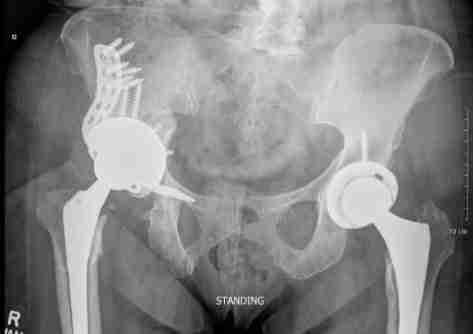
- On-site weight-bearing X-rays compared against your originals
- Metal Artifact Reduction MRI — sees soft tissue around implants that standard MRI can't
- Implant identification — model, size, and recall status (why that matters)
Revision surgery, when it's truly needed
When the workup finds a surgical problem, Dr. Morton performs revision hip and revision knee replacement — fellowship-level surgery for bone loss, component exchange, and staged infection treatment. His University of Chicago adult-reconstruction training and AO trauma fellowship cover exactly this territory: compromised bone, complex fixation, unhappy joints. And when the answer isn't surgical — a spine referral, targeted therapy, an injection proving a different pain source — that's delivered just as clearly.
Infected joint replacements: the pathway matters
Periprosthetic joint infection (PJI) is the diagnosis nobody wants and everybody needs excluded — it changes everything about treatment. When infection is confirmed, the plan depends on timing and biology, not habit:
- Early or acute infections (within weeks of surgery, or sudden onset in a previously happy joint) can sometimes be treated with DAIR — debridement, antibiotics, and implant retention with exchange of the plastic liner — keeping your original components.
- Chronic infections generally require exchange of the implant. The gold-standard two-stage revision removes the infected implant, places an antibiotic spacer while IV antibiotics clear the infection, then rebuilds the joint months later. In selected cases a single-stage exchange — removal and reimplantation in one operation — is appropriate.
- Suppression — long-term antibiotics without surgery — has a legitimate role for patients whose health can't support staged surgery.
These decisions are made with infectious disease specialists, hospital-level resources at Queen's, and honest conversation about the months involved. What the clinic promises is that the diagnosis is made properly — aspiration with cell counts and cultures held long enough to catch slow-growing organisms — before anyone commits you to that road.
The reconstruction toolkit
Revision surgery is carpentry on compromised ground — the reason it's a fellowship discipline. Depending on what the workup finds, the toolkit includes: porous metal augments and cones that rebuild deficient bone, longer revision stems that bypass damaged bone to reach solid fixation, increased-constraint bearings when ligaments can no longer stabilize a knee, dual-mobility constructs for hips that dislocate, and staged plans when infection or bone loss demands it. Every revision is also planned against your bearing history — metal reactions, worn poly, or corroded tapers each dictate different component choices. The technical detail lives on the revision hip and revision knee pages.
Surveillance: catching problems while they're small
The clinic also runs annual implant surveillance for anyone with a joint replacement — brief visits with X-rays that catch silent loosening or wear years before symptoms. Small problems mean simpler surgery; silent ones found late mean reconstruction. If you have an implant and no surgeon watching it (yours retired, you moved, you never went back), that's reason enough to establish care. Second opinions on revision recommendations are welcome too.
Medically reviewed by Paul N. Morton, MD, FAAOS, FAAHKS — board-certified orthopedic surgeon, fellowship-trained in adult hip & knee reconstruction and orthopedic trauma.
This page is for education only and isn’t a substitute for an exam and personalized advice — schedule a consultation to discuss your situation.