
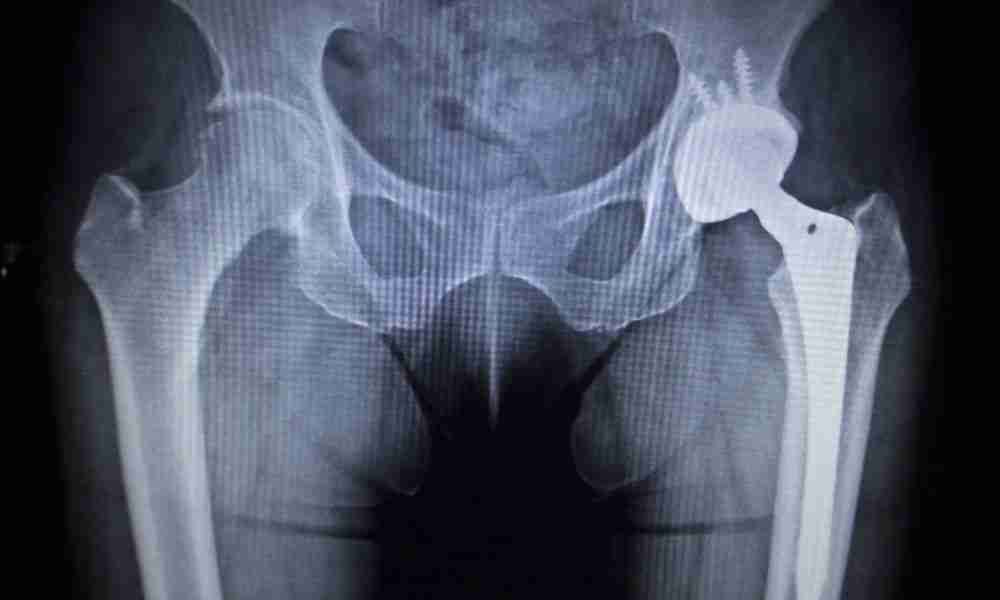
Anterior hip replacement in Honolulu — the short answer
The direct anterior approach is a way of performing total hip replacement from the front of the hip, through a natural interval between muscles, so no muscle is detached from bone. It suits most first-time hip replacements. In Honolulu, Dr. Paul Norio Morton performs it as his routine technique at Pacific Bone & Joint, with a bikini-incision option — and, at Hilo Community Surgery Center on Hawai‘i Island, Mako robotic guidance. Most patients walk the day of surgery with no hip precautions and drive at about two to six weeks on average (sooner for a left hip with an automatic transmission), once completely off narcotic pain medication. Individual results vary.
- Muscles detached from bone: none — the surgeon works between the sartorius and rectus femoris on one side and the tensor fasciae latae on the other
- Hip precautions: usually none — bend, cross your legs, and sleep on your side as comfort allows
- Walking: the day of surgery for most; home the same day or after one night
- Verification: live X-ray confirms cup position and leg length before the incision is closed
- Fine print: temporary outer-thigh numbness is the most common nuisance, and a different approach is occasionally safer
What is the direct anterior approach?
The direct anterior approach reaches the hip from the front, working through a natural interval between muscles rather than cutting through or detaching them. Traditional posterior and lateral approaches reach the joint from behind or from the side, which requires releasing muscles and tendons that must then heal and be protected while they do.
The approach itself is not new — the anterior interval between the hip's front muscles was described early in the twentieth century and has been used for hip replacement since the operation's first decades. What is new is how reproducible it has become: modern instruments, specialized operating tables, and robotic guidance have turned it into a routine choice for primary hip replacement. The implant that goes in is the same. What changes is the path to the joint, and that path is what your first weeks of recovery are built on. For patients who also care about the scar, the anterior approach can be done through a bikini incision hidden along the groin crease.
“I was walking with a walker and doing light PT exercises the same day after my hip replacement!” — Verified patient, Yelp review
The “operation of the century”
In 2007, the medical journal The Lancet declared total hip replacement the “operation of the century” — few procedures in any field of medicine relieve so much pain and restore so much function so reliably. More than 300,000 total hip replacements are performed in the United States every year.
A modern hip replacement uses a highly engineered combination of metal, plastic, and ceramic to recreate the ball-and-socket joint. The goal is simple: relieve the pain, restore your mobility, and get you back to your life. The anterior approach adds one more advantage to an already outstanding operation — a gentler road in.
Posterior vs anterior: two roads to the same joint
Every total hip replacement does the same core work. The arthritic femoral head — the worn ball of the joint — is removed and replaced with a ball and stem seated in the femur (thigh bone), and the hip socket on the pelvis is resurfaced with a metal cup. What differs from surgeon to surgeon is the road in, and the two most common roads are the posterior and anterior approaches.
- Posterior approach. The traditional route reaches the joint through the back of the hip via a single, long incision. Getting there means splitting the gluteus maximus and releasing a small muscle group called the short external rotators — muscles that matter to the stability of your hip. They are repaired at the end of surgery and must be protected while they heal.
- Direct anterior approach. The incision is on the front of the thigh, following the natural plane between the sartorius and rectus femoris on one side and the tensor fasciae latae on the other. No muscle is detached from bone — the muscles are moved apart, and only the joint capsule is opened to reach the joint — and the short external rotators are never released. That is a large part of why the anterior hip is more stable from the very first day.
The anterior approach is not right for every patient, which is why candidacy is covered honestly below — but for most first-time hip replacements, the difference in the road in becomes a difference in the recovery out.
The 6 reasons, in order
Six reasons come up again and again among surgeons who offer the anterior approach and the patients who choose it — and they compound:
- It spares your muscles. The approach follows the natural path between muscle planes, so no muscle is detached from bone — only the joint capsule is opened — and nothing needs to be repaired. Because the front of the hip sits closer to the joint, the incision can be smaller too. The machinery that powers your hip is intact from day one.
- It hurts less. Less muscle trauma means less early pain — some patients need little more than Tylenol in the first days, a natural fit with Dr. Morton's opioid-sparing pain protocol.
- Recovery is faster. Most patients walk the day of surgery, many go home the same day, and most progress to a cane, then no support, sooner than with muscle-cutting approaches.
- Dislocation risk is lower. The short external rotators and other structures behind the hip that guard against dislocation are never disturbed, and precise implant positioning lowers the risk further.
- Fewer precautions. Traditional approaches come with strict rules — no rotating the leg inward, no bending the hip past 90 degrees — that can be genuinely limiting. Most anterior patients have no formal precautions at all. You move the way your body wants to.
- Verification is built in. Because you lie on your back, X-ray imaging during surgery can confirm cup position and leg length before you leave the operating room — a big deal in Hawai‘i, where life happens in slippers and barefoot on the beach.
Each reason traces back to the same principle: the less normal tissue the surgery disturbs, the less your body has to recover from.
Leg length and offset: details most patients never hear about
Two of the most common complaints after traditional posterior hip replacement are a leg that feels longer or shorter than the other and nagging pain on the outside of the hip. The anterior approach gives Dr. Morton a direct way to prevent both: because you lie flat on your back, he takes X-rays during the operation and checks your leg lengths in real time, adjusting the implant before anything is final. Getting leg lengths perfect is hardest in revision and deformity surgery — which is exactly where careful intraoperative measurement earns its keep.
He also measures offset — how far your femur sits from your pelvis. Offset is a balancing act: too much puts extra pressure on the hip and can cause pain, while too little can leave the hip unstable. Dr. Morton uses templating on calibrated X-rays, specialized instruments, and intraoperative imaging — plus, for a Mako hip in Hilo, robotic 3D planning — to dial in the offset and leg length that match your anatomy. Ask him about both at your consultation — it is one of the clearest windows into how personalized a hip replacement really is.

Anterior vs posterior: an honest comparison
The honest answer: a well-done posterior hip replacement is still an excellent operation, and long-term implant survival is similar across approaches. By a year out, most studies find anterior and posterior patients functioning equally well. Where they differ is the first stretch of recovery.
| Posterior approach | Direct anterior approach | |
|---|---|---|
| Muscles detached | Gluteus maximus split; short external rotators released and repaired | None — muscles moved apart; only the joint capsule opened |
| Hip precautions | Typically weeks of rules: no bending past 90°, no crossing legs, no inward rotation | Usually none |
| Early dislocation risk | Higher while the muscle repair heals — the reason for the precautions | Lower — the stabilizing structures behind the hip are never disturbed |
| Leg-length check | Side-lying position; leg length largely estimated | Face-up position; live X-ray verifies cup position and leg length before closing |
| Incision | Single long incision at the back and side of the hip | 3–6 inches at the front of the hip, or a bikini incision along the groin crease |
| Long-term implant survival | Excellent | Excellent — similar across approaches |
The anterior approach has its own fine print. It is technically demanding, with a real learning curve — outcomes depend on the surgeon doing it routinely, not occasionally. Temporary numbness on the outer thigh can occur because a small sensory nerve (the lateral femoral cutaneous nerve) runs near the incision; it usually fades and does not affect strength. Dr. Morton performs the anterior approach as his standard technique, on a specialized operating table designed for it, and at Hilo Community Surgery Center pairs it with Mako robotic guidance. The question worth asking any hip surgeon is not which approach they offer, but which one they do every week.
Recovery after anterior hip replacement, step by step
Because no muscle is detached, the recovery arc is short and steep. The complete hip replacement guide has the full timeline, and the first year after hip replacement covers golf, the ocean, and travel month by month. In brief:
- Surgery day
Up and walking
Most patients stand and walk with a walker within hours; many go home the same day through the outpatient pathway, others after one night.
- Weeks 1–2
Walker to cane
Usually no hip precautions and little pain medication. Walk often, control swelling, let the incision heal.
- Weeks 2–4
Driving returns
At about 2–6 weeks on average, once you are completely off narcotic pain medication and can brake hard — sooner for a left hip with an automatic.
- About 3 months
Most activities back
Walking, swimming, golf, and gentle hiking for most patients, with strength still building through the first year.
When should you consider a hip replacement?
Consider a hip replacement when your hip causes enough pain to keep you from enjoying your life and nonoperative treatment has failed — surgery is never the first move, but it should not be postponed so long that you lose years of living to a solvable problem. The complete guide to hip replacement covers the signs that it is time, and if you are still sorting out whether the pain is even coming from the hip, start with the five common causes of hip pain.
Am I a candidate for the anterior approach?
Most patients having a first-time total hip replacement are candidates for the direct anterior approach, and many healthy patients also qualify for same-day outpatient surgery. Age by itself is rarely the deciding factor; overall health, bone quality, and home support matter more. In a few situations another approach can be the safer choice — the approach is chosen around you, because the end goal is a hip that is stable, balanced, and built to last.
- Likely a candidate: a first-time hip replacement for arthritis, avascular necrosis, or fracture
- Likely a candidate: you want to avoid hip precautions and get back to walking, driving, and work quickly
- Likely a candidate: you care about leg-length accuracy or a hidden (bikini) scar
- Another approach may be safer: significant excess weight or a large overhanging skin fold
- Another approach may be safer: previous hip surgery, retained hardware, or significant deformity of the hip joint
- Another approach may be safer: health conditions that slow wound healing
Have realistic expectations
Part of deciding to have a hip replacement is understanding what the implant can and cannot do. The encouraging part: over 90% of people who have a total hip replacement get an incredible reduction in pain and a dramatic improvement in function. With normal use and activity, the plastic spacer inside a modern hip rarely wears out.
The honest part: an implant is a machine, and how you treat it matters. Increased activity or excess weight speeds up wear on the plastic components and can eventually cause the replacement to loosen or become painful. After recovery you will feel capable of almost anything — which is exactly when guidance matters. The American Academy of Orthopaedic Surgeons advises patients to avoid running, jogging, jumping, and other high-impact activities after hip replacement; most everything else comes back.
Dr. Morton follows his patients annually with an X-ray to confirm the hip is still functioning at its best. Small problems caught early stay small — a once-a-year checkup is cheap insurance on a joint meant to last decades.
The risks, stated plainly
Total hip replacement has a high success rate and is one of the most reliable operations in all of orthopedics — but it is still major surgery, and informed patients make better decisions. The possible complications include:
- Blood clots — deep vein thrombosis (DVT) or pulmonary embolism (PE)
- Blood loss — occasionally enough to require a transfusion
- Infection — one of the more severe complications; can require multiple operations
- Implant loosening — sometimes requires a revision replacement
- Fracture — the implant changes how stress is distributed across the bone, which can predispose it to breaking
- Dislocation — the ball popping out of the socket; a risk the anterior approach specifically lowers
- Leg-length inequality — reduced by the intraoperative imaging built into anterior hip surgery
- Heterotopic ossification — a rare complication in which extra bone forms and the hip grows increasingly stiff
- Nerve or blood vessel damage — extremely rare, but potentially serious
Dr. Morton takes great care to minimize each of these risks, and he is happy to discuss any question or concern before you commit to anything.
Talk with Dr. Morton about hip replacement — your first visit
Dr. Morton is one of the few orthopedic surgeons in Hawai‘i who is fellowship-trained in hip and knee reconstruction. He regularly handles complicated hip replacements, performs anterior total hips as his routine approach, and takes on revision total hip replacements that other surgeons refer out. He operates at The Queen's Medical Center — which holds Advanced Certification for total hip and total knee replacement from The Joint Commission — at Adventist Health Castle, and at Hilo Community Surgery Center on the Big Island.
What happens next. If hip pain is holding you back, call (808) 439-6201 or schedule an evaluation online at Pacific Bone & Joint in Honolulu (Ala Moana), West O‘ahu (Kunia), Hilo, or Kona. Bring a photo ID, your insurance card, and any prior X-rays or reports; Dr. Morton reviews your imaging with you, explains what the anterior approach would look like for your anatomy, and gives you a straight answer. Managed-care and Medicaid/Quest plans may require a referral from your primary care physician — the office can help you check (insurance plans accepted). When an in-person visit isn't practical, neighbor-island and mainland patients can start with a telehealth visit and existing X-rays.
Medically reviewed by Paul N. Morton, MD, FAAOS, FAAHKS — board-certified orthopedic surgeon, fellowship-trained in adult hip & knee reconstruction and orthopedic trauma. Last reviewed: .
This page is for education only and isn’t a substitute for an exam and personalized advice — schedule a consultation to discuss your situation.