
PRP injections in Honolulu — the short answer
PRP is an office injection of your own concentrated platelets and growth factors, placed under image guidance into an arthritic joint or injured tendon. It suits mild-to-moderate knee arthritis, tendinopathies, and select meniscus problems. Dr. Paul Morton, a fellowship-trained hip and knee surgeon, diagnoses first and offers PRP only where it fits. Light activity resumes the same day; relief often lasts six to nine months in responders.
- Your own blood, nothing added — drawn, spun for about 15 minutes, and injected in the same one-hour visit
- Typical course — three injections over about six weeks, sometimes a booster around six months
- Best evidence — mild-to-moderate knee arthritis; PRP does not regrow cartilage
- Cash-pay — most insurers call PRP investigational; you get an exact quote before deciding
- Where — Pacific Bone & Joint clinics in Honolulu (Ala Moana), West O‘ahu (Kunia), Hilo, and Kona
How PRP works
Platelets are best known as the blood's clotting cells, but they do something just as valuable: they release a cascade of proteins that signal cells to grow and tissue to repair. PRP puts that biology to work.
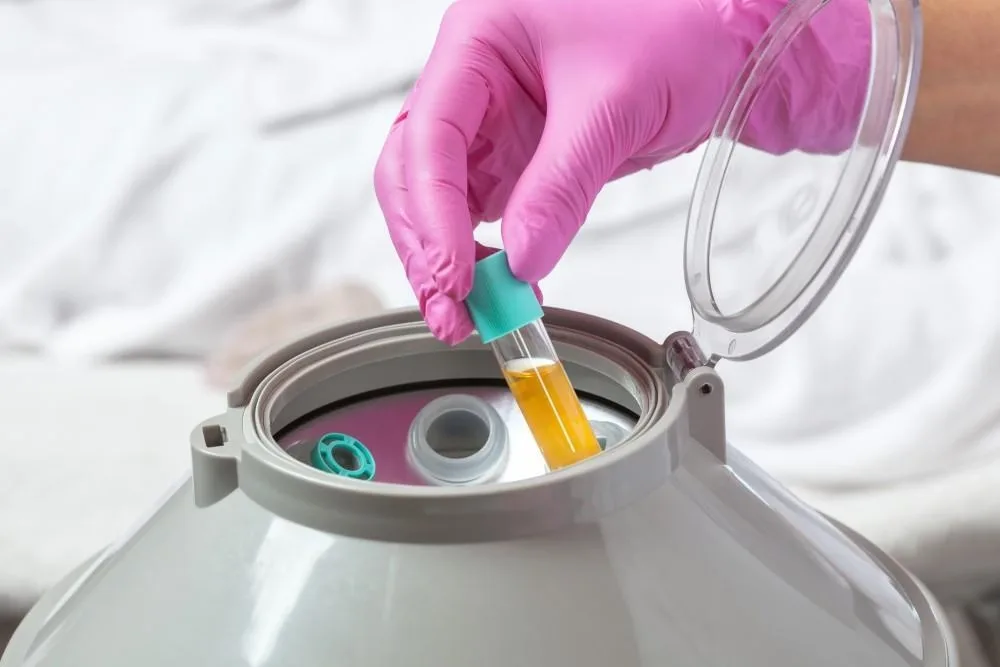
Dr. Morton draws a small amount of your blood and spins it in a centrifuge, separating and concentrating the platelets from the rest of the sample. The result is platelet-rich plasma — a concentrated mixture of platelets, fibrinogen, and other proteins found naturally in your blood. It delivers growth factors and cytokines such as platelet-derived growth factor (PDGF) and transforming growth factor beta-1 (TGF-β1), which drive cellular proliferation and tissue repair — a single preparation can carry more than 30 bioactive proteins.
That concentrate is then injected precisely into the arthritic joint or damaged tissue. The goal isn't a brand-new knee — no honest surgeon will promise that. The goal is a calmer, better-functioning joint: less inflammatory signaling, less pain, and better tolerance for the activity that keeps you strong.

What PRP can treat
PRP has been used by professional sports teams for years — for everything from tendon injuries to ACL problems. Dr. Morton uses it where the evidence is strongest and frames it candidly where the evidence is still maturing. The common thread: PRP works on the biology of a joint or tendon, so it helps most when there is still healthy tissue to protect. It does not fix a mechanical problem — a locked, torn meniscus or a bone-on-bone joint needs a different answer.
- Knee osteoarthritis — the best-studied use; well-selected patients often get six months or more of meaningful relief (who responds and who doesn't)
- Meniscus tears — as a stand-alone option for select degenerative tears, or to augment meniscus repair when surgery is the right call
- Tendon and ligament injuries — chronic tendinopathies such as jumper's knee, plus sprains and strains that haven't responded to a proper loading program
- Hip arthritis and other joints — case by case, under ultrasound guidance, after an honest conversation about expectations
- Alongside surgery — occasionally paired with arthroscopy or cartilage restoration to support healing
Are you a candidate for PRP?
Candidacy is a diagnosis question, not a menu choice. An exam and current X-rays — sometimes an MRI or ultrasound — decide it. As a rule of thumb:
You may be a candidate if…
- Your knee or hip has mild-to-moderate arthritis — worn and painful, but not bone-on-bone
- You have a chronic tendon problem that hasn't improved with a structured strengthening program
- You want to stay active and understand the goal is less pain and better function, not regrown cartilage
- Cortisone has stopped lasting, or you would rather avoid repeated steroid injections
- You are comfortable with a cash-pay treatment whose response varies from person to person
It may be the wrong tool if…
- Your joint is end-stage, bone-on-bone — PRP has little to work with there, and knee or hip replacement deserves an honest conversation instead
- The pain comes from a mechanical problem — a locking meniscus tear, a loose body, or instability — that needs its own fix
- You have a low platelet count or abnormal platelet function, an active infection, severe anemia, or active cancer
- You are looking for a one-and-done cure rather than a management tool
Not sure which knee you have? Book a consultation and find out before spending anything on an injection.
What the evidence shows — including the trials that didn't favor PRP
Here is the honest state of the research, sources named.
Against hyaluronic acid. A meta-analysis of 18 level-1 randomized trials (Belk et al., American Journal of Sports Medicine, 2021) found that patients treated with PRP for knee osteoarthritis had better pain and function scores than those treated with hyaluronic acid, with an average follow-up of about 11 months. Leukocyte-poor PRP performed best.
Against placebo. The largest placebo-controlled trial to date — the RESTORE trial (Bennell et al., JAMA, 2021) — randomized 288 patients with mild-to-moderate knee arthritis to three weekly injections of leukocyte-poor PRP or saline. At 12 months, there was no significant difference in knee pain or in cartilage volume on MRI. In other words, PRP was not shown to beat a well-delivered placebo.
The guideline view. The AAOS clinical practice guideline on non-arthroplasty management of knee osteoarthritis (3rd edition, 2021) rates the evidence that PRP may reduce pain and improve function as limited. That is neither an endorsement nor a dismissal — it is a reason for measured expectations.
Dr. Morton's read: meta-analyses favor PRP over hyaluronic acid for pain at six to twelve months, but the best placebo-controlled trial found no benefit over saline — so response is genuinely uncertain, earlier-stage knees do best, and no one should be sold PRP as a sure thing. PRP is not a cure for osteoarthritis. It cannot reverse the disease, and it does not rebuild cartilage that is already gone. Think of it as a way to manage symptoms and buy good years — not a replacement for a joint that has run out of cartilage. Individual results vary.
PRP vs cortisone vs hyaluronic acid vs BMAC
Four injections, four different jobs. The figures below are the ones Dr. Morton quotes in clinic; none of these injections regrows cartilage, and the full comparison lives on the orthobiologics hub.
| Injection | What it is | Best for | Onset | Typical duration | Downtime | Usually covered? |
|---|---|---|---|---|---|---|
| Cortisone | Steroid plus a local anesthetic | Calming an arthritis flare quickly; also a diagnostic test | Numbing within minutes; steroid in 2–3 days | About 3 months on average; capped at 3–4 per joint per year | Same-day activity | Usually yes |
| Hyaluronic acid gel | A lubricant the joint makes naturally, given as one shot or a series of 3–5 | Mild–moderate knee arthritis that feels dry and grinding; a steroid-free choice for diabetes | Builds over 2–3 weeks | Several months when it works; evidence is mixed | Easy day; no hard impact for a day or two | Often, for knee arthritis (prior authorization common) |
| PRP (this page) | Your own platelets and growth factors, concentrated | Mild–moderate knee arthritis, some tendinopathies, select meniscus problems | 2–6 weeks | Often 6–9 months in responders; not everyone responds | Light activity same day; no strenuous exercise for 2–4 weeks | Rarely — cash-pay, quoted before you decide |
| BMAC | Your own bone marrow cells, platelets, and growth factors, concentrated | Early hip AVN with core decompression; selected arthritis when PRP hasn't held | 4–12 weeks | Varies; trials show no advantage over PRP for knee arthritis | Sore harvest site for a few days; light activity within days | Rarely — cash-pay, quoted before you decide |
Many knees use more than one of these over time — cortisone for a flare you need calmed now, gel for month-to-month cushioning, PRP for a longer biologic effect in a knee that still has cartilage to protect. The injections page explains how each is placed and why guidance matters.
Is PRP safe?
Because PRP is made from your own blood, it is a low-risk procedure — no incisions and no general anesthesia, which is part of why many patients consider it before surgery. Even so, it is a medical injection and should be performed only by a qualified clinician who understands platelet biology and joint anatomy.
Most side effects are mild and temporary: soreness with activity, swelling, and bruising at the injection site for a day or two. As with any injection into a joint, there is a small risk of infection whenever a needle enters the joint, and rare risks include bleeding or an allergic reaction to the local anesthetic. Sterile technique and image-guided placement keep those risks low.
Why have a surgeon do your PRP?
PRP is offered everywhere from med-spas to franchise clinics. The injection is the easy part; the judgment is not. Is the pain really arthritis, or a meniscus tear, avascular necrosis, or an SI joint problem wearing a costume? How advanced is the wear? Would an insurance-covered option work just as well? A fellowship-trained hip and knee surgeon answers those questions before any needle, and — because he can also offer conventional injections and surgery — has no reason to sell you the wrong one. That is what a single-product clinic cannot offer.
- Diagnosis before injection — a hands-on exam and a careful review of your imaging, so PRP is aimed at the real problem
- Image- and ultrasound-guided placement — biologics can't diffuse through the joint capsule the way steroid can, so the concentrate has to land exactly where it belongs
- Evidence-based recommendations — guided by the research above, not by industry marketing
- Integrated options — PRP sits within a full joint-preservation program that also includes BMAC, A2M, hyaluronic acid, and conventional injections
- Holistic support and honesty — rehabilitation, nutrition, and activity guidance from in-house physical therapy, plus a straight answer if surgery is genuinely the better path
Preparing for your PRP injection
A little preparation protects your results. Dr. Morton may order a complete blood count (CBC) to confirm your platelet levels, and he'll review your medical history to be sure PRP is right for you.
Medications — read this carefully. Never stop a prescription blood thinner or antiplatelet medication on your own. If you take one — for a heart stent, atrial fibrillation, a prior clot, or any other reason — the office will coordinate with your prescribing physician or cardiologist to decide whether a brief pause is safe, or whether PRP should wait. Over-the-counter anti-inflammatories (ibuprofen, naproxen, aspirin) and blood-thinning supplements such as fish oil, flaxseed oil, and bromelain are usually held for about a week beforehand, because they can blunt the healing response PRP depends on; the office will confirm exact timing for you.
PRP is generally not recommended if you have:
- Abnormal platelet function or a low platelet count
- An active systemic infection
- Severe anemia
- Active cancer
What a PRP visit looks like, step by step
Plan for about an hour per visit, all in the office. There is no general anesthesia, no incision, and no need for someone to drive you home unless you'd prefer the company.
- Step 1
Evaluation
Dr. Morton reviews your history and imaging, confirms you're a good candidate, and answers your questions.
- Step 2
Blood draw
A small sample is drawn from your arm, much like a routine lab test.
- Step 3
Centrifuge
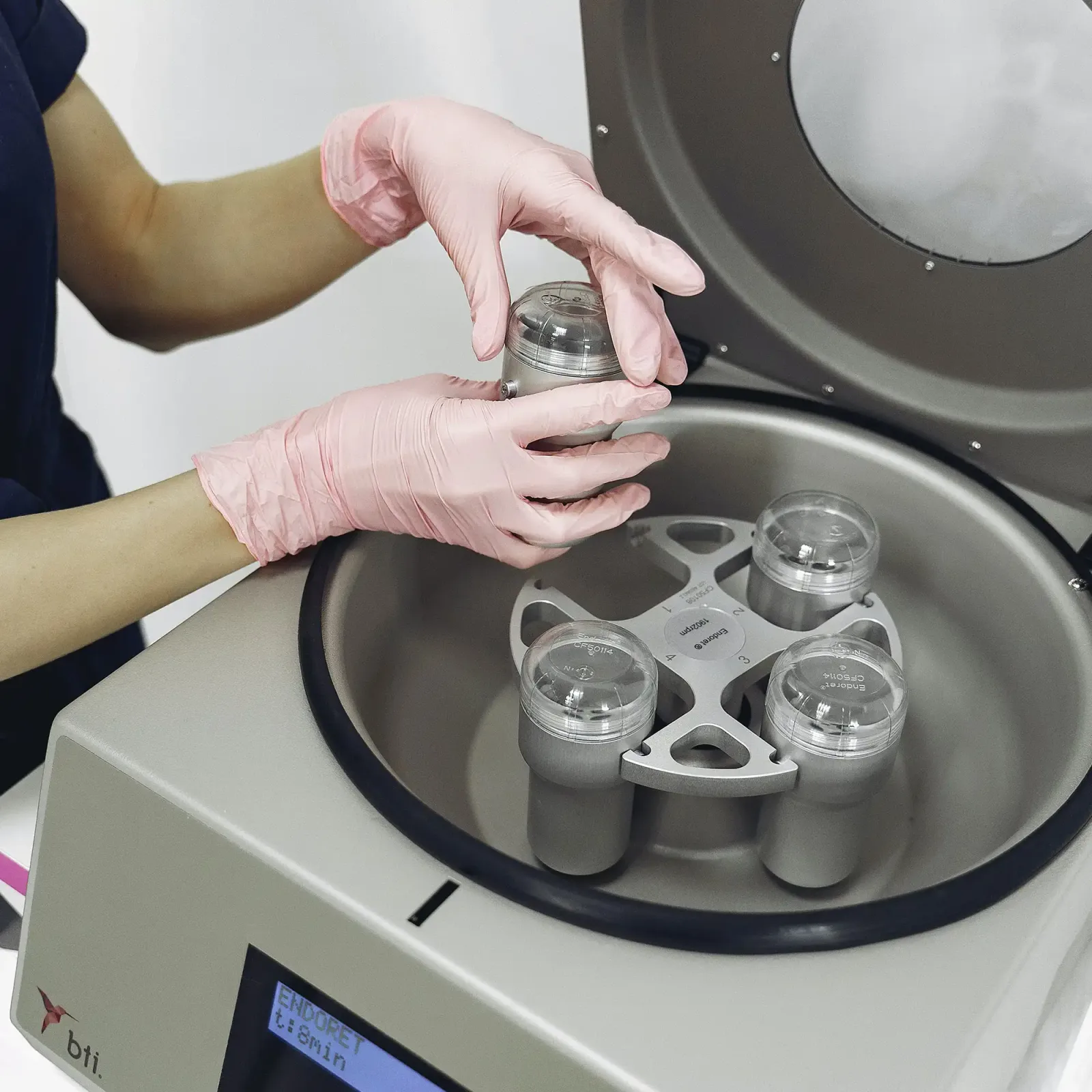
The sample spins for roughly 15 minutes; the platelet-rich fraction is drawn off to make your PRP.
- Step 4
Injection
Under local anesthetic — with ultrasound or image guidance when the target calls for it — the concentrate goes directly into the joint or tissue.
- Step 5
Home the same day
Rest a few minutes, then head home; most people return to light activity that day.
Aftercare and your PRP timeline
Aftercare. Expect swelling and soreness at the site for one to two days — that's the healing response doing its job. For about two weeks, avoid aspirin and other NSAIDs (they work against the inflammatory signal PRP relies on) and use acetaminophen (Tylenol) or topical lidocaine for discomfort instead. Ice the area for 10–15 minutes every couple of hours as needed, elevate the limb to rest, and avoid strenuous activity for two to four weeks. Keep any strengthening or physical therapy plan going — PRP works best alongside it.
Protocol. Dr. Morton's usual protocol is a series of three injections spaced one to two weeks apart over about six weeks, sometimes followed by a booster around six months. The plan follows your diagnosis and, crucially, how your joint actually responds — never a fixed package sold in advance.
- Weeks 0–6
The series
Three injections, one to two weeks apart. Soreness for a day or two after each; light activity in between, no strenuous exercise for two to four weeks.
- Weeks 2–6
Relief begins
Most patients notice improvement between two and six weeks as the biology takes hold.
- After the series
Measure the response
Follow-up checks how much the injections helped and for how long — that answer shapes what comes next.
- About 6 months
Optional booster
In responders, relief commonly lasts six to nine months; a booster around six months can extend it. Individual results vary.
Combining PRP with hyaluronic acid
For some arthritic knees, Dr. Morton pairs PRP with a hyaluronic acid (HA) gel injection — also called viscosupplementation. The two work on different timelines, which is the point: HA improves the joint's glide and cushioning within a few weeks, while PRP's effect on inflammatory signaling builds more gradually. Some studies suggest the combination outperforms either alone in osteoarthritis, though the evidence is not settled and no combination regrows cartilage. A practical bonus: when your plan covers HA for a documented arthritis diagnosis, the office obtains authorization so the covered part of your plan stays covered.
- Different timelines — HA improves joint mechanics early; PRP's benefit builds over weeks
- Different mechanisms — lubrication and cushioning from HA; growth-factor signaling from PRP
- Possible additive effect — some studies suggest the pair outperforms either alone; individual results vary
- Coverage help — HA is often insurance-covered for knee arthritis; PRP is not
Pairing PRP with MLS laser therapy — an optional add-on
Dr. Morton's clinics also offer MLS (Multiwave Locked System) laser therapy, a non-invasive light treatment aimed at calming inflammation and swelling in the treated tissue. Some patients add a course of laser sessions during a PRP series. Two honest caveats: the clinical evidence for laser in knee arthritis is limited — the AAOS guideline named above rates it that way — and it is never required for PRP to do its job. It's an option to discuss, not a package you have to buy.
FDA status, cost & insurance
FDA status. The equipment used to prepare PRP is FDA-cleared, but PRP as a treatment is still considered investigational and is not formally FDA-approved for most orthopedic uses. Because PRP comes from your own blood, it isn't classified as a drug; physicians may use it "off-label" when they judge it to be in a patient's best interest. The practical consequence is that most insurers do not cover PRP.
Cost. PRP is offered as a transparent cash-pay treatment. A typical course is a series of three injections over about six weeks, with an optional booster around six months; you'll receive a written quote for exactly what's recommended — plus any applicable consult fee, which insurance may cover — before you decide. No surprises, and no packages pushed.
Hyaluronic acid coverage. When a hyaluronic acid injection is added and your plan covers it, the office helps obtain authorization, reviews your benefits, and explains any out-of-pocket cost in advance.
How to start: your first PRP visit
Call (808) 439-6201 or book a consultation online. Dr. Morton sees PRP patients at Pacific Bone & Joint in Honolulu (Ala Moana), West O‘ahu (Kunia), Hilo, and Kona, and most new patients are seen within one to two weeks.
What to bring: a photo ID, your insurance card, a list of current medications (especially any blood thinner), and any prior X-rays or MRI. If your imaging was taken in Hawai‘i, the office can usually retrieve it electronically; new standing X-rays can be taken in clinic the same day. Managed-care and Medicaid/Quest plans may need a referral from your primary care physician for the consultation — the office checks before your visit.
At the visit, Dr. Morton examines the joint, reviews the imaging, and tells you plainly whether PRP fits — or whether a covered injection, therapy, or a surgical conversation serves you better. If PRP is the right call, a CBC may be ordered and the first injection is scheduled; the blood draw and injection happen in the same one-hour visit. When an in-person first visit isn't practical — a neighbor island without a nearby clinic, or a patient traveling from across the Pacific — a video call can start the conversation: a telehealth visit if you're in Hawai‘i, or a pre-travel review of your records and imaging if you're farther away. The injection itself is done in clinic.
Medically reviewed by Paul N. Morton, MD, FAAOS, FAAHKS — board-certified orthopedic surgeon, fellowship-trained in adult hip & knee reconstruction and orthopedic trauma. Last reviewed: .
This page is for education only and isn’t a substitute for an exam and personalized advice — schedule a consultation to discuss your situation.