
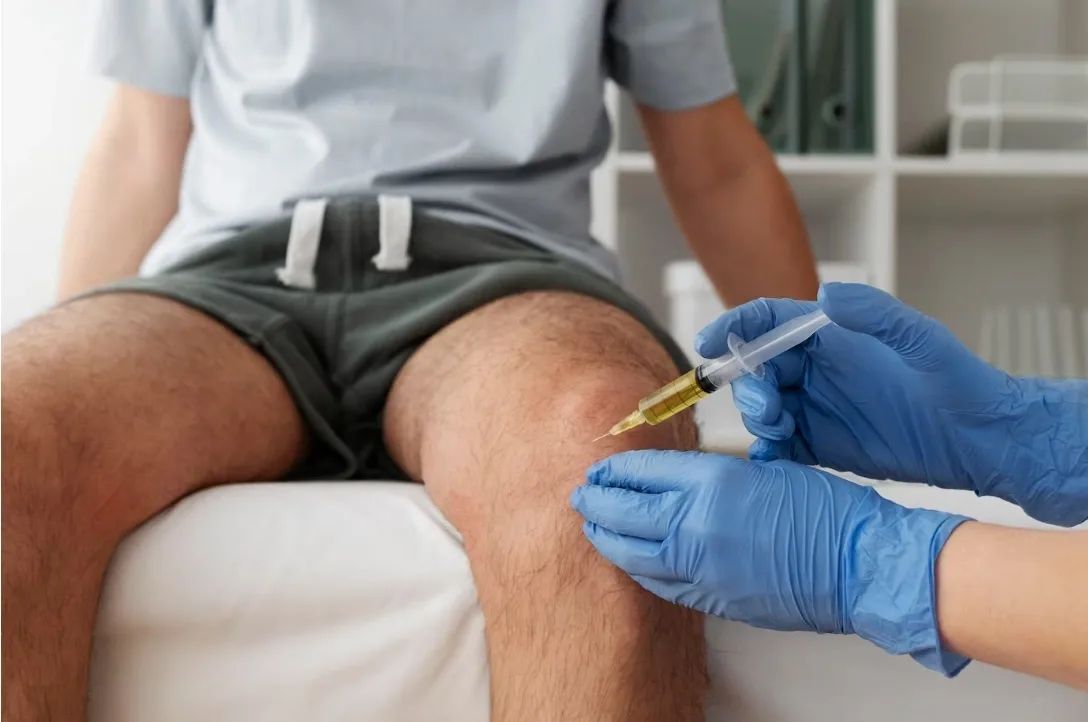
Does PRP help knee arthritis? The short answer
For the right knee, often — but not for everyone. PRP concentrates your own platelets and injects them into the joint, where they can quiet the inflammatory chemistry of arthritis. It suits mild-to-moderate arthritis in a knee that still has cartilage to protect; it does not regrow cartilage. Dr. Paul Morton, a fellowship-trained hip and knee surgeon in Honolulu, offers it only after an exam and X-rays show it fits.
- Best candidates — mild-to-moderate arthritis, active adults not ready for or not needing surgery
- Worst candidates — bone-on-bone knees, which have little for PRP to work with
- Evidence — meta-analyses favor PRP over gel; the largest placebo-controlled trial found no benefit over saline; the AAOS rates the evidence as limited
- Realistic result — relief often six months or longer in responders; individual results vary
- Cash-pay — most insurers call PRP investigational; a written quote comes before any decision
What the studies actually show
Knee osteoarthritis is the best-studied use of PRP, and the honest summary has three parts.
PRP versus gel. A meta-analysis of 18 level-1 randomized trials (Belk et al., American Journal of Sports Medicine, 2021) found that patients treated with PRP had better pain and function scores than those treated with hyaluronic acid at an average follow-up of about 11 months, with leukocyte-poor PRP performing best.
PRP versus placebo. The RESTORE trial (Bennell et al., JAMA, 2021) — the largest and most rigorous trial to date — randomized 288 patients with mild-to-moderate knee arthritis to three weekly injections of leukocyte-poor PRP or saline. At 12 months there was no significant difference in knee pain, and no difference in cartilage volume on MRI. PRP did not beat a well-delivered placebo.
The guideline. The AAOS clinical practice guideline on non-arthroplasty management of knee osteoarthritis (3rd edition, 2021) rates the evidence that PRP may reduce pain and improve function as limited.
What that means for you: PRP is a reasonable option with a genuinely uncertain response, not a proven fix. It changes how the joint behaves, not what it's made of. The mechanics of how it's prepared and delivered are on the PRP procedure page; the practical visit, aftercare, and cost questions are in the complete PRP knee guide.
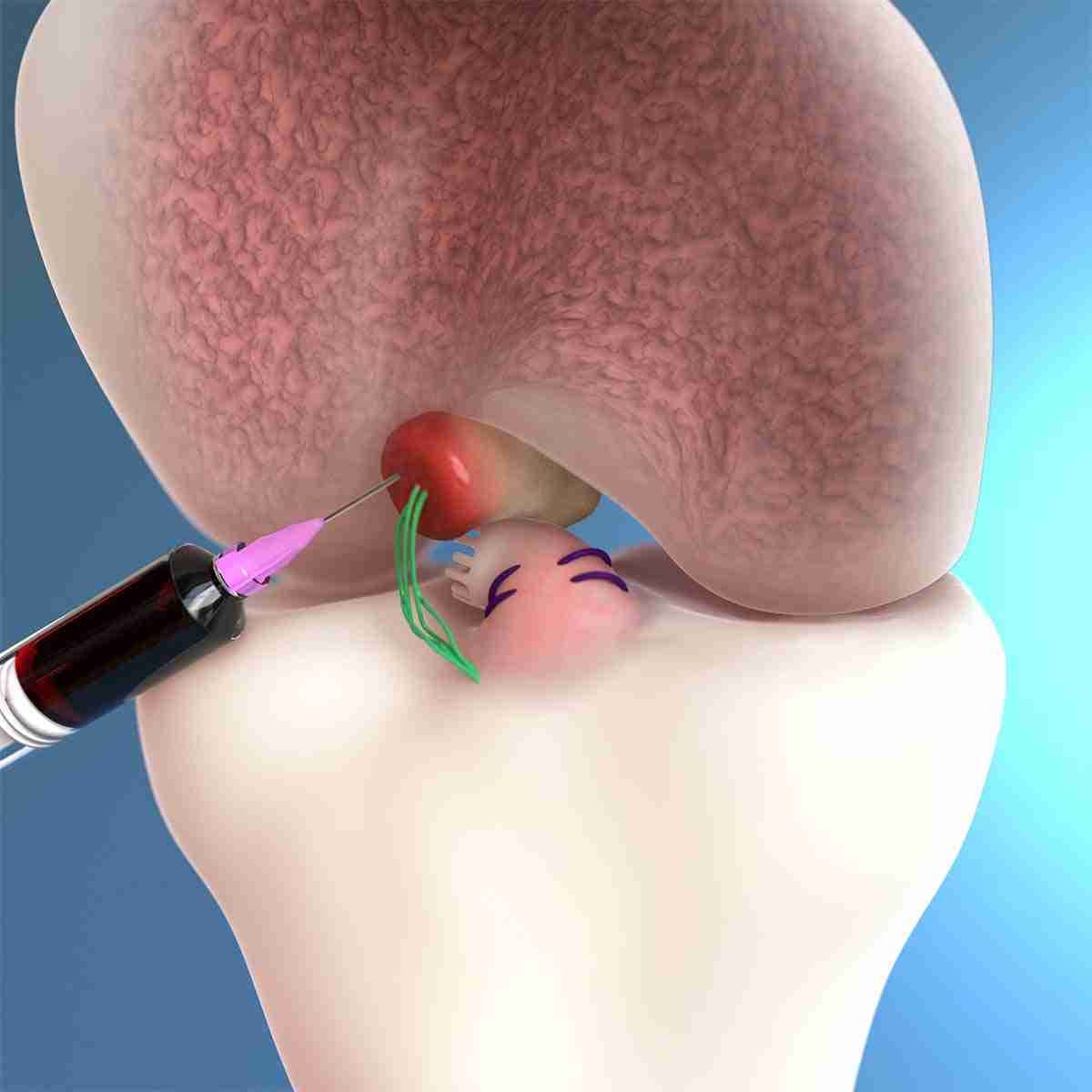
PRP vs cortisone vs gel
These three injections do genuinely different jobs, and the best plan often uses more than one over time. None of them regrows cartilage.
| Injection | Onset | Typical duration | Effect on cartilage | Usually covered? |
|---|---|---|---|---|
| Cortisone | Numbing within minutes; steroid in 2–3 days | About 3 months on average | None restored; repeated doses may be hard on cartilage, so it's capped at 3–4 per joint per year | Usually yes |
| Hyaluronic acid gel | Builds over 2–3 weeks | Several months when it works; evidence mixed, and the AAOS guideline does not recommend routine use | None restored; lubricates and cushions | Often, for knee arthritis (prior authorization common) |
| PRP | 2–6 weeks | Often 6–9 months in responders; not everyone responds | None regrown — RESTORE measured cartilage volume by MRI and found no difference from placebo | Rarely — cash-pay, quoted before you decide |
The honest summary: cortisone for a flare you need calmed now, gel for month-to-month cushioning — and often the first thing to try, because it's usually covered — and PRP for a longer biologic effect in a knee that still has cartilage to protect. The full five-way comparison, including BMAC and A2M, is on the orthobiologics hub.
Are you a candidate?
PRP shines in mild-to-moderate knee arthritis — a joint that's worn and painful but not yet bone-on-bone. The more cartilage the joint has left, the more PRP has to work with, which is why timing matters as much as the treatment itself.
You may be a candidate if…
- X-rays show mild-to-moderate arthritis, not bone-on-bone
- You're an active adult who wants to keep hiking, playing, and moving, and you aren't ready for or don't yet need surgery
- Cortisone has stopped lasting, or you'd rather avoid repeated steroid injections
- You'll pair the injection with strengthening and weight management — the part that makes results last
- You understand the goal is less pain and better function, not a cure, and that the response varies
It may be too late — or the wrong tool — if…
- The knee is end-stage, bone-on-bone: repeated injections there mostly delay a decision you'll eventually make anyway, and an honest look at what's left to try and, when the time is right, knee replacement serves you better
- The pain comes from a locked or displaced meniscus tear or another mechanical problem that PRP can't fix
- You have a low platelet count, an active infection, severe anemia, or active cancer
The only way to know which knee you have is an exam and X-rays at a proper consultation — a shot given without that diagnosis is a guess, and an expensive one when it's cash-pay.

Why stacking PRP with strengthening matters
PRP is not a stand-alone fix, and it works best as one piece of a bigger plan. The strongest, most durable results come when the injection is paired with the boring, proven fundamentals: strengthening the muscles around the knee, especially the quadriceps and hips; managing body weight so the joint carries less load; and staying active within comfortable limits.
The logic is simple. PRP can buy you a window of less pain — strengthening turns that window into lasting function. A knee supported by strong muscles is a knee that hurts less and lasts longer, injection or not. That's why PRP here is offered inside a full joint-preservation program with in-house physical therapy rather than as a one-off shot: the injection opens the door, and the rehab work walks you through it. Skipping the strengthening is the single most common reason a promising PRP result fades faster than it should.
What a realistic plan looks like — and what happens next
There's no universal recipe. Dr. Morton's usual course is three injections over about six weeks, but some knees respond to less, and many patients who benefit repeat the treatment periodically to maintain the effect. What should never happen is committing to a fixed package of shots sold in advance — the plan should follow your diagnosis and, crucially, how your knee actually responds. Follow-up measures whether the injection helped, by how much, and for how long; a weak response is valuable information that the joint has moved past what biologics can offer, not a reason to buy more of the same shot. Either way, PRP sits alongside conventional injections and the rest of the ladder — never a dead end.
Find out which knee you have. Book a consultation or call (808) 439-6201. PRP is offered at Pacific Bone & Joint's Honolulu (Ala Moana), Kunia, Hilo, and Kona clinics; bring your insurance card, a medication list, and any prior X-rays or MRI, and note that managed-care and Medicaid/Quest plans may need a referral from your primary care physician. Visit details, aftercare, and cost are covered in the complete guide.
Medically reviewed by Paul Norio Morton, MD, FAAOS, FAAHKS. Last reviewed: . This article is for education only and isn’t a substitute for an exam and personalized advice — schedule a consultation to discuss your situation.