
Regenerative medicine in Honolulu — the short answer
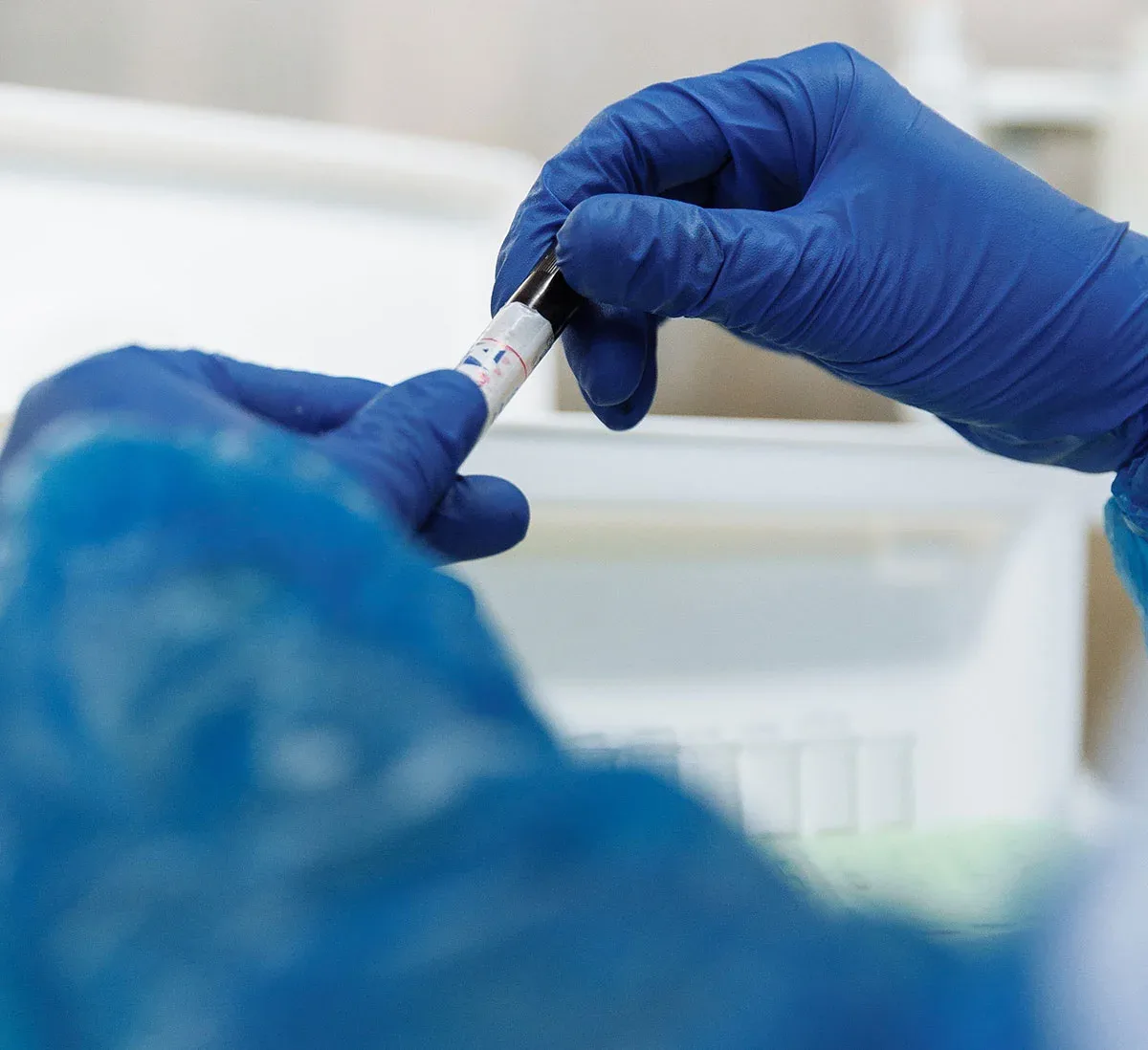
Orthobiologics are injections made from your own blood or bone marrow — PRP, BMAC, and A2M — that may reduce pain and improve function in selected patients. They do not regrow cartilage. Dr. Paul Morton, a fellowship-trained hip and knee surgeon, diagnoses and stages the joint first, delivers the biologic under image guidance, and says plainly when a covered injection, therapy, or surgery would serve you better.
- Best-studied — PRP for mild-to-moderate knee arthritis; relief often six months or longer in responders
- Heavier tool — BMAC, with its best evidence in early hip avascular necrosis alongside core decompression
- Emerging — A2M, an enzyme-blocking protein; promising mechanism, clinical proof still developing
- Cash-pay — most insurers call biologics investigational; cortisone and gel are usually covered and often tried first
- Where — Pacific Bone & Joint clinics in Honolulu (Ala Moana), West O‘ahu (Kunia), Hilo, and Kona
What are orthobiologics?
Orthobiologics are treatments built from substances found naturally in your own body — platelets, growth factors, cytokines, marrow cells, plasma proteins — plus hyaluronic acid, which your joints make themselves. Concentrated and placed precisely where tissue is irritated or damaged, they aim to change the chemistry inside a joint or tendon: less inflammatory signaling, less pain, better function.
What they can and can't do: in selected patients, orthobiologics may reduce pain and improve function, and for some that means surgery delayed or avoided. They do not regrow cartilage or reverse arthritis, and the research behind each one is at a different stage — which is why every treatment on this page is labeled honestly below.
The range of problems they are used for is wide: cartilage wear from osteoarthritis, soft-tissue tears and tendinopathy, bursitis, muscle strains, and ligament sprains. They're also worth considering when an injury simply isn't healing the way it should — or when physical therapy and pain medication haven't delivered.
- Less pain and inflammation — often within weeks of treatment, in patients who respond
- Better function — the goal is a joint you can actually use, not just a number on a pain scale
- Surgery delayed or avoided — for the right patient, the biggest win of all
- Honest limits — no cartilage regrowth, and not every joint responds
The preservation ladder — least invasive first
Every joint at this practice starts with the same question: what's the least invasive treatment that will actually work for this patient? The ladder runs from activity modification and physical therapy, through conventional injections (cortisone, hyaluronic acid gel), to biologics — PRP, BMAC, A2M — and iovera° cryoneurolysis for nerve-driven knee pain. Surgery sits at the top of the ladder, used when it's genuinely the right rung — and skipping straight to it is as much a failure of judgment as never getting there. The full ladder for arthritic joints is laid out on the hip and knee arthritis page.
PRP vs BMAC vs cortisone vs gel: which injection does what
This is the comparison patients ask for most, so here it is in one place. The figures are the ones Dr. Morton quotes in clinic and uses across this site; none of these injections regrows cartilage, and each row links to its full page.
| Injection | What it is | Best for | Onset | Typical duration | Downtime | Usually covered? |
|---|---|---|---|---|---|---|
| Cortisone | Steroid plus a local anesthetic | Calming an arthritis flare quickly; also a diagnostic test | Numbing within minutes; steroid in 2–3 days | About 3 months on average; capped at 3–4 per joint per year | Same-day activity | Usually yes |
| Hyaluronic acid gel | A lubricant the joint makes naturally, given as one shot or a series of 3–5 | Mild–moderate knee arthritis that feels dry and grinding; a steroid-free choice for diabetes | Builds over 2–3 weeks | Several months when it works; evidence is mixed | Easy day; no hard impact for a day or two | Often, for knee arthritis (prior authorization common) |
| PRP | Your own platelets and growth factors, concentrated from a blood draw | Mild–moderate knee arthritis, some tendinopathies, select meniscus problems | 2–6 weeks | Often 6–9 months in responders; not everyone responds | Light activity same day; no strenuous exercise for 2–4 weeks | Rarely — cash-pay, quoted before you decide |
| BMAC | Your own bone marrow cells, platelets, and growth factors, concentrated | Early hip AVN with core decompression; selected arthritis when PRP hasn't held | 4–12 weeks | Varies; trials show no advantage over PRP for knee arthritis | Sore harvest site for a few days; light activity within days | Rarely — cash-pay, quoted before you decide |
| A2M | A plasma protein that blocks cartilage-degrading enzymes, concentrated from a blood draw | Early-to-moderate arthritis, as an emerging option | Not well established | Not well established — evidence still developing | Same-day light activity | Rarely — cash-pay, quoted before you decide |
Read across a row and the pattern is clear: cortisone for a flare you need calmed now, gel for month-to-month cushioning (often covered), PRP for a longer biologic effect in a knee that still has cartilage to protect, and BMAC reserved for specific jobs — chiefly early hip AVN. Which rung fits is a diagnosis question, decided at a consultation with imaging.
The toolkit, honestly labeled
Each treatment has a lane where evidence and experience support it — and a label that says how strong that evidence is:
- PRP — platelet-rich plasma — made from your own blood and concentrated to a high dose of platelets, the cells packed with growth factors. Best-studied for mild–moderate knee arthritis, where meta-analyses favor it over hyaluronic acid but the largest placebo-controlled trial did not; also used for tendinopathy, bursitis, and select meniscus problems. Relief often lasts six months or longer in responders
- BMAC — bone marrow aspirate concentrate — drawn from your own bone marrow, which carries mesenchymal stromal cells and growth factors. Best evidence: avascular necrosis of the hip with core decompression. For arthritis, trials show results similar to PRP, so it's used selectively
- A2M — alpha-2-macroglobulin — a naturally occurring plasma protein that traps the enzymes that break down cartilage. The mechanism is well described; the hope is to slow that breakdown and ease pain, but clinical proof in real patients is still developing, so it's offered as an emerging option, not a proven one
- iovera° cryoneurolysis — freezes sensory nerves for months of knee pain relief; also used before knee replacement to cut opioid needs
- Hyaluronic acid (HA) gel — a substance your joints make naturally to lubricate and cushion. Injected as viscosupplementation for knee arthritis, often insurance-covered; evidence is mixed and the AAOS guideline does not recommend it for routine use, but a well-chosen trial is reasonable in the right knee
- MLS laser therapy — a non-invasive light treatment aimed at swelling and soreness. Offered as an optional adjunct; clinical evidence in knee arthritis is limited and it is never required

Other biologics you'll see advertised — and what the FDA says
Two more products come up constantly in regenerative-medicine marketing, and they deserve honest context. Dr. Morton offers PRP, BMAC, and A2M only — each prepared from your own tissue in the same visit, which is how we work to keep them within FDA rules.
Adipose-derived mesenchymal stem cells (AD-MSCs) are harvested from body fat. In the laboratory these cells can differentiate into bone, cartilage, and muscle cells, which is why they attract intense research interest — but research interest is not the same as proven joint treatment, and products that are enzymatically processed or expanded in a lab fall outside what a clinic may legally offer without FDA approval.
Amniotic tissue and umbilical-cord products come from donated tissue and carry growth factors and healing proteins. Their best-established use is in chronic wounds and skin ulcers — worth remembering when a clinic markets them as a joint cure. The FDA's consumer warning about unapproved stem cell products is explicit: unapproved stem cell products have caused serious harm, and "stem cell" marketing for arthritis is a red flag, not a credential. The same standard applies to every biologic on this site: for osteoarthritis, cell-based injections remain experimental — many studies have been done, most show minimal improvement, and none has demonstrated that stem cells reliably fix orthopedic problems.
Dr. Morton's regenerative protocol — a framework, not a package
For patients who choose joint preservation, Dr. Morton uses a structured framework so treatments reinforce each other and the response can actually be measured. It is a starting point adjusted to your diagnosis and your response — never a fixed package of shots sold in advance. If the first series doesn't earn its keep, the plan changes; that is the whole point of tracking the response.
Step 1 — Diagnosis first
Every plan begins with a hands-on office examination to pinpoint the source of pain and any functional limits, plus up-to-date imaging — X-ray, MRI, or ultrasound — so treatment targets the actual problem rather than a guess.
Step 2 — A typical six-week treatment phase
| Treatment | Typical schedule | Purpose | Required? |
|---|---|---|---|
| Initial PRP (or BMAC where indicated) | Start of treatment | Calm inflammatory signaling in the joint; A2M can be added in selected cases | The core treatment |
| Two follow-up PRP injections | One to two weeks apart, over about six weeks | Complete the series studied in most trials | Usual, adjusted to response |
| Hyaluronic acid gel | During the initial phase | Lubricate the joint while PRP works; often insurance-covered | Optional, when it fits the knee and coverage |
| MLS laser therapy | 10–12 sessions over six weeks | Adjunct aimed at swelling and soreness; clinical evidence is limited | Optional — never required |
Why PRP plus hyaluronic acid? The two work on different timelines: HA improves the joint's glide and cushioning within a few weeks, while PRP's effect on inflammatory signaling builds more gradually. Some studies suggest the combination outperforms either alone in osteoarthritis, though the evidence is not settled. Why laser? MLS laser is offered to patients who want an extra, drug-free tool against swelling and soreness during the series. The AAOS clinical practice guideline on non-arthroplasty management of knee osteoarthritis (3rd edition, 2021) rates laser evidence as limited — as it does PRP itself — so it's an option, not a requirement.
Measuring the response, boosters, and ongoing care
Step 3 — Measure the response
A follow-up visit after the series asks the only question that matters: did it help, by how much, and for how long? Honesty cuts both ways here. Meta-analyses favor PRP over hyaluronic acid at six to twelve months, but the RESTORE trial (Bennell et al., JAMA, 2021) found no benefit over saline at 12 months in mild-to-moderate knee arthritis — so a weak response is real information, not a reason to buy more of the same shot.
Step 4 — Around six months
In patients whose first series helped, a booster PRP injection — with hyaluronic acid when your plan covers it — can extend the effect. In patients it didn't help, the conversation moves to the next rung of the ladder instead.
Step 5 — Ongoing care
- Rehabilitation and physical therapy — tailored exercises to strengthen the joint and restore range of motion, with PT available in-house at the Honolulu and Kunia clinics
- Lifestyle and nutrition guidance — dietary and daily habits that support joint health and overall well-being
- Monitoring and adjustment — regular follow-ups to track progress, adjust treatment, and stop what isn't working
- Visit 1
Diagnosis and staging
Exam plus X-ray, MRI, or ultrasound decide whether biologics fit at all — and which one.
- Weeks 0–6
Treatment phase
PRP (or BMAC where indicated), two follow-up PRP injections, with HA and laser as optional add-ons.
- After the series
Measure the response
A follow-up visit asks whether it helped, by how much, and for how long.
- About 6 months
Booster or next rung
A booster if the first series earned it; a different plan if it didn't.
Are you a candidate for orthobiologics?
The ideal orthobiologics patient has early-to-moderate arthritis or a soft-tissue injury, wants to stay active, and understands the honest goal: less pain, better function, more years out of your own joint — not regeneration miracles.
You may be a candidate if…
- Your knee or hip has mild-to-moderate arthritis — worn and painful, but not bone-on-bone
- You have a tendon, ligament, or meniscus problem that hasn't responded to a proper strengthening program
- You're an athlete protecting a joint after injury, or an active adult not ready for replacement
- You're medically better served by avoiding surgery, and comfortable with a cash-pay treatment whose response varies
It may be too soon or too late if…
- You haven't yet tried the covered basics — therapy, activity modification, cortisone or gel — that may work just as well
- Your joint is bone-on-bone; no biologic rebuilds absent cartilage, and replacement deserves an honest conversation
- The pain comes from a mechanical problem — a locked meniscus, a collapsed femoral head, instability — that needs its own fix
- You have an active infection, a bleeding disorder, or active cancer
A consultation with imaging tells you which rung of the ladder you're actually on.
Why the injector matters more than the injection
Hawai‘i has no shortage of clinics selling "regenerative" shots. What they can't sell is judgment. A fellowship-trained hip & knee surgeon starts with the diagnosis — is this pain actually arthritis, or a meniscus tear, AVN, or an SI joint problem wearing a costume? — stages the joint honestly, delivers the biologic under image guidance, and tells you plainly when biologics would waste your money. When a joint is truly bone-on-bone, the kindest thing anyone can do is say so and explain what actually fixes it.
It's also why an orthopedic surgeon — rather than a chiropractor or a physician without musculoskeletal training — is the right person to deliver these treatments (how to choose a regenerative medicine specialist):
- Specialized musculoskeletal knowledge — deep command of bones, muscles, ligaments, tendons, and joints, with experience spanning sports injuries to degenerative disease
- Advanced diagnostics — trained on MRI, CT, and ultrasound, so the injection targets the root cause; delivery is image-guided for precision and fewer complications
- Every treatment option in one plan — injections, physical therapy, medication management, and surgery under one roof, with no incentive to force a single tool onto every problem
- The full injection repertoire — cortisone, viscosupplementation, PRP, BMAC, and more, matched to your condition rather than to a clinic's inventory
- Safety and evidence — extensive procedural training minimizes risks like infection or tissue damage, and treatment choices follow research and clinical guidelines, not industry marketing
Risks, honestly stated
Orthobiologic injections are low-risk procedures — but no honest practice calls any procedure risk-free. Complications are rare and can include infection, bleeding, or nerve injury; a BMAC marrow draw adds a sore harvest site for a few days and, rarely, bleeding or nerve irritation at the back of the pelvis. Sterile technique and image-guided delivery keep those risks to a minimum, and because PRP, BMAC, and A2M are prepared from your own blood or bone marrow, there is no foreign substance for your body to react to. Prescription blood thinners are coordinated with your prescribing physician beforehand — never stopped on your own.
Insurance, cost, and no surprises
Most orthobiologic injections are not covered by insurance, which still classifies them as investigational. There are useful exceptions: some plans cover hyaluronic acid injections for a documented osteoarthritis diagnosis, and the consultation and imaging that decide candidacy are usually covered. Check what your plan covers — and let the office do the legwork:
- Benefits verified first — before any combined treatment, the team reviews your insurance benefits to determine what's covered
- Authorization assistance — when your plan covers HA gel injections, the office helps secure the authorization
- Transparent pricing — cash-pay treatments are quoted in writing before you decide; no surprises, no packages pushed
What happens next: your first visit
Call (808) 439-6201 or book a consultation online. Dr. Morton sees joint-preservation patients at Pacific Bone & Joint in Honolulu (Ala Moana), West O‘ahu (Kunia), Hilo, and Kona — so treatment and follow-up stay close to home — and most new patients are seen within one to two weeks.
What to bring: a photo ID, your insurance card, a list of current medications (especially any blood thinner), and any prior X-rays or MRI. If your imaging was taken in Hawai‘i, the office can usually retrieve it electronically; new standing X-rays can be taken in clinic the same day. Managed-care and Medicaid/Quest plans may need a referral from your primary care physician for the consultation — the office checks before your visit.
At the visit, Dr. Morton examines the joint, reviews the imaging, and tells you which rung of the ladder you're on — a covered injection, a biologic series with a written quote, therapy, or a surgical conversation. When an in-person first visit isn't practical — a neighbor island without a nearby clinic, or a patient traveling from across the Pacific — a video call can start the conversation: a telehealth visit that reviews your imaging if you're in Hawai‘i, or a pre-travel review of your records and imaging if you're farther away. Any injection is done in clinic.
Medically reviewed by Paul N. Morton, MD, FAAOS, FAAHKS — board-certified orthopedic surgeon, fellowship-trained in adult hip & knee reconstruction and orthopedic trauma. Last reviewed: .
This page is for education only and isn’t a substitute for an exam and personalized advice — schedule a consultation to discuss your situation.