
How freezing a nerve relieves pain
The sensory nerves around your knee — which carry pain but not movement signals — can be paused with cold. The iovera° handpiece delivers precise, targeted freezing through tiny probes, interrupting the nerve's ability to transmit pain. The nerve's structure isn't destroyed; it regenerates over months, fully functional. Until it does, the knee simply hurts less — commonly for up to six months. It's the same principle as ice on a sore joint, engineered to work at the nerve itself and last thousands of times longer.
Use one: before knee replacement, against opioids
This is where iovera° shines brightest in Dr. Morton's practice. Treating the knee's sensory nerves before knee replacement means you arrive at surgery with pain signaling already dialed down — and go through recovery needing meaningfully less medication of every kind. Combined with the opioid-sparing protocol (blocks, local anesthetic, scheduled non-opioids), it's a major reason patients report recovery hurt far less than they feared. Patients who fear opioids — or must avoid them — should ask about this specifically.

Use two: arthritis relief without surgery
For knee arthritis patients who aren't ready for replacement — or aren't candidates — iovera° offers months of relief without drugs, injections into the joint, or downtime. It pairs naturally with the rest of the arthritis ladder: quieter pain makes strengthening possible, and stronger muscles protect the joint. Relief is repeatable when nerves regenerate.
- Knee arthritis pain limiting daily life or exercise
- Patients avoiding or delaying surgery
- Preparing for knee replacement with less-opioid recovery
- Patients who can't tolerate NSAIDs or repeated cortisone
What the visit feels like
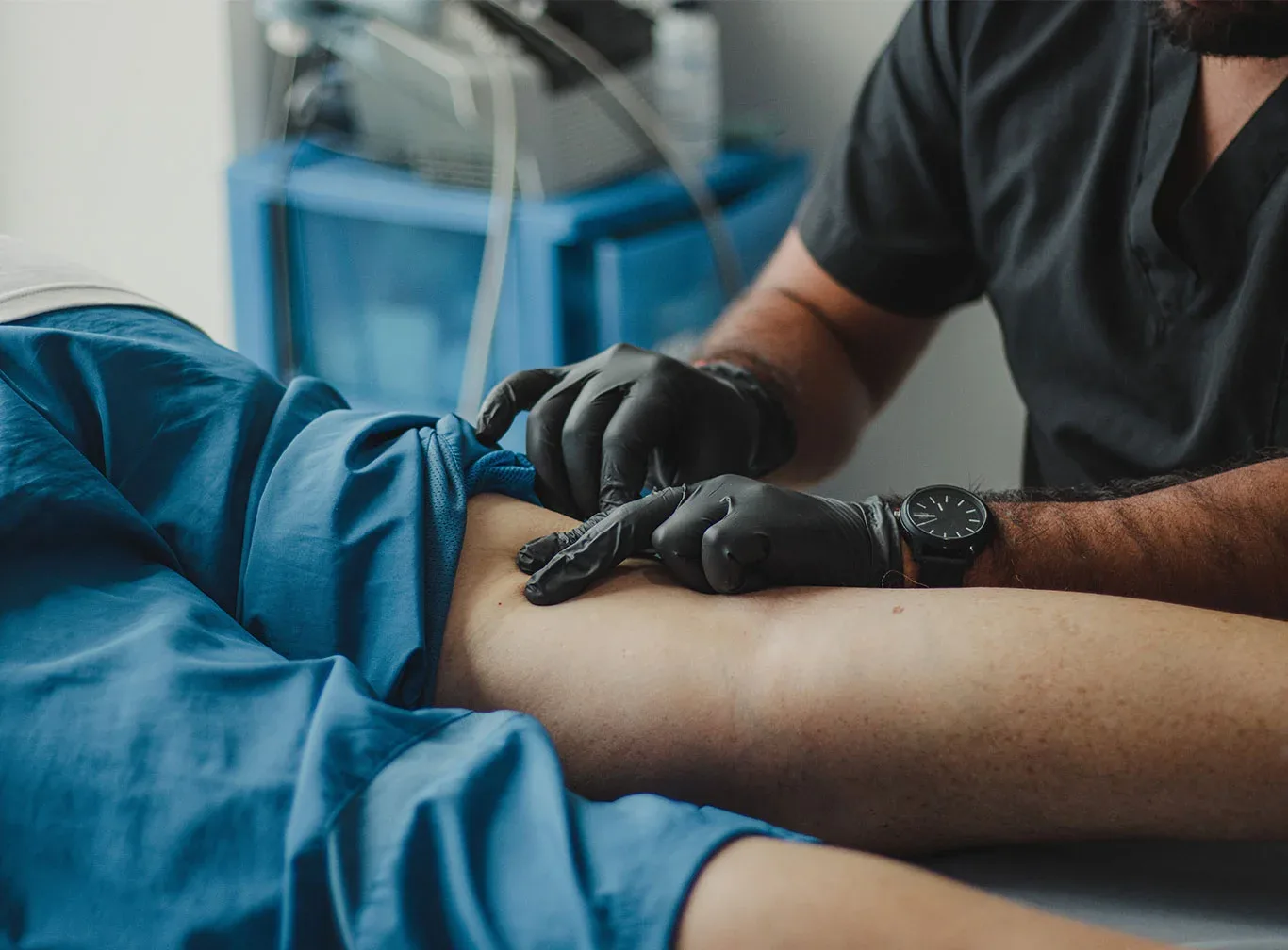
After mapping the target nerves, the skin is numbed and the handpiece applies focused cold treatment at several points around the knee — most patients describe pressure and brief cold sting. You walk out when it's done; normal activity resumes immediately, with possible numb patches and temporary soreness at treatment sites. Relief typically settles in over days. It's among the lowest-commitment treatments in orthopedics — and one of the most underused.
Medically reviewed by Paul N. Morton, MD, FAAOS, FAAHKS — board-certified orthopedic surgeon, fellowship-trained in adult hip & knee reconstruction and orthopedic trauma.
This page is for education only and isn’t a substitute for an exam and personalized advice — schedule a consultation to discuss your situation.