

Subvastus knee replacement in Honolulu — the short answer
The subvastus approach is a way of reaching the knee joint during total knee replacement by lifting the vastus medialis muscle and sliding underneath it, so the quadriceps tendon is never cut. It suits most primary knee replacements. Dr. Morton — founder of Pacific Bone & Joint in Honolulu — uses it on nearly every knee, combined with robotic planning and no tourniquet. Patients typically lift the leg sooner, need less pain medication, and walk the day of surgery. Individual results vary.
- Muscle cut: none — the quadriceps tendon stays intact
- Walking: the day of surgery; many home within 24 hours
- Early benefit: earlier straight-leg raise, less day-one pain, better early motion (published randomized trials)
- Long-term: implant durability is the same — the approach changes the start, not the finish
- Where: every venue Dr. Morton operates at, on O‘ahu and Hawai‘i Island
What makes subvastus different?
In a standard (medial parapatellar) knee replacement, the surgeon splits the quadriceps tendon to reach the joint. That incision through the extensor mechanism is one of the main reasons early recovery hurts and quad strength takes months to return.
The subvastus approach reaches the knee by lifting the vastus medialis muscle and sliding underneath it. The quadriceps tendon is never divided. Your knee still gets a complete, precisely aligned replacement — but the muscle that powers it is left intact.
“From the first visit I felt very secure and comfortable with him. The surgery was very successful — I was walking without assistance after only 5 days. The level of care and kindness have been extraordinary.” — Verified patient, Healthgrades review
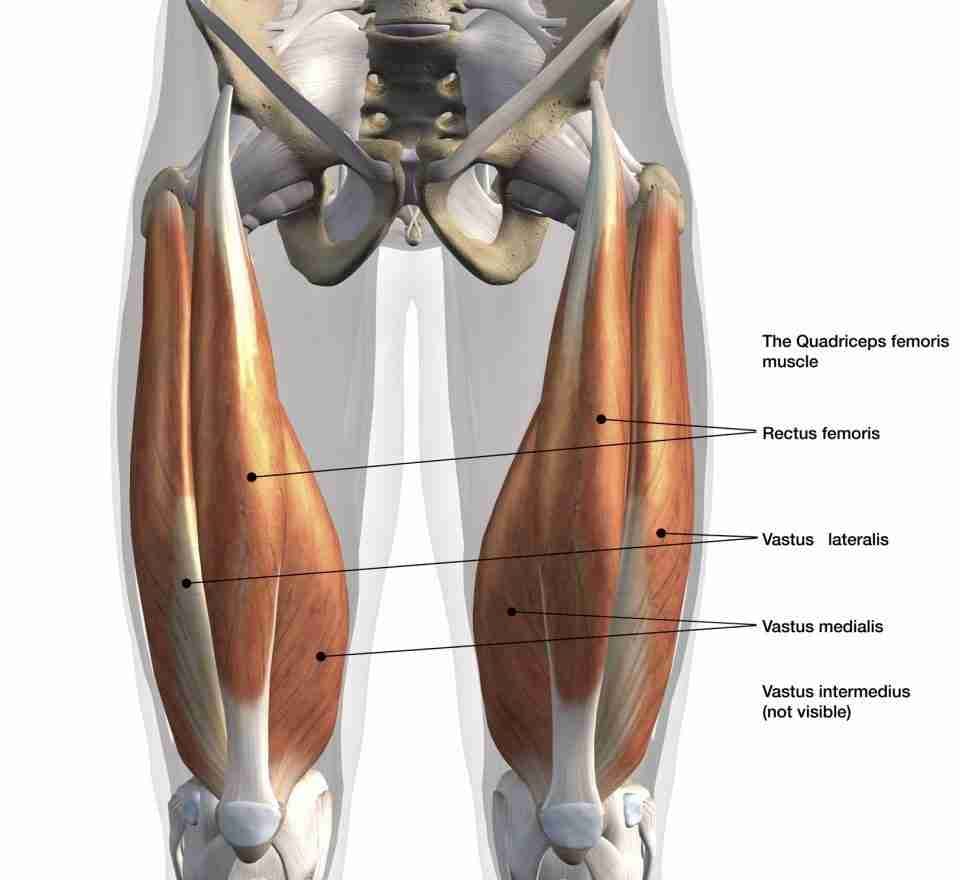
Subvastus vs midvastus vs medial parapatellar: how the approaches differ
All three approaches end at the same joint and allow the same implant. They differ in what happens to the quadriceps on the way in.
| Medial parapatellar (standard) | Midvastus | Subvastus | |
|---|---|---|---|
| Path to the joint | Splits the quadriceps tendon above the kneecap | Splits the vastus medialis muscle fibers | Lifts the vastus medialis and passes beneath it |
| Quadriceps tendon | Divided | Preserved; muscle belly split | Preserved; no muscle or tendon cut |
| Kneecap blood supply | Most disrupted | Partly preserved | Best preserved |
| Exposure | Widest — used for revisions and stiff knees | Moderate | Narrowest — pairs with robotic guidance |
| Early recovery | Slowest return of quad function | Intermediate | Earliest straight-leg raise and walking in randomized trials |
| Long-term result | Equivalent — durability depends on alignment, fixation, and materials, not the approach | ||
The standard approach is standard for a reason: it gives the widest view and works for every knee, which is why it is still the right choice for most revisions and very stiff or deformed knees. The subvastus approach trades some of that room for an intact extensor mechanism — a trade that robotic planning makes safe, because the cuts are guided and verified rather than relying on a wide exposure to see everything.
What the evidence says
This is one of the better-studied questions in knee replacement. A systematic review and meta-analysis of 20 randomized controlled trials covering 1,893 primary total knee replacements (Berstock et al., EFORT Open Reviews, 2018) found the subvastus approach produced an active straight-leg raise about 1.7 days sooner, lower pain scores on the first day after surgery, roughly 7° more knee motion at one week, fewer lateral releases, and modestly less blood loss than the medial parapatellar approach — at the cost of about ten minutes of additional operating time. Knee Society Scores at six weeks and one year were the same, and rates of infection, blood clots, and stiffness requiring manipulation did not differ.
A separate meta-analysis of 14 randomized trials (Wu et al., International Journal of Surgery, 2018) reported better range of motion in the mini-subvastus group at four to six weeks, three months, and six months. The honest summary: subvastus buys a stronger, less painful first few weeks; by a few months out, the approaches converge, and the implant lasts just as long either way. That early window is exactly what makes same-day discharge realistic.
Why it matters for your recovery
Because the extensor mechanism is preserved, subvastus patients typically demonstrate earlier straight-leg raises, need less pain medication, and regain independent walking sooner than with quad-splitting approaches. Studies of quadriceps-sparing techniques report faster return of strength and better early range of motion in the first weeks after surgery — exactly the window when momentum matters most.
- Quadriceps tendon left intact — no muscle repair to protect
- Earlier straight-leg raise and stair climbing
- Less early pain, so less need for opioids
- Lower risk of patellar (kneecap) complications from tendon splitting
Part of a complete rapid-recovery protocol
Dr. Morton combines the subvastus approach on every total knee replacement with robotic planning for precise alignment, a tourniquet-free technique that reduces thigh pain and swelling, opioid-sparing multimodal anesthesia, and cementless implant options. Together these let most patients stand and walk the day of surgery — many go home within 24 hours through the same-day knee replacement program.
Am I a candidate — and who is not?
Most patients having a primary total knee replacement are candidates for a quad-sparing approach. The exceptions are knees where a narrower window would compromise safety or implant position: very muscular or very tight knees, significant deformity, prior surgery with scarring, and most revision knee replacements, which need wider exposure. In those knees Dr. Morton uses the approach that keeps your surgery safe and your implant perfectly positioned — the approach is a means to an end: a knee that works, for decades.
To find out which approach fits your knee, schedule an orthopedic consultation at any of Dr. Morton's four Pacific Bone & Joint clinics — Honolulu (Ala Moana), West O‘ahu (Kunia), Hilo, or Kona — or call (808) 439-6201. Most new patients are seen within one to two weeks. Bring a photo ID, your insurance card, a list of current medications, and any prior imaging or operative reports; if your X-rays were taken in Hawai‘i, the office can usually retrieve them electronically, and new standing X-rays are taken in the clinic at the same visit. Managed-care and Medicaid/Quest plans may need a referral from your primary care physician — the office checks before your visit. When an in-person visit isn't practical — a neighbor island without a nearby clinic, or a patient traveling from across the Pacific — a telehealth visit with existing X-rays can start the process.
- Usually a candidate: first-time total knee replacement for arthritis, with typical alignment and motion
- Usually a candidate: patients planning same-day or next-day discharge who want the strongest possible start
- Decided case by case: very muscular thighs, very stiff knees, or significant deformity
- Usually not: revision knee replacement, or a knee with extensive scarring from prior surgery
Medically reviewed by Paul N. Morton, MD, FAAOS, FAAHKS — board-certified orthopedic surgeon, fellowship-trained in adult hip & knee reconstruction and orthopedic trauma. Last reviewed: .
This page is for education only and isn’t a substitute for an exam and personalized advice — schedule a consultation to discuss your situation.