
Why wear a knee brace?
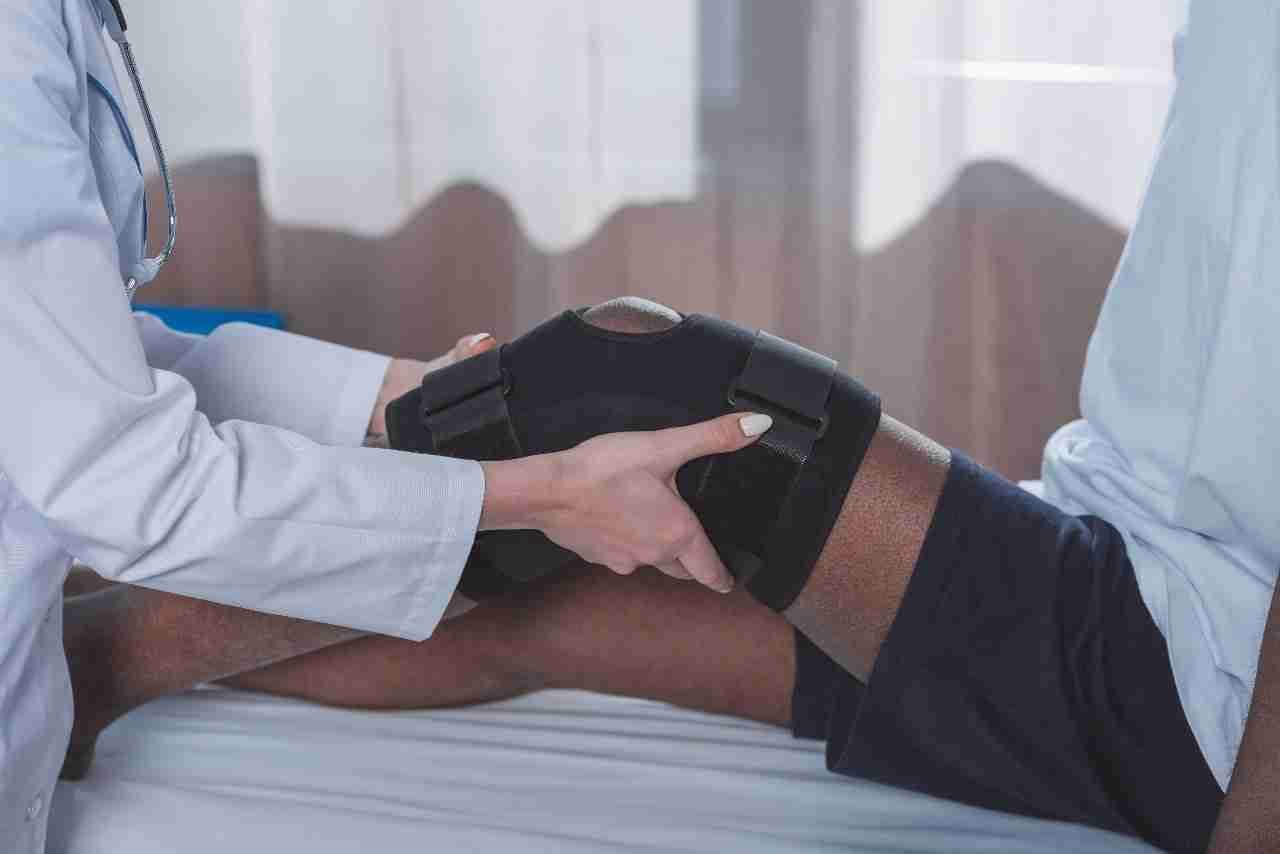
Knee braces serve a variety of functions, but the most important is stabilizing the joint. Their primary role is managing the discomfort of knee osteoarthritis: a brace reduces pain by taking some of the weight off the damaged portion of the knee, and it helps you walk with more confidence.
Osteoarthritis (OA) is a widespread condition that involves the entire joint. For decades, researchers attributed it to simple wear-and-tear; more recent evidence suggests that inflammation plays a more important role than previously thought. The knee is one of the joints most often subject to the structural destruction OA causes, and the condition is usually unilateral — it affects one knee more than the other, and often one side of the knee more than the other.
That unequal damage is why arthritic knees drift out of alignment, producing a bow-legged or knock-kneed appearance. The good news: a brace can shift weight away from the worn compartment, which relieves pain and favorably alters the mechanics of the knee. And if your knee feels like it is about to buckle when you put weight on it, a brace restores the confidence to walk without bracing for a fall.
The six common types of knee brace
Braces are made from different materials and serve distinct purposes — the right one depends on what is actually wrong with your knee. Here is the field at a glance, followed by the details:
| Brace | Best suited for | Key trait |
|---|---|---|
| Unloader | One-sided knee arthritis | Shifts load off the worn compartment |
| Hinged | MCL/LCL injury, surgical recovery | Side hinges stabilize walking |
| Drop-lock hinged | After injury or surgery; extensor problems | Hinge locks to limit motion |
| Patellofemoral | Kneecap tracking pain | Steadies the kneecap in motion |
| Neoprene sleeve | Mild support, all-day wear | Low profile, hides under pants |
| Functional | After ACL injury or reconstruction | Supports a return to sport |
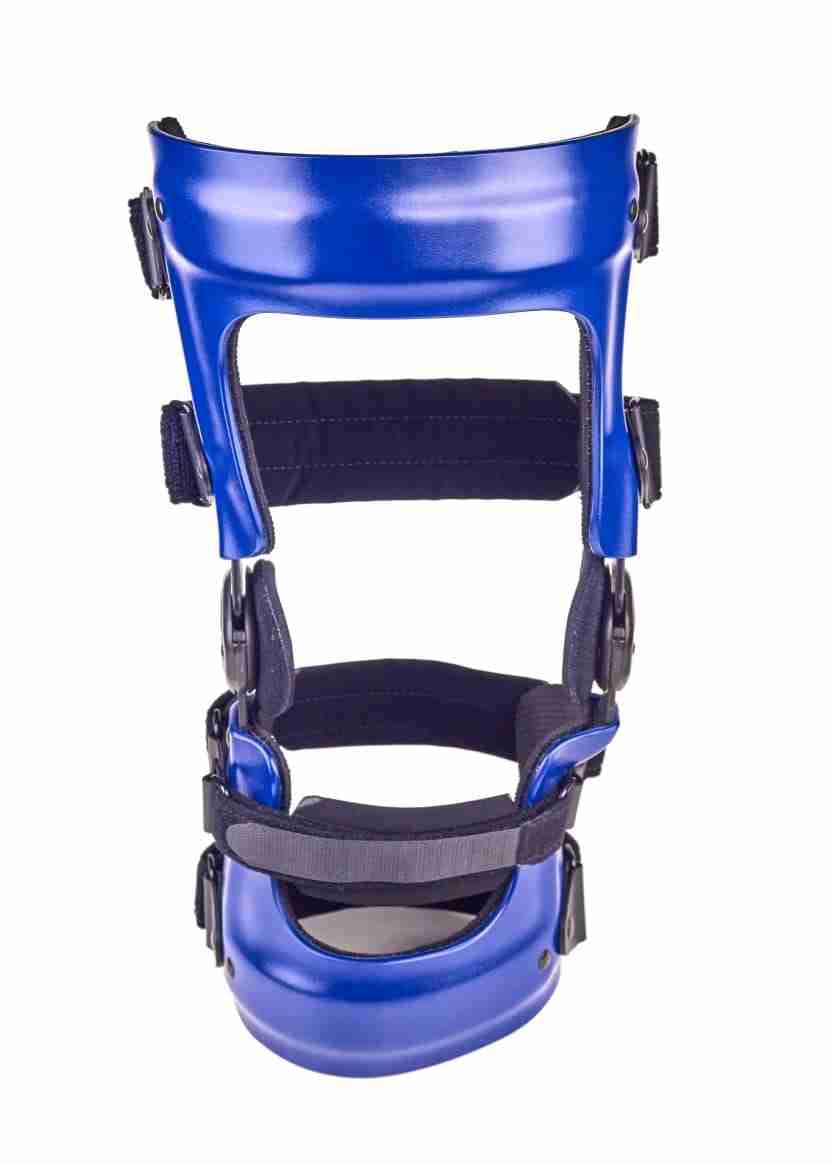
- Unloader brace. Generally molded plastic with foam padding and steel struts that keep the knee from wobbling. Unloaders are usually custom-made and adjustable, so pressure can be dialed down on the inner or outer side of the knee — exactly where one-sided arthritis hurts. Their honest drawback: they can be bulky, the most common patient complaint.
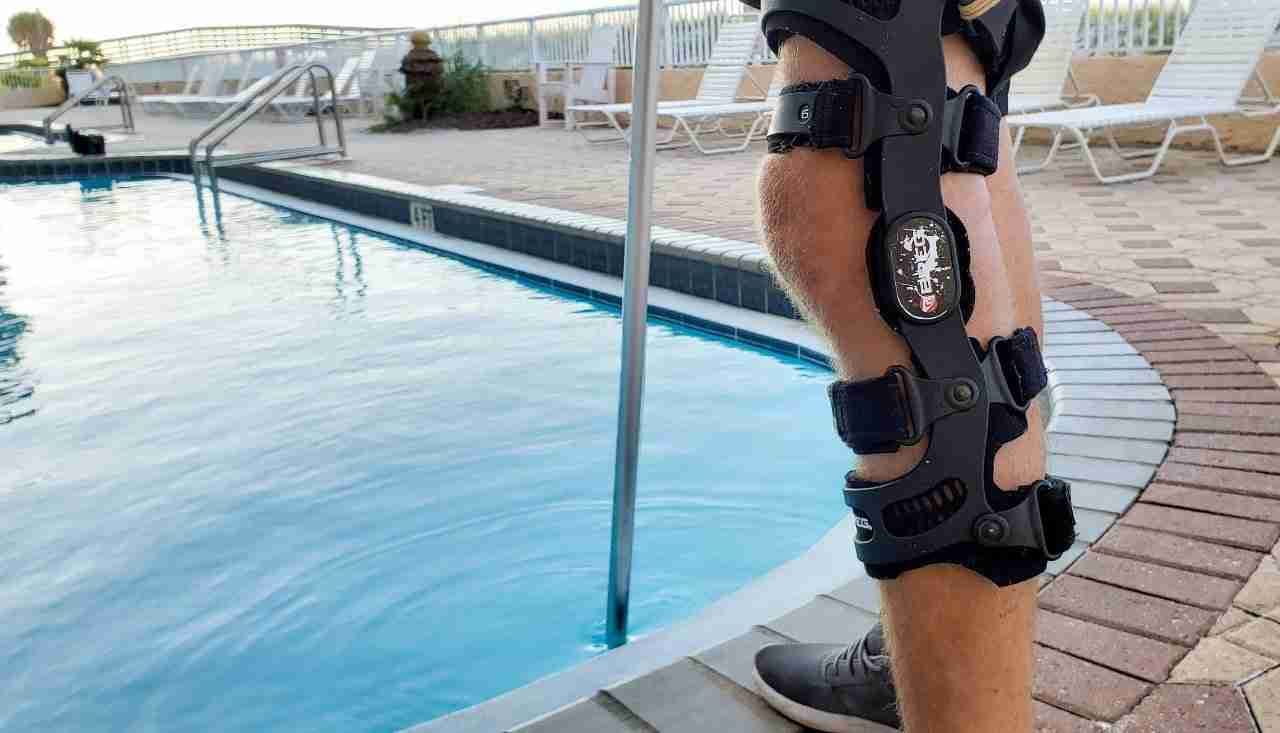
- Hinged knee brace. As the name implies, a hinge on each side of the knee supports walking. Hinged braces are available over the counter and are often used to stabilize medial or lateral collateral ligament injuries. Lighter versions are typical during surgical recovery or after a recent injury; sturdier versions add ligament support for patients with chronic ligament problems or arthritis.
- Drop-lock hinged brace. A hinged brace whose adjustable hinge can lock, stopping the knee from overextending or flexing too far. That makes it a strong choice after a knee injury or surgery, and a good option for patients with an extensor mechanism problem.
- Patellofemoral brace. Built for kneecap tracking problems, which typically cause pain at the front of the knee. This brace stabilizes the kneecap as it glides during motion.
- Neoprene sleeve. A sleeve pulled over the knee, usually with the kneecap area cut out. Its low profile means it conceals easily under pants — but that slimness is also why it provides less support than the other designs.
- Functional brace. Commonly provided after an ACL injury or reconstruction, functional braces let patients resume physical activity while providing additional support.
The downsides worth knowing
Like any orthotic device, knee braces have trade-offs. Dr. Morton walks patients through them up front:
- Discomfort. Some patients find braces heavy, bulky, or hot — and a poorly fitted brace can slip down the leg, which defeats the purpose.
- Skin irritation and swelling. Sensitive skin may become irritated or red under a brace, and in rare cases a brace can cause edema (swelling) around the joint.
- No benefit. Braces are not magic — some patients honestly report no improvement.
- Joint stiffness. Treating a braced knee as if it were fragile can lead to abnormal weight distribution and a stiffer joint. The brace is there so you move more, not less.
Getting a brace: prescription, fitting, and cost
Start with a conversation. Explain your condition, your hopes, and your concerns; weighing the benefits and risks together leads to a decision you can trust. If a brace makes sense, you receive a prescription and a referral to an orthotist — a healthcare professional who designs, builds, and fits braces and other orthotic devices.
Check your coverage before you order. Custom-made braces can be costly, so call your health insurance provider first to confirm which types your policy covers.
Off-the-shelf vs. custom. Off-the-shelf braces are available immediately and are satisfactory for many patients. Custom braces take a few weeks to fabricate and finish with a final fitting to confirm the brace matches your knee precisely.
After the fitting. Your orthotist will teach you how to put the brace on and take it off, and — if it is adjustable — how to work its settings. For the best results, follow your doctor's and orthotist's instructions on how and when to wear it.
What to expect once you're wearing it
Once you are used to the brace, expect to walk with more confidence and without the constant fear of the knee giving way. Worn consistently, a brace provides stability — and research suggests bracing can improve the functional symptoms of arthritis, including pain and stiffness.
Keep the bigger picture in view: bracing is one tool in a complete nonsurgical plan that can also include injections, physical therapy, and activity modification — see the full menu of alternatives to knee replacement. A thorough discussion of these options is how you get relief that lasts. If a brace is no longer controlling your knee pain, or you still have questions about which type fits your situation, schedule an appointment with Dr. Morton at (808) 439-6201 — he sees patients in Honolulu, West O'ahu, Hilo, and Kona.
Medically reviewed by Paul N. Morton, MD, FAAOS, FAAHKS — board-certified orthopedic surgeon, fellowship-trained in adult hip & knee reconstruction and orthopedic trauma.
This page is for education only and isn’t a substitute for an exam and personalized advice — schedule a consultation to discuss your situation.