
The short answer: most arthritic knees don't need surgery yet
Knee pain has many causes — arthritis, patellofemoral syndrome, ligament injury, meniscus tears, and cartilage injury among them — and for nearly all of them, treatment begins without an operation. There is an excellent chance your pain can be fixed, or meaningfully improved, without surgery. As a surgeon, Dr. Morton has no interest in replacing a knee that can be managed well without an operation — the recommendation you get is the one he'd want for his own knee.
One honest ground rule before the ladder: none of these alternatives regrows cartilage. Arthritis is worn joint surface, and nothing in this list rebuilds it. What the alternatives do is reduce pain, protect function, and buy time — which is often exactly what a knee needs. Knowing what each rung can and cannot deliver keeps you from wasting months, and money, on the wrong one. Not every option below is safe for every patient, so talk with Dr. Morton about which rungs make sense for your knee and your health history.
- Nothing on this list regrows cartilage — the alternatives reduce pain, protect function, and buy time
- Strengthening and weight management come first because every other rung works better on top of them
- Cortisone and gel injections are usually covered; PRP, BMAC and A2M are cash-pay and quoted in writing
- Partial knee replacement is the rung between injections and a total knee that many patients never hear about
- An exam and standing X-rays in one visit tell you which rung you're on — clinics in Honolulu (Ala Moana), Kunia, Hilo and Kona
The foundation: therapy, weight, activity, and simple supports
Every arthritic knee should start here, because everything else works better on top of it.
Exercise and physical therapy
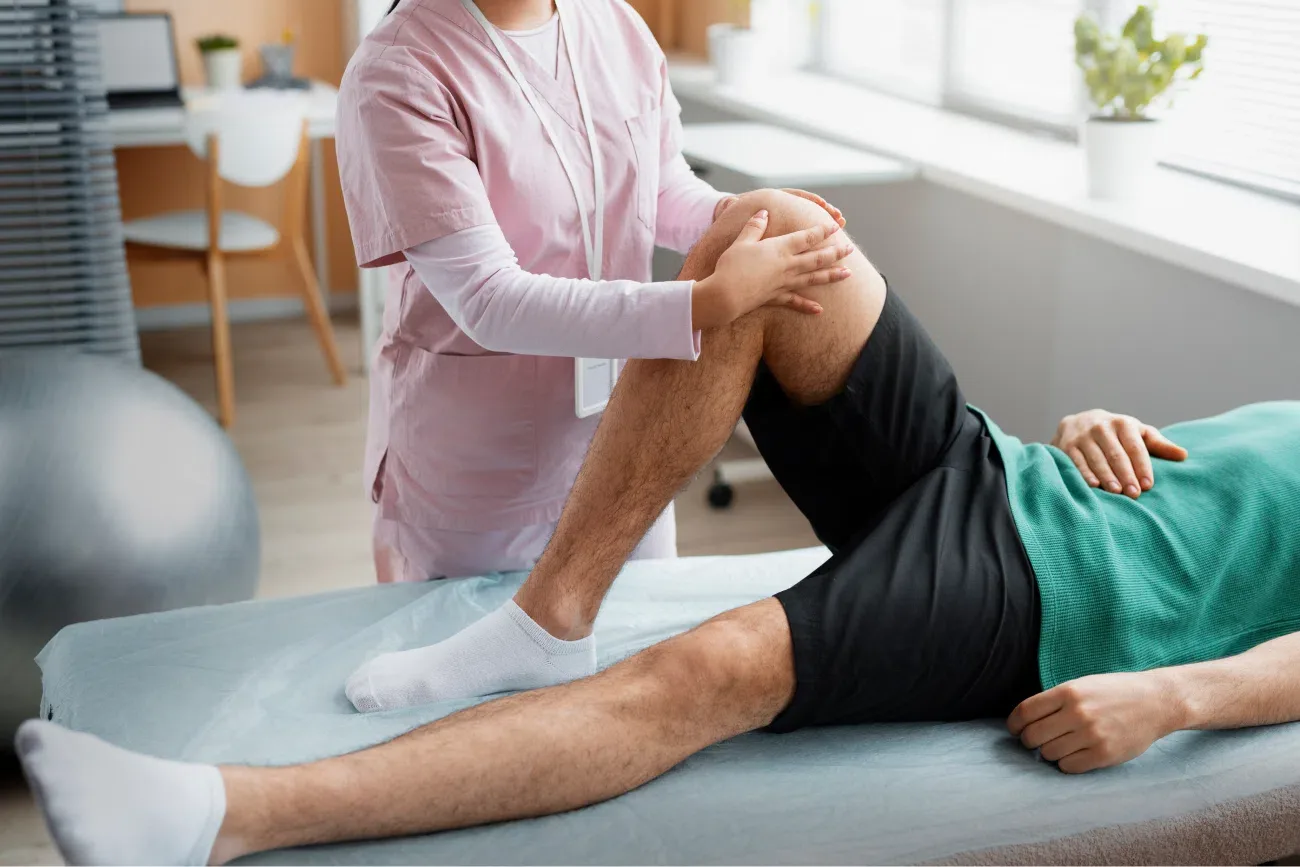
Building muscle is an incredibly effective way to improve joint pain. Working with a therapist develops the quadriceps and hip muscles that shield the knee, and that added strength directly reduces the stress passing through the joint — a stronger leg genuinely hurts less. Stretching matters too: a flexible knee is a less stiff, less painful knee. Dr. Morton's practice offers physical therapy at both the Honolulu and Kunia clinics.
Weight loss
Weight management is the most underrated treatment in orthopedics. Every pound carried on your body puts roughly four pounds of force across your knees — so every pound lost is multiplied in relief, and even modest weight loss pays off with every single step.
Activity modification
High-impact activities like jogging on a worn-out joint can provoke pain and further damage the remaining cartilage. Sensible swaps — cycling and pool work instead of pounding pavement — keep you fit without punishing the joint. Reasonable expectations of an arthritic knee are often the difference between a painful joint and a pain-free experience.
Knee braces
Braces are an accessible, low-risk tool. Options include hinged braces, neoprene sleeves, and offloading (unloader) braces, which shift force away from a worn compartment when arthritis affects mainly one side of the knee. Ask Dr. Morton which design fits your pattern of arthritis.
Walkers and canes
Gait aids improve mobility and support for patients who need them. A cane in the opposite hand quietly unloads a painful knee — there's no prize for limping through without one.
Pain medications: NSAIDs and Tylenol, explained
Non-steroidal anti-inflammatory drugs (NSAIDs) reduce pain and inflammation by blocking an enzyme called cyclooxygenase (COX). The COX enzyme converts breakdown products from cell walls into prostaglandins — the chemicals that drive pain and inflammation. There are two versions: COX-1, found in the gastrointestinal tract, and COX-2, found in the musculoskeletal system. Medications that block both can upset the stomach; COX-2-selective medications spare it.
NSAIDs come as pills or creams. The advantage of a cream is that the medication goes straight to the knee and is far less likely to affect the rest of your body — including the kidneys and heart.
NSAID options at a glance
| Medication (brand) | Label dosing | Why choose it | Prescription? | Form |
|---|---|---|---|---|
| Ibuprofen (Advil, Motrin) | OTC label: 200 mg every 4–6 hours, with food; up to 400 mg per dose if needed; no more than 1,200 mg in 24 hours unless a doctor directs | Works quickly; easy to adjust the dose; take with meals | OTC at label doses; 600–800 mg tablets are prescription only | Oral |
| Naproxen (Aleve, Naprosyn) | OTC naproxen sodium: 220 mg every 8–12 hours, with food; no more than 660 mg in 24 hours unless a doctor directs | Longer lasting — twice a day, with breakfast and/or dinner | OTC at 220 mg; 250–500 mg twice-daily regimens are prescription only | Oral |
| Meloxicam (Mobic) | 7.5–15 mg once daily, with food | Once-daily dosing; gentler on the stomach (more COX-2 than COX-1) | Yes | Oral |
| Celecoxib (Celebrex) | 200 mg once daily or 100 mg twice daily | COX-2 selective — least likely to cause stomach upset | Yes | Oral |
| Diclofenac 1% gel (Voltaren Arthritis Pain) | OTC label: 4 g to the knee up to four times daily, measured with the dosing card; no more than 16 g per day to any one lower-body joint | Delivered directly to the knee; least likely to cause systemic side effects | No | Topical |
| Diclofenac 2% solution (Pennsaid) | Applied to the knee twice daily as prescribed | Prescription topical for knee arthritis when the OTC gel isn't enough | Yes | Topical |
Dosing above reflects U.S. FDA labeling and is for orientation only: follow the package label or your prescriber's instructions, and never combine two NSAIDs.
A word on safety: NSAIDs are generally safe, but patients with a history of heart disease, kidney disease, high blood pressure, ulcers, or GI bleeding should be cautious — these medications can worsen all of those problems. Check with Dr. Morton or your primary care physician before starting a daily regimen.
What about Tylenol (acetaminophen)?
Acetaminophen works differently — and researchers still haven't fully worked out how. It acts as a partial COX inhibitor without the anti-inflammatory punch of an NSAID, may interact with the body's endocannabinoid receptors, and works largely on the central nervous system to dial down the experience of pain. It's an inexpensive, over-the-counter option and generally very safe. Because it's processed by the liver, patients with liver disease should avoid it.
Injections: cortisone and gel
When the foundation isn't enough, injections are the next rung.
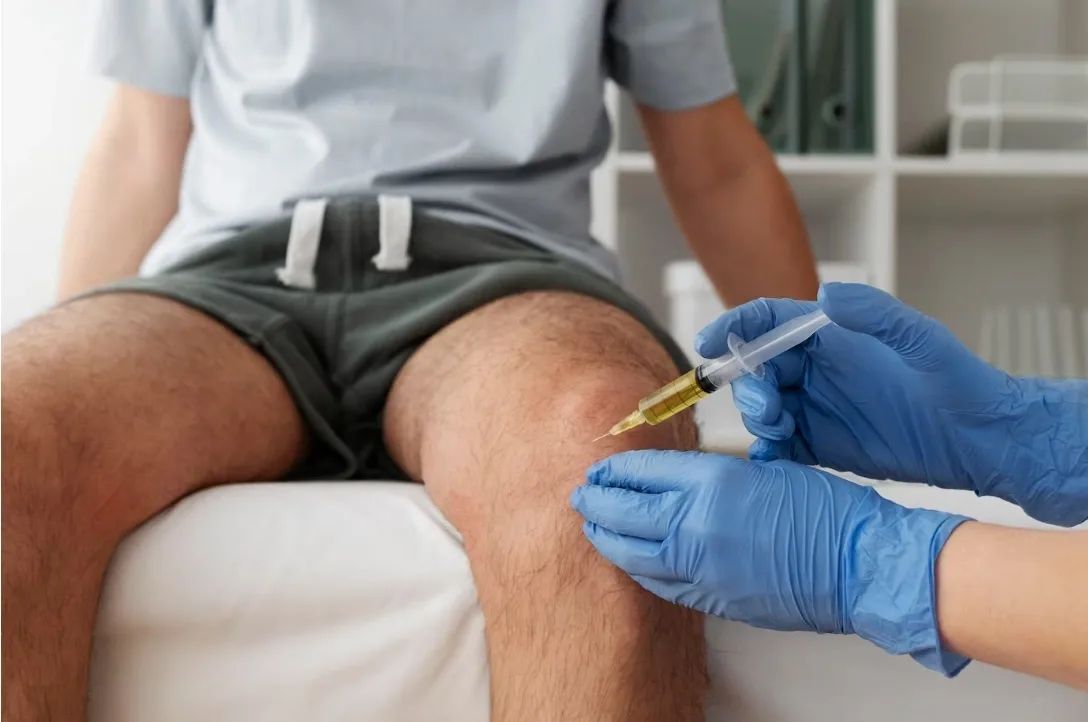
Cortisone is the workhorse. Cortisol is a hormone your body produces naturally under stress — part of the fight-or-flight response — to suppress inflammation. Cortisone works the same way, and injecting it directly into the knee calms the pain generators of an arthritis flare quickly and reliably. Injections can usually be repeated every three months, but many patients do well with far less — one or two well-timed injections a year around flares. It's a symptom tool: it settles the inflammation, not the arthritis underneath.
Hyaluronic acid (gel) injections supplement a substance the knee naturally makes, adding cushion and lubrication so the joint can move with less pain. They're FDA-approved for knee arthritis, and patients who respond often get relief lasting up to six months at a time. They're a reasonable trial in milder arthritis, especially when cortisone is wearing off quickly.
Biologics: PRP, BMAC, A2M — and stem cells, honestly
Biologics use your own body's healing machinery. PRP (platelet-rich plasma) starts with a simple blood draw; a centrifuge then spins the sample to concentrate the platelets, growth factors, and anti-inflammatory molecules, which are injected back into the knee. In mild-to-moderate arthritis, PRP has been shown to improve symptoms for six months and sometimes as long as two years — though it's often not covered by insurance. BMAC concentrates cells and growth factors drawn from your own bone marrow. Alpha-2-macroglobulin (A2M) concentrates a blood protein that neutralizes cartilage-degrading enzymes. All three are part of the practice's orthobiologics program, and all three are generally cash-pay — quoted in writing before you decide.
Stem-cell injections deserve an honest word: some practitioners inject stem cells or embryonic tissue to reduce inflammation, and some patients do report significant, lasting relief — but the research is still limited. If you're receiving these injections elsewhere, let Dr. Morton know; it matters for planning the rest of your care. And remember the ground rule: none of these rebuilds a bone-on-bone joint. In the right knee, though, a biologic can be the longest-lasting nonsurgical rung on the ladder.
When it isn't osteoarthritis: gout and inflammatory arthritis
Not every painful knee is worn cartilage. If your arthritis is driven by gout, rheumatoid disease, or another inflammatory condition, the right medication can be genuinely life-changing — and it comes from a different toolbox. Anti-rheumatic medications have transformed pain control for these patients, and Dr. Morton recommends evaluation by a rheumatologist for co-management.
Gout has its own playbook: urate-lowering medications such as allopurinol, febuxostat, and probenecid to address the root cause, plus prophylactic medications to prevent flares. Diet matters too — minimizing the foods that raise uric acid, including red meat, organ meats like liver and kidneys, sugary drinks, and foods rich in fructose. Treating the underlying disease often does more for the knee than anything injected into it.
Treating the messenger: iovera, radiofrequency ablation, and TENS
Some treatments target the nerves that carry knee pain rather than the joint itself.
iovera cryoneurolysis uses a handheld device to deliver precise, targeted cold to the sensory nerves at the front of the knee, temporarily stopping them from transmitting pain. The nerves aren't destroyed — they regrow over time — so relief typically lasts a few months and the treatment can be repeated. It's drug-free, done in the office, and involves no downtime, which makes it useful for patients who can't take anti-inflammatories, want to avoid repeated cortisone, or need a bridge — through a wedding, a season of work, a long-planned trip. Dr. Morton also uses iovera before knee replacement itself, pre-treating the nerves so the early postoperative weeks hurt less and require fewer opioids.
Radiofrequency ablation takes the same idea further. A probe is placed near the nerve and delivers radiofrequency energy, using heat to create a lesion that blocks pain signals from the arthritic knee. Probe placement requires anesthesia; relief typically lasts six to twelve months, and the procedure can be repeated.
TENS units (transcutaneous electrical nerve stimulation) are the gentlest of the three. Electrode pads on the skin deliver mild electrical stimulation that contracts muscle and blunts pain — no medication, no procedure. Therapists often use TENS in the clinic for muscle building and pain relief, and many patients find an inexpensive portable take-home unit gives them meaningful control over daily symptoms.
Complementary treatments: an honest scorecard
Patients ask about these constantly, and most are low-risk. Here is the honest read on each — and whatever you try, tell Dr. Morton about it, because supplements and outside treatments matter when planning your care.
| Option | The idea | The honest read |
|---|---|---|
| Acupuncture | Needle stimulation of nerves may trigger the release of endorphins, the body's own pain relievers | Associated with decreased pain in some patients; low risk |
| Chiropractic & massage | Hands-on treatment of the muscles and joints around the knee | Some patients get relief, but there's minimal evidence of prolonged benefit for arthritis |
| Glucosamine & chondroitin | Supplement forms of natural components found in knee cartilage | May support cartilage health; won't rebuild a worn surface |
| Turmeric | A natural anti-inflammatory consumed in food or as a supplement | Some patients notice gradual improvement with long-term use |
| CBD / medical marijuana | Cannabinoids may dampen pain signaling; CBD is the extract without THC's drowsiness | Possible pain relief — talk with Dr. Morton before using CBD or pursuing a medical marijuana card |
| Low-level laser | Light penetrating the soft tissue provokes a mild inflammatory response that promotes cellular regeneration | Low-risk; some patients report improvement |
None of these reverses arthritis. They're reasonable additions to a real plan — therapy, weight management, medications, injections — not replacements for one.
The honest word on knee arthroscopy
Patients often ask whether the knee can simply be "scoped and cleaned out." For arthritis, the honest answer is no: studies have consistently shown that arthroscopy provides little lasting benefit for a knee whose problem is worn cartilage. The pain comes back because the arthritis was never removable in the first place.
Knee arthroscopy still has a real role — for genuine mechanical problems. A displaced meniscus flap that locks the knee, a loose body that catches, certain cartilage injuries in younger patients: these respond well to arthroscopic surgery. The skill is telling the difference between a mechanical symptom and an arthritic one, which is exactly what an exam and imaging sort out. Beware of a scope offered as an arthritis treatment; welcome one offered for a locked or catching knee.
Partial knee replacement: the smaller surgery in between
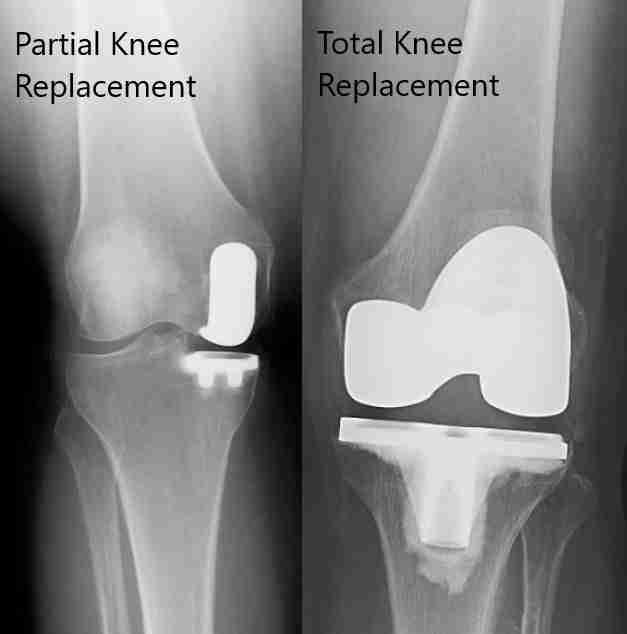
There is a rung between injections and total knee replacement that many patients never hear about. When arthritis is confined to a single compartment of the knee — most often the inner side — a partial knee replacement resurfaces only the worn compartment and leaves the rest of your knee, including all the ligaments, untouched.
The result is a smaller operation with a faster recovery: less bone removed, less pain early on, and same-day discharge is common. Patients frequently say a partial knee feels more natural than a total, because most of the joint is still their own. Not every knee qualifies — the other compartments and ligaments must be healthy — but for the right candidate it delivers replacement-level pain relief with a fraction of the disruption. Dr. Morton performs partials robotically, where precise component positioning matters most.
Which path fits your knee?
Most knees fall into one of these patterns. The exam and standing X-rays confirm which — but this is where each leads:
- Early arthritis, cartilage still on X-ray, pain after busy days → therapy, weight, bracing, and injections as needed
- Mild-to-moderate arthritis, cortisone fading fast → gel, PRP, or BMAC for a longer biologic effect
- Can't take anti-inflammatories, or need a bridge through a season → iovera° cryoneurolysis
- Wear confined to one compartment, ligaments intact → robotic partial knee replacement
- Locking or catching from a meniscus flap or loose body → arthroscopy or meniscus repair, not an arthritis "clean-out"
- Bone-on-bone, night pain, a shrinking life → robotic total knee replacement, most often same-day
When alternatives stop making sense
The ladder has a top. When X-rays show bone-on-bone arthritis and daily pain persists despite honest efforts at the rungs below, each repeat treatment tends to buy less relief for less time. Waiting past that point has real costs: the quad weakens, deformity can progress, and overall fitness erodes — all of which make eventual surgery and recovery harder than they needed to be.
If the signs below sound familiar, it's time to talk about whether the ladder is still working for you — schedule a consultation and get an honest read on where your knee stands. Sometimes the answer is another year of injections. Sometimes it isn't. Either way, you'll know. Book online or call (808) 439-6201 — clinics in Honolulu (Ala Moana), West O‘ahu (Kunia), Hilo and Kona, with most new patients seen within one to two weeks. Bring a photo ID, your insurance card, a medication list, and any prior X-rays; managed-care and Medicaid/Quest plans need a referral from your primary care physician, which the office helps arrange. Telehealth is an option when an in-person visit isn't practical, with standing X-rays taken near home first.
- Bone-on-bone arthritis on X-ray with pain most days
- Night pain that wakes you or keeps you from falling asleep
- Injections that used to last months now fading in weeks
- A knee that dictates your work, travel, and family plans
- Visible bowing or deformity that is getting worse
- You're organizing your life around the knee instead of living it
Medically reviewed by Paul Norio Morton, MD, FAAOS, FAAHKS. Last reviewed: . This article is for education only and isn’t a substitute for an exam and personalized advice — schedule a consultation to discuss your situation.