
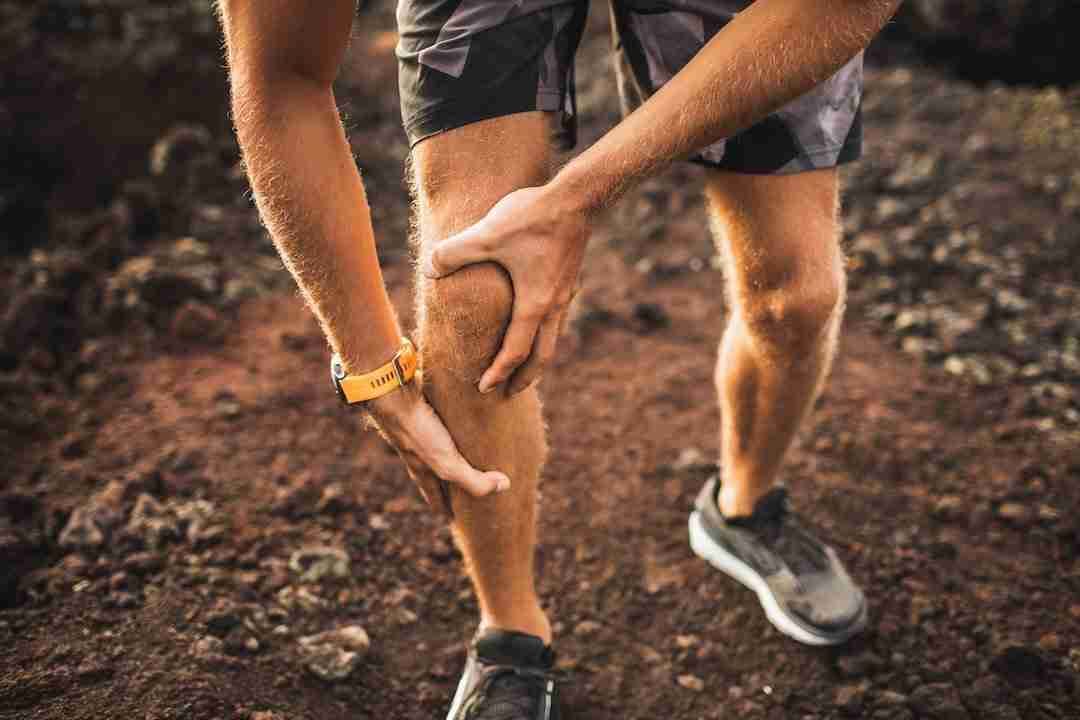
What causes knee pain? The short answer
Most knee pain comes from a short list of causes: osteoarthritis in adults over 50; overuse problems such as patellofemoral pain and tendinitis in younger, active people; and meniscus or ligament injuries after a twist. Dr. Paul Morton, a fellowship-trained hip and knee surgeon in Honolulu, sorts most knees out with an exam and an X-ray in a single visit — and most are treated without surgery.
- Where it hurts and how it started narrow the diagnosis fastest — inner joint line, kneecap, outer knee, or behind the knee
- An exam and a plain X-ray explain most knees on the first visit; MRI is added only when a specific question remains
- Most knee pain without red flags earns a few weeks of self-care first — and often needs nothing more
- A hot, swollen knee with fever, a knee that locks, or one that can't bear weight needs same-day care
- Clinics in Honolulu (Ala Moana), West O‘ahu (Kunia), Hilo and Kona — (808) 439-6201
Start with where it hurts — and how it started
Knee pain is the most common joint complaint I see in clinic, and it has a way of interfering with everyday life and stopping people from doing the things they want to do. The diagnosis usually begins with two questions: where does it hurt, and how did it start? Pain along the inner joint line points toward the meniscus or the medial compartment — that pattern is common enough to deserve its own guide to medial knee pain. Pain in front, around or under the kneecap, suggests patellofemoral trouble. Sharp outer-knee pain in a runner is often the iliotibial band. Pain and tightness behind the knee raises the question of a Baker's cyst.
Timing matters just as much. A knee that swelled within an hour of a twist is a different problem from one that aches after a day of yard work, and a hot, swollen knee that appeared overnight is different again. The knee absorbs a remarkable amount of force with every step, every day — which is exactly why it is so prone to injury. An exam and an X-ray sort out most knees in a single visit, but the eleven causes below explain the vast majority of what walks through my door, along with honest guidance on what you can safely treat at home.
Causes 1–3: the arthritis family
1. Osteoarthritis is the most common cause of knee pain in adults over 50. Cartilage wears away over years, and most patients describe months to years of gradually building discomfort with a telltale daily rhythm: stiffness in the morning, aching when they first start to move that eases as the joint warms up, swelling after busy days, and pain that returns by evening. When arthritis becomes severe, the knee can turn very stiff — or unstable — and everyday functions like stairs, curbs, and getting out of a low chair become genuinely difficult. It is also the most treatable cause on this list, with a full ladder of options from activity changes and injections up to replacement — the guide to hip and knee arthritis covers every rung.
2. Rheumatoid arthritis is different: an autoimmune disease in which the body attacks the joint lining. It often involves both knees and other joints such as the hands, with morning stiffness lasting an hour or more and warmth or swelling out of proportion to activity. Early treatment with a rheumatologist protects the joint, so this pattern should not sit at home.
3. Post-traumatic arthritis develops years after a fracture, dislocation, or ligament injury, when the damaged joint wears out faster than it should. If your painful knee has a history — an old tackle, a car accident, a fall — that history is usually part of the answer.

Causes 4–5: meniscus and ligament injuries
4. Meniscus tears. The knee has two menisci — the medial on the inside, the lateral on the outside. These small, crescent-shaped pieces of cartilage act as shock absorbers between the femur and tibia, dissipating force and helping the joint glide smoothly. They tear easily, and they tear in two distinct ways. Younger patients tear them acutely with a twist — often with a pop, then catching or locking. Over 40, tiny degenerative tears build on each other over time until the meniscus fails from wear alone, frequently alongside arthritis. Joint-line pain, stiffness, swelling, clicking, and pain with squatting or pivoting are typical; the guide to meniscus repair explains when tears heal, when they are trimmed, and when they are best left alone.
5. Ligament injuries and sprains. Four ligaments stabilize the knee. The medial and lateral collateral ligaments (MCL and LCL) guard the inner and outer sides; they are usually injured by a direct blow — a kick or tackle to the side of the knee — or by a twist that stretches them past their limit, the classic "sprained knee." Most collateral sprains heal without surgery. The two cruciate ligaments cross the center of the joint and stabilize it front to back: the ACL, which tears during cutting and pivoting sports — usually with a pop and swelling within the hour — and the PCL, injured less often. Whatever the ligament, the symptom to respect is instability. A knee that buckles or can't be trusted deserves an exam even after the swelling settles, because ongoing giving-way damages the meniscus and cartilage over time.
Causes 6–9: overuse and soft-tissue pain
6. Patellofemoral pain is the aching kneecap: pain in the front of the knee with stairs — especially going down — squatting, and long sitting. It is usually a mechanics-and-strength problem rather than structural damage, and it responds well to hip and quadriceps strengthening.
7. Tendinitis. The patellar and quadriceps tendons ache with jumping, hiking downhill, and stairs. Pain sits at the lower or upper edge of the kneecap and often warms up with activity early on — a classic overuse pattern that rewards patience and progressive loading.
8. Bursitis. Bursae are small, fluid-filled sacs that cushion the moving parts of the knee, and two of them cause most of the trouble. Prepatellar bursitis inflames the bursa in front of the kneecap — the occupational hazard of people who kneel for a living, such as plumbers, gardeners, and roofers, and of athletes who take a direct blow to the front of the knee. Less commonly it is caused by a bacterial infection, which needs prompt medical treatment rather than home care. Pes anserine bursitis involves the sac between the shinbone and the hamstring tendons on the inner knee, just below the joint line; when it becomes irritated it swells and presses on the surrounding tissue, causing pain and tenderness along the inside of the knee. It flares in walkers and in patients who also have arthritis.
9. Iliotibial band syndrome causes sharp outer-knee pain in runners and cyclists, often starting at a predictable distance into a workout. It is a friction problem where the IT band crosses the outer femur, and it nearly always settles with training changes and targeted therapy.
Causes 10–11: crystals and cartilage
10. Gout and pseudogout. Crystal arthritis is the great impostor: a hot, swollen, exquisitely tender knee that arrives fast — sometimes overnight — without any injury. Gout deposits uric acid crystals; pseudogout deposits calcium crystals and particularly favors the knee. Both are very treatable once diagnosed. One warning deserves bold print: a hot, swollen knee with fever must be evaluated urgently, because a joint infection looks identical and can permanently damage cartilage within days.
11. Articular cartilage injuries. Articular cartilage is the smooth, glassy layer capping the ends of the femur and tibia — it is what makes painless, gliding motion possible, and it is often damaged in the same event that tears a meniscus or ligament. A focal pothole in this surface — from an injury, or from osteochondritis dissecans in teens and young adults — can cause pain, swelling, and catching in a knee that is otherwise healthy. One variant deserves its own mention: the osteochondral flap, where a piece of cartilage peels partly away from the bone. Detached cartilage is generally beyond repair, but a flap that keeps a healthy blood supply can sometimes be saved — if it is found in time. Smaller lesions in younger patients may be treatable with cartilage procedures before they widen, which is one more reason a young, swollen knee should never be written off as a simple sprain.
Four more culprits worth knowing
The big eleven cover most knees, but four other diagnoses come up often enough in clinic that they belong in any honest guide.
Loose bodies. Sometimes a fragment of bone or cartilage breaks free and floats inside the joint. In osteoarthritis, the extra bone the knee grows — bone spurs — can snap off; a traumatic event like a kneecap dislocation can shed fragments too. The loose piece irritates everything it touches, causing pain and true mechanical locking, where the knee jams mid-motion.
Synovitis. The synovium is the layer of connective tissue lining the inside of the knee; its job is to lubricate the joint with synovial fluid. When it becomes inflamed — from overuse in athletes, or from an underlying condition such as inflammatory arthritis — the result is an aching, irritable knee without any obvious injury to explain it.
Baker's cyst. Also called a popliteal cyst, this is a collection of synovial fluid behind the knee. It is almost never the primary problem — it is usually the visible result of an underlying one, such as arthritis or a joint injury, pushing fluid backward. It causes pain and stiffness at the back of the knee, and some people can feel the cyst as a small, firm mass when the leg is fully straightened.
Fracture. A "broken knee" means a fracture of the femur, the tibia, or the patella, and it typically takes real force — high-velocity accidents such as car crashes, or hard falls. A knee that is deformed or cannot bear any weight after an injury needs emergency evaluation, not a wait-and-see approach.
Home remedies that actually help
For knee pain without red flags, a few weeks of sensible self-care is reasonable — and often enough. After a fresh injury, start with the classic RICE protocol for the first few days:
- Rest — stop the activities that aggravate the knee or demand its full range of motion: kneeling, squatting, kicking, deep lunges.
- Ice — cold reduces blood flow to the joint and brings swelling down. No ice pack? A bag of frozen peas or corn molds to the knee just as well.
- Compression — an ACE bandage or a snug sleeve helps push swelling out of the knee.
- Elevation — propping the leg up above heart level helps the fluid stored in the knee drain away.
Beyond the first few days, the goal shifts: calm the knee down while keeping the muscles around it working, because a knee that stops moving gets weaker and stiffer, not better. Self-care is real treatment for many of the causes above — tendinitis, IT band syndrome, mild sprains, and bursitis usually settle with it. And if the knee improves but never fully quiets, remember that surgery is the last rung, not the next one — there is a whole menu of non-surgical options, from structured therapy to bracing and injections, that work better when started early.
- Relative rest — cut back the aggravating activity, but don't stop moving
- Ice 15–20 minutes at a time for a swollen or newly painful knee, with a cloth between ice and skin
- Over-the-counter anti-inflammatories or acetaminophen, used as directed
- Gentle strengthening — straight-leg raises, sit-to-stands, hip work
- Weight management — each pound lost takes several pounds of load off the knee
- Supportive shoes; a compression sleeve can ease swelling and steady confidence
When to stop self-treating
Self-care has limits, and knowing them protects your knee. Two findings deserve particular respect. The first is swelling that persists — an effusion is the knee's way of announcing an underlying problem, and that problem may not go away on its own. The second is pain that does not improve with rest — overuse injuries get better when you unload them; pain that doesn't respond to rest is telling you the diagnosis is something else. Beyond those, the simple rule: knee pain that still limits your normal life after a few weeks of honest self-care deserves an exam and an X-ray. Waiting rarely improves your options — early diagnosis is what keeps the smaller treatments on the table, whether that's therapy for a tendon, repair of a fixable meniscus tear, saving a viable cartilage flap, or getting ahead of arthritis before it dictates your schedule. Some symptoms shouldn't wait even a few weeks — the list below is worth a same-day call.
- A hot, swollen knee with redness, fever, or chills — same-day care to rule out infection
- You can't bear weight, or the knee gave way with a pop and immediate swelling
- The knee locks — gets stuck and won't fully straighten
- Obvious deformity, or inability to lift the leg after an injury
- Swelling that keeps returning, or night pain and pain at rest
- Pain persisting beyond a few weeks despite rest, ice, and activity changes
What an orthopedic specialist can actually do for your knee
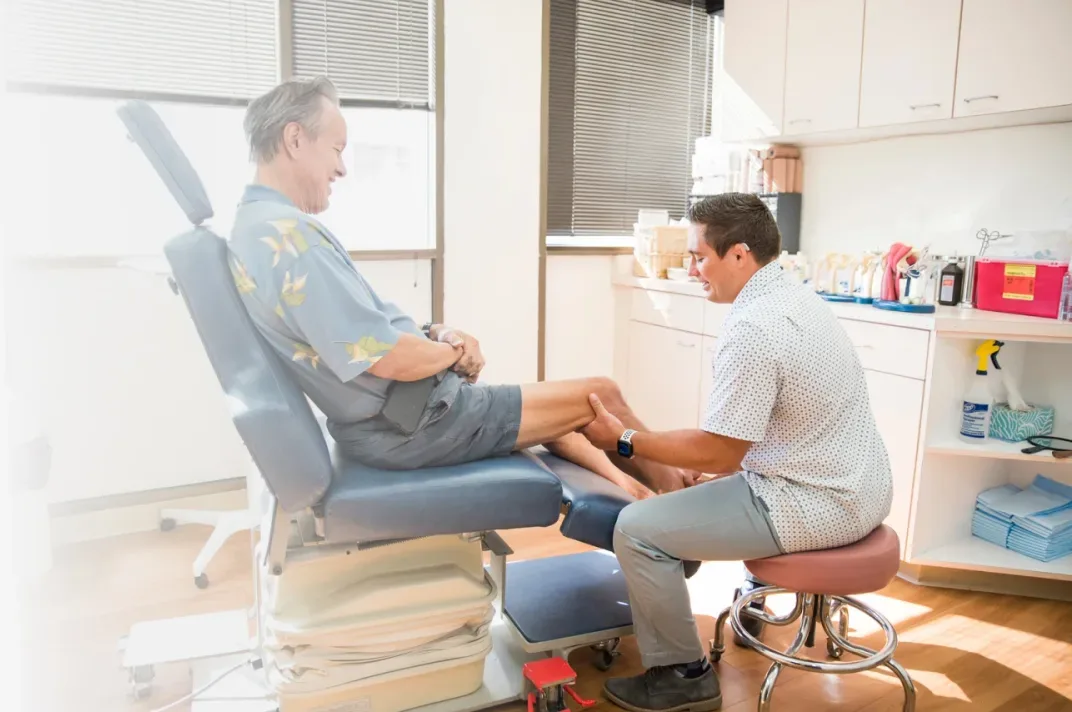
The first visit is mostly detective work: a focused exam and an X-ray, which together explain the majority of knees on the spot. An MRI is added only when a specific question remains — usually about the meniscus, a ligament, or the cartilage surface. From there the treatment menu is far wider than most patients expect. Depending on the diagnosis, Dr. Morton may recommend a brace, targeted physical therapy — available in-house at the Honolulu and Kunia clinics — anti-inflammatory medication, or injections to quiet the joint — cortisone or gel for a flare, or biologics such as PRP and BMAC in a knee that still has cartilage to protect. If a structural problem genuinely needs fixing, options run from knee arthroscopy for meniscus tears and loose bodies, to meniscus repair and ACL reconstruction, to partial and total knee replacement for arthritis that has run out of smaller answers — most of it performed as same-day, outpatient surgery. A consultation usually answers the question in one visit, and if you're on a neighbor island, it can start by telehealth when an in-person visit isn't practical — Dr. Morton also sees patients in person at his Hilo and Kona clinics.
Which treatment path fits your knee?
Once the cause is named, the next step usually falls into one of a handful of paths — and each one has its own guide:
- Bone-on-bone arthritis that runs your day → robotic knee replacement, or a partial knee when only one compartment is worn
- Arthritis that still has cartilage to protect → injections, PRP or BMAC, and the rest of the non-surgical ladder
- A twist, a pop, and a knee that gives way → ACL evaluation and reconstruction
- Joint-line pain with clicking, catching or locking → meniscus repair or arthroscopy
- Knee pain that's really coming from the hip → a hip evaluation, and hip replacement when the hip is the worn joint
- Not sure? → a consultation — the exam decides, not the internet
Your first visit: what happens and what to bring
Book online or call (808) 439-6201; most new patients are seen within one to two weeks at the Honolulu (Ala Moana), West O‘ahu (Kunia), Hilo or Kona clinic. Bring a photo ID, your insurance card, a list of current medications, and any prior X-rays or MRI — imaging taken in Hawai‘i can usually be retrieved electronically, and new standing X-rays are taken in clinic the same day. PPO plans and traditional Medicare generally allow self-referral; managed-care and Medicaid/Quest plans need a referral from your primary care physician, which the office helps arrange. Telehealth is available when an in-person visit isn't practical, with X-rays ordered near home first.
- Visit 1
Exam + X-ray
A focused exam and weight-bearing X-rays, taken in clinic the same day, explain most knees on the spot.
- Same visit
A named diagnosis
MRI is added only when a specific question remains — usually the meniscus, a ligament, or the cartilage surface.
- Your plan
Least invasive first
Therapy, bracing, or injections before any operation; surgery only when structure genuinely needs fixing.
- Follow-up
Reassess and escalate
If a rung stops working, the next one is under the same roof — up to same-day robotic knee replacement.
Why patients trust Dr. Morton with their knees
Dr. Paul Morton is a board-certified, fellowship-trained hip and knee surgeon who treats the full spectrum of knee problems — from the sprain that needs nothing but reassurance to the complex revision that needs everything he has. Patients choose him because the whole ladder lives under one roof:
- Board-certified, fellowship-trained specialist in knee reconstruction
- Non-operative and operative treatments — surgery is never the only option offered
- Minimally invasive techniques with smaller incisions, including minimally invasive total knee and partial knee replacement
- Certified on all four robotic platforms — ROSA, Mako, CORI, and VELYS — for robotic-assisted joint replacement
- Most surgeries performed as same-day, outpatient procedures
- Handles revision knee replacements and complex operations other surgeons refer out
- Trauma surgeon at The Queen's Medical Center, Hawai'i's Level 1 trauma center
- Clinics in Honolulu (Ala Moana), West O‘ahu (Kunia), Hilo, and Kona — read his patient reviews, then book a consultation or call (808) 439-6201
Medically reviewed by Paul Norio Morton, MD, FAAOS, FAAHKS. Last reviewed: . This article is for education only and isn’t a substitute for an exam and personalized advice — schedule a consultation to discuss your situation.