
What causes pain on the inside of the knee? The short answer
Inner-knee pain usually comes from one of three structures: the medial meniscus (a twist, then clicking or catching), the MCL (a blow to the outer knee), or medial-compartment arthritis (gradual aching after 50). Pes anserine bursitis mimics all three from just below the joint line. Dr. Paul Morton, a fellowship-trained knee surgeon in Honolulu, sorts them out with an exam and a plain X-ray — usually in one visit.
- Age and exact location do most of the diagnostic work: joint-line pain after a twist at 30 is usually meniscus; the same pain arriving gradually at 65 is usually arthritis
- Tenderness two finger-widths below the joint line points to pes anserine bursitis, not the joint
- Most inner-knee pain without red flags earns a few weeks of self-care first
- Isolated medial arthritis has an option many patients never hear about: robotic partial knee replacement
- Clinics in Honolulu (Ala Moana), West O‘ahu (Kunia), Hilo and Kona — (808) 439-6201
Why the inner knee hurts so often
The inside of the knee is crowded real estate. The medial compartment carries most of your body weight with every step, the medial meniscus cushions it, the MCL stabilizes it, and three tendons drape over the inner shin just below the joint line. When the inner knee hurts, at least ten different structures could be responsible — and the right treatments range from a couple of weeks of rest to resurfacing the worn compartment.
Two clues do most of the diagnostic work: your age, and exactly where the pain sits. Joint-line pain in a 30-year-old after a twist is usually meniscus. The same pain arriving gradually at 65 is usually arthritis. Pain two finger-widths below the joint line is usually pes anserine bursitis. Here are the ten causes I see most often, roughly in the order I look for them.
Causes 1–3: meniscus, MCL, and arthritis
1. Medial meniscus tear — the most common structural cause of inner-knee pain. Younger patients tear it with a twist; over 40, it often tears from wear alone. Joint-line tenderness, clicking or catching, and pain with squatting and pivoting are classic. Treatment depends on the tear pattern and the state of the surrounding cartilage — some tears warrant repair, and many do well without surgery at all.
2. MCL sprain. The medial collateral ligament is injured by a blow to the outer knee or a ski-style twist, with pain running above and below the joint line along the ligament itself. The MCL has an excellent blood supply, and most sprains heal with bracing and therapy rather than surgery. When the same twist also tears the ACL — common in pivoting sports — the knee feels unstable rather than just sore, and the plan changes.
3. Medial compartment osteoarthritis. The inner compartment is where knee arthritis usually begins. The pattern: activity-related aching, stiffness after sitting, swelling after busy days, and often a slowly bowing leg. The guide to hip and knee arthritis covers the full treatment ladder.
Causes 4–6: bursitis, plica, and the kneecap's inner ligament
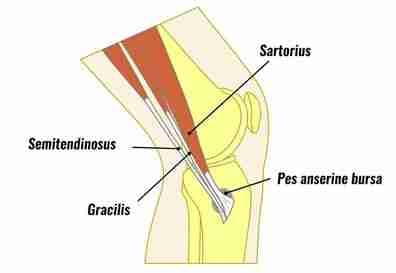
4. Pes anserine bursitis. Three tendons converge on the inner shin about two finger-widths below the joint line, cushioned by a small bursa that flares with overuse — commonly in walkers, runners, and patients who also have arthritis. The tenderness sits below the joint rather than on it, which is the giveaway. It settles with therapy, hamstring stretching, and occasionally an injection.
5. Medial plica syndrome. A plica is a normal fold of joint lining; in some knees it thickens and snaps over the inner edge of the femur, causing an ache and sometimes a palpable band that clicks as the knee bends. Most cases respond to therapy and anti-inflammatories.
6. MPFL injury after a kneecap dislocation. When the patella dislocates, it tears the medial patellofemoral ligament — the checkrein on the inner side of the kneecap. The result is inner-knee pain plus apprehension that the kneecap will slip again, most often in younger athletes. Recurrent instability deserves an orthopedic evaluation before it damages cartilage.
Causes 7–10: bone, crystals, nerves, and the hip
7. Spontaneous osteonecrosis of the knee (SONK). A sudden, severe inner-knee ache — classically in patients over 60, often worst at night, with no injury — can signal a stress reaction or loss of blood supply in the inner part of the femur. X-rays may look normal early; MRI makes the diagnosis. Caught early, some cases heal with protected weight-bearing; advanced collapse may need partial or total knee replacement.
8. Gout and pseudogout. Crystal flares make the knee hot, swollen, and exquisitely tender within hours, and pseudogout particularly favors the knee. A first hot, swollen knee needs prompt evaluation to rule out infection.
9. Saphenous nerve irritation. A branch of this nerve crosses the inner knee and can be irritated by direct pressure, entrapment, or prior surgery — causing burning inner-knee pain despite normal imaging.
10. Referred pain from the hip. An arthritic hip can send pain down to the inner knee — some patients feel it only in the knee. When the knee looks healthier than it feels, we examine the hip; see the common causes of hip pain.
Self-care that helps most inner-knee pain
Most inner-knee pain without red flags earns a few weeks of self-care first. The aim is simple: unload the medial side, calm the inflammation, and keep the muscles that protect the compartment strong. And self-care is not a lesser option — for bursitis, plica irritation, and mild MCL sprains it is the treatment, and doing it consistently for several weeks is what makes it work. Consistency beats intensity here: ten minutes of strengthening daily does more than an hour once a week. Stop self-treating sooner if the knee locks, gives way, can't bear weight, or becomes hot and swollen — those knees need a diagnosis, not more rest.
- Relative rest — trim the aggravating activity rather than stopping all movement
- Ice the painful spot 15–20 minutes at a time after activity
- Over-the-counter anti-inflammatories, used as directed
- Quad, hip, and hamstring strengthening — the muscles that shield the medial compartment
- Supportive shoes; some patients with medial arthritis feel better in an unloader brace
- Weight management — the medial compartment feels every extra pound
Targeted treatment — including partial knee replacement for isolated medial arthritis
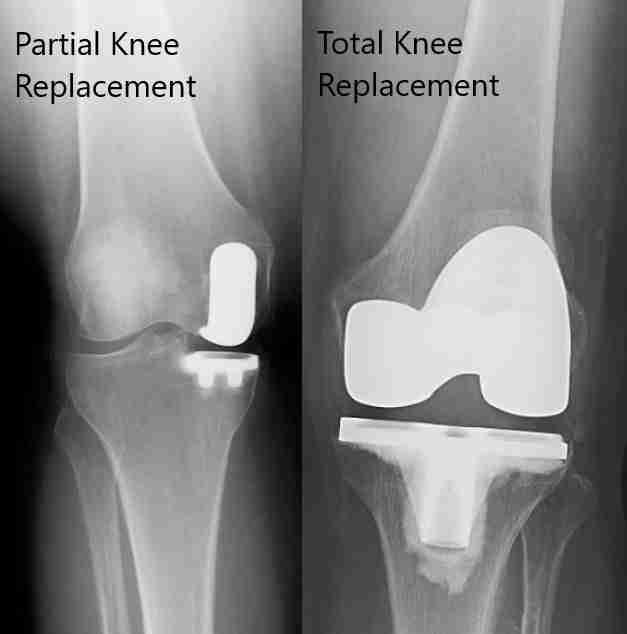
When self-care isn't enough, treatment is matched to the structure. Meniscus tears may need arthroscopy or repair. Bursitis and plica syndrome respond to therapy and targeted injections. Crystal disease is managed medically. And isolated medial-compartment arthritis has an option many patients have never been offered: partial knee replacement, which resurfaces only the worn inner compartment through a smaller operation, preserving the ACL and the healthy rest of the knee — same-day discharge is common. When arthritis involves more of the joint, total replacement remains the durable answer; the comparison of partial versus total knee replacement walks through the tradeoffs.
Which treatment path fits your inner knee?
The ten causes above funnel into a handful of treatment paths. Match your pattern to the path, then let the exam confirm it:
- Isolated medial arthritis, ligaments intact → robotic partial knee replacement
- Arthritis across the whole joint → total knee replacement, most often same-day
- Meniscus tear with catching or locking → meniscus repair or arthroscopy
- Instability after a twist → ACL evaluation
- Early arthritis with cartilage still to protect → injections, PRP or BMAC
- Bursitis, plica, or nerve irritation → therapy and targeted injections — surgery is rarely part of the answer
Your next step: one visit, one X-ray
The first step is the same for all ten causes: an exam and a plain X-ray, taken in clinic, which answer most questions in one visit. If your inner knee has been talking to you for more than a few weeks, schedule a consultation or call (808) 439-6201 — clinics in Honolulu (Ala Moana), West O‘ahu (Kunia), Hilo and Kona, and most new patients are seen within one to two weeks. Bring a photo ID, your insurance card, a medication list and any prior imaging; managed-care and Medicaid/Quest plans need a referral from your primary care physician, which the office helps arrange. Telehealth is an option when an in-person visit isn't practical — neighbor island patients often start there with X-rays taken near home.
- Visit 1
Exam + X-ray
Joint-line tenderness, ligament testing, and standing X-rays taken the same day sort most inner knees on the spot.
- If needed
MRI for a specific question
Ordered when the meniscus, MCL, or a suspected SONK lesion would change the plan — not as a first test.
- Your plan
Least invasive first
Therapy, an unloader brace, or targeted injections before any operation.
- If it's structural
Matched to the structure
Meniscus repair, or a robotic partial knee for isolated medial arthritis — same-day discharge is common.
Medically reviewed by Paul Norio Morton, MD, FAAOS, FAAHKS. Last reviewed: . This article is for education only and isn’t a substitute for an exam and personalized advice — schedule a consultation to discuss your situation.