
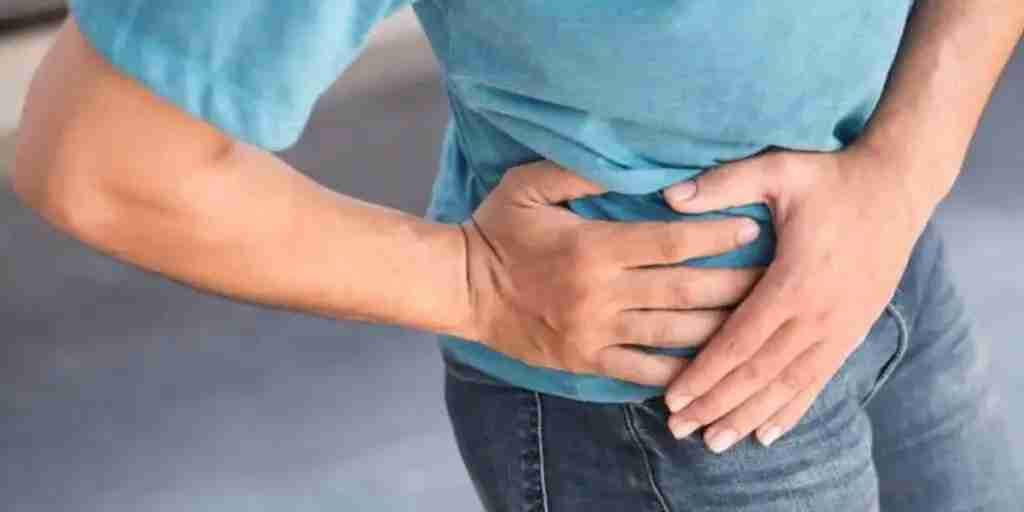
What causes hip pain? The short answer
Five problems explain most hip pain: osteoarthritis (deep groin ache after 50), avascular necrosis (groin pain in younger adults), hip fracture (after a fall), tendinitis or bursitis (outer-hip pain), and labral tears with impingement (sharp groin pain in active adults). Dr. Paul Morton, a fellowship-trained hip surgeon in Honolulu, tells them apart with an exam and a plain X-ray — usually in one visit.
- Location is the first clue: groin pain is usually the joint, outer-hip pain is usually tendon or bursa, and buttock pain often isn't the hip at all
- Arthritis is the most common and most treatable cause, with a full ladder from injections to hip replacement
- Unexplained groin pain in a younger adult should never be brushed off — early AVN can be treated before the ball collapses
- Outer-hip bursitis is the one cause on the list that rarely needs surgery
- Clinics in Honolulu (Ala Moana), West O‘ahu (Kunia), Hilo and Kona — (808) 439-6201
First, where does it hurt?
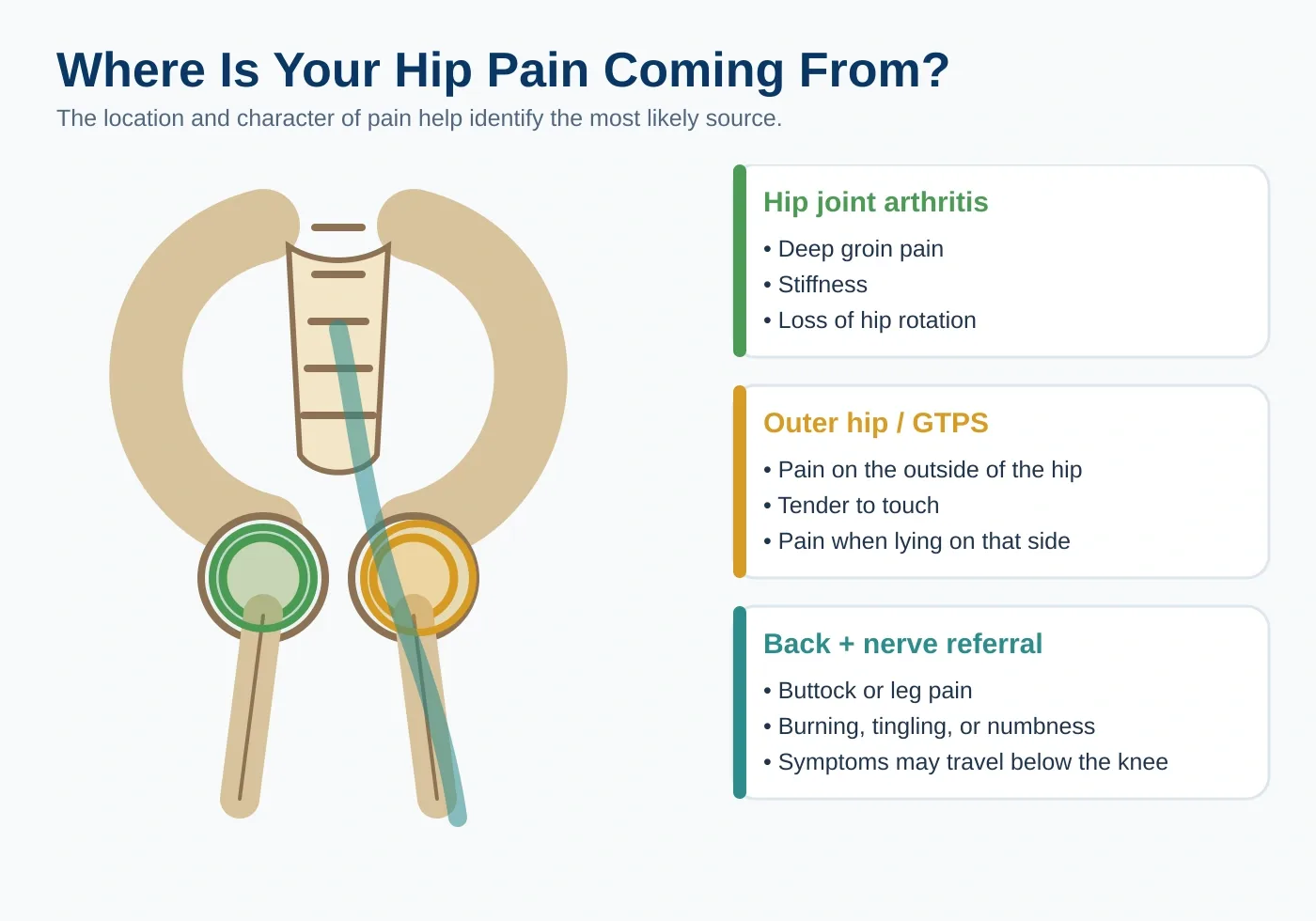
Location is the single most useful clue in hip pain. Pain from the hip joint itself is usually felt in the groin — not the side of the hip, where most people point. Pain over the outer hip typically comes from the tendons and bursae that lie over the bone, not the joint. Pain in the buttock often isn't hip at all; it frequently traces back to the lower spine or the sacroiliac joint.
None of this replaces an exam and imaging, but it explains why two people who both say "my hip hurts" can have completely different problems — and completely different treatments. How the pain started matters too: an ache that crept in over a year is a different conversation from pain that began with a fall or a specific twist. With that map in mind, here are the five causes I see most often.
1. Osteoarthritis
Osteoarthritis is the most common cause of hip pain in adults over 50. The smooth cartilage lining the ball-and-socket joint wears away, and bone begins to grind on bone. The classic picture: deep groin ache, stiffness that's worst after sitting or first thing in the morning, trouble putting on socks and shoes, and a slowly shrinking walking range.
Arthritis is also the most treatable cause on this list, with a full ladder of options. Early disease often responds to activity modification, weight management, anti-inflammatories, and injections. When arthritis progresses past what therapy and injections can hold — bone-on-bone on X-ray and pain that runs your schedule — total hip replacement in Honolulu is one of the most successful operations in medicine. Dr. Morton performs it through a muscle-sparing anterior approach, and most patients walk the day of surgery; individual results vary. You can read more about how joint wear develops and progresses in the guide to hip and knee arthritis.
2. Avascular necrosis (osteonecrosis)
Avascular necrosis (AVN) is bone death in the ball of the hip caused by loss of blood supply. The weakened bone can collapse, destroying the joint from the inside. Unlike osteoarthritis, AVN often strikes adults in their 30s, 40s, and 50s — and it's linked to prolonged corticosteroid use, heavy alcohol use, prior hip trauma, and conditions like sickle cell disease, though some cases have no identifiable cause.
AVN is the reason unexplained groin pain in a younger adult should never be brushed off. Early, pre-collapse disease may be treatable with joint-preserving surgery; once the ball collapses, replacement becomes the answer. X-rays can be normal early on, so MRI is often needed. The full picture — stages, preservation options, and when replacement makes sense — is covered in the guide to avascular necrosis of the hip.
3. Hip fractures
A hip fracture is the emergency on this list. In older adults, it usually follows a fall — often a simple one from standing height — and the leg may look shortened and turned outward, with pain that makes standing impossible. Nearly all hip fractures need prompt surgery, both to fix the bone and to get the patient out of bed before complications set in. The repair may be fixation or replacement, depending on where the bone broke.
Two points worth knowing. First, a break from a minor fall usually signals osteoporosis, so treating the bone matters as much as fixing the fracture. Second, not every fracture is dramatic: stress fractures of the femoral neck can develop gradually in runners and in older adults with fragile bone, causing groin pain with activity long before anything shows on an X-ray.
4. Tendinitis and bursitis
If your pain lives on the outside of the hip — sore when you lie on that side, climb stairs, or get up after sitting — the most likely culprits are the gluteal tendons and the bursa that cushions them over the bony prominence of the femur. Doctors group these under greater trochanteric pain syndrome; patients know them as hip bursitis or tendinitis.
The good news: this is the one cause on the list that rarely needs surgery. Most cases settle with activity modification, targeted physical therapy to strengthen the gluteal muscles, anti-inflammatories, and an injection when needed. For stubborn tendon problems, orthobiologic options such as platelet-rich plasma (PRP) use concentrated growth factors from your own blood to support tendon healing. The key is confirming the diagnosis — outer hip pain is sometimes referred from the spine or from an arthritic joint, and treating the wrong one wastes months.

5. Labral tears and impingement
The labrum is a ring of cartilage that rims the hip socket and deepens its grip on the ball. In younger, active adults — surfers, runners, dancers, anyone who squats and pivots — the labrum can tear, often because of femoroacetabular impingement (FAI): subtle extra bone on the ball or socket that pinches the labrum with deep hip flexion.
The typical story is sharp groin pain with deep squats, long sitting, or twisting, sometimes with catching or clicking. Treatment starts conservatively — activity modification, physical therapy to improve hip mechanics, and an injection that can both treat and confirm the diagnosis. When symptoms persist, surgical options exist, and long-standing impingement can contribute to early arthritis, which is why persistent groin pain in an athlete deserves a real diagnosis. Joint-preserving strategies for active patients are covered under sports and joint preservation.
Which treatment path fits your hip?
Each of the five causes has its own path. Match your pattern to the path below, then let the exam and X-ray confirm it:
- Groin ache, stiffness, bone-on-bone on X-ray → anterior hip replacement when injections and therapy no longer hold
- Early arthritis with cartilage still to protect → injections and, in the right joint, PRP or BMAC
- Groin pain in your 30s–50s with steroid or alcohol exposure → MRI for avascular necrosis — preservation surgery before collapse, replacement after
- Outer-hip pain, sore lying on that side → therapy, an injection, and PRP for stubborn gluteal tendons
- Sharp groin pain with deep squats or pivoting in an athlete → joint-preservation evaluation for a labral tear or impingement
- Buttock pain that isn't the joint → the SI joint or spine — treated at the source
- Pain after a fall, can't bear weight → same-day care; fracture fixation or replacement
When to see a specialist — and the red flags
A simple rule: hip pain that limits your normal life for more than a few weeks despite rest and over-the-counter measures deserves an evaluation. An exam and a plain X-ray answer most questions in a single visit, and early diagnosis protects options — especially for AVN and stress fractures, where waiting closes doors.
Some symptoms shouldn't wait weeks. Seek prompt care for any of the red flags below. For everything else, book a consultation or call (808) 439-6201 — clinics in Honolulu (Ala Moana), Kunia, Hilo and Kona, with most new patients seen within one to two weeks. Bring a photo ID, your insurance card, a medication list and any prior imaging; managed-care and Medicaid/Quest plans need a referral from your primary care physician, which the office helps arrange. If you're on a neighbor island, the visit can start by telehealth when travel isn't practical, with X-rays taken near home first.
- Inability to bear weight, or hip pain after a fall — same-day evaluation
- Fever or chills with hip pain — possible joint infection
- Pain that wakes you at night or pain at rest
- Groin pain in a younger adult with steroid or heavy alcohol exposure
- Numbness, tingling, or weakness in the leg
- Pain persisting beyond a few weeks despite rest and activity changes
Medically reviewed by Paul Norio Morton, MD, FAAOS, FAAHKS. Last reviewed: . This article is for education only and isn’t a substitute for an exam and personalized advice — schedule a consultation to discuss your situation.