

BMAC injections in Honolulu — the short answer
BMAC is a same-day procedure: marrow is drawn from the back of your pelvis, spun to concentrate its cells, platelets, and growth factors, and injected where bone or a joint needs help. Its best-supported use is early hip avascular necrosis with core decompression. For knee arthritis, trials have not shown BMAC beats PRP or placebo, so Dr. Paul Morton offers it selectively, cash-pay, with that caveat stated up front.
- Your own tissue — harvested, concentrated, and injected in one visit; no laboratory culture or expansion
- Best evidence — pre-collapse hip AVN, where marrow concentrate is added to core decompression
- For arthritis — trials show results similar to PRP; BMAC is not a stronger version of the same shot
- Recovery — a sore harvest site for a few days, light activity within days, improvement judged over four to twelve weeks
- Where — Pacific Bone & Joint clinics in Honolulu (Ala Moana), West O‘ahu (Kunia), Hilo, and Kona; AVN procedures in the operating room
What BMAC is
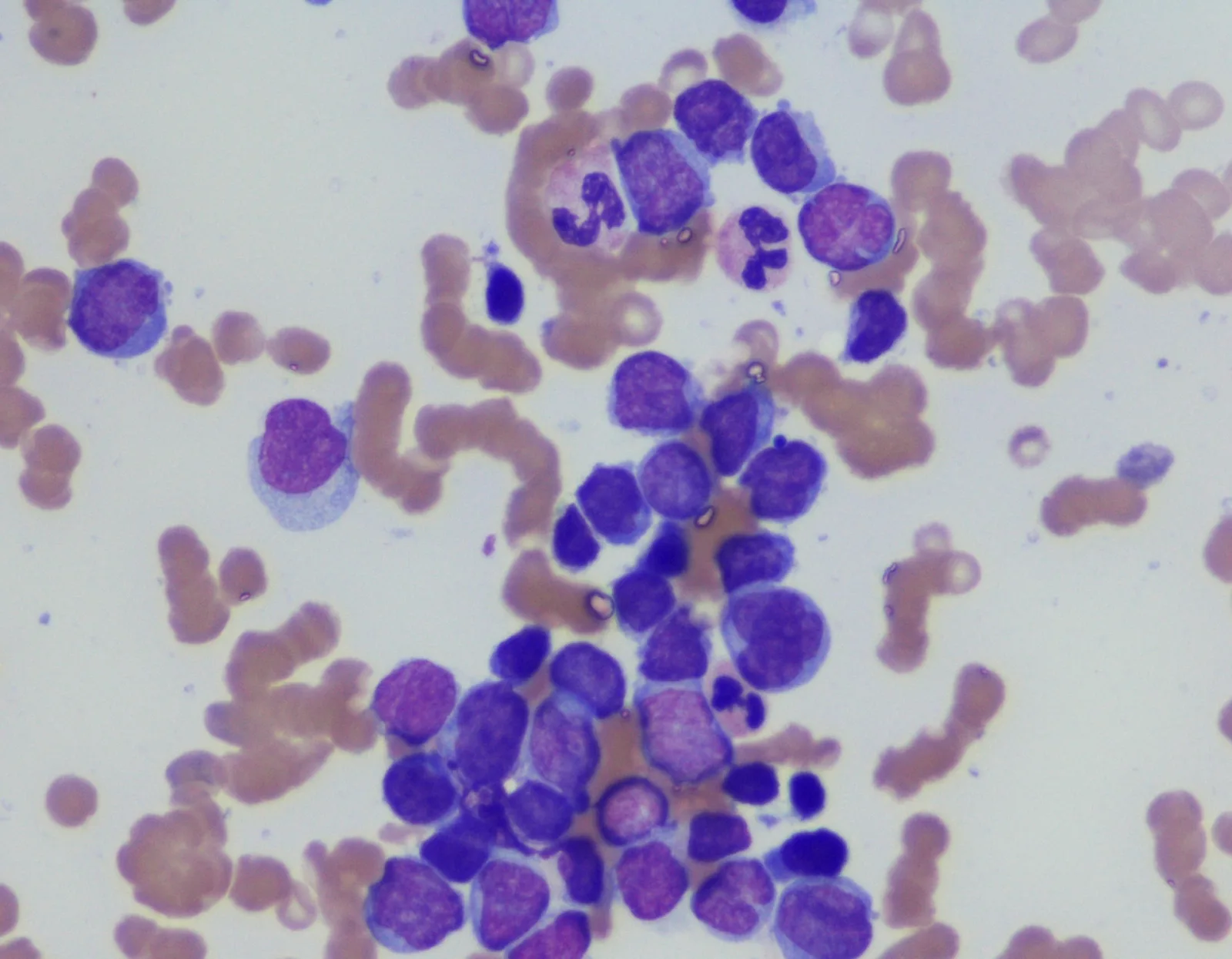
Your bone marrow is where your body manufactures repair capacity: mesenchymal stromal cells (often called "stem cells"), hematopoietic cells, platelets, and a dense mix of growth factors. BMAC — bone marrow aspirate concentrate — harvests a sample of that marrow from the back of your pelvis, spins it in a centrifuge to concentrate the biologically active fraction, and injects it into the joint, bone, or tissue being treated. One visit, your own cells, no laboratory manipulation.
One honest correction to the marketing: mesenchymal stromal cells are a small fraction of what's in the syringe. Most of the concentrate is platelets, other marrow cells, and growth factors — which is part of why, in head-to-head trials for arthritis, BMAC behaves much like PRP.
Where the evidence is strongest: early hip avascular necrosis
The best-supported orthopedic use of bone marrow concentrate is avascular necrosis (AVN) of the femoral head caught before the ball collapses. The standard joint-preserving operation is core decompression — drilling into the dead segment to relieve pressure and open channels for new blood supply — and marrow concentrate is delivered into that channel to improve the biology of healing.
The foundational series comes from Hernigou and Beaujean, Clinical Orthopaedics and Related Research, 2002: 189 hips treated with core decompression plus concentrated autologous marrow and followed for five to ten years. Among hips treated before collapse, 9 of 145 went on to hip replacement; among hips treated after collapse, 25 of 44 did. Two lessons follow. First, stage decides everything — this is a pre-collapse procedure. Second, patients who received more progenitor cells did better, which is why harvest and concentration technique matter.
Dr. Morton performs core decompression with BMAC as an image-guided, usually outpatient operation, with the navigated targeting described on the AVN page. Once the femoral head has collapsed, no biologic rescues it — anterior hip replacement becomes the reliable answer, and he will say so.
BMAC for knee and hip arthritis: what the trials actually show
You've seen "stem cell" clinics promising regrown joints. Here is what the randomized evidence says about marrow concentrate for osteoarthritis:
- A Mayo Clinic trial (Shapiro et al., American Journal of Sports Medicine, 2017) gave 25 patients with arthritis in both knees BMAC in one knee and saline in the other. Pain improved substantially in both knees over six months, with no significant difference between the BMAC knee and the placebo knee.
- A 90-patient randomized trial (Anz et al., 2020 and 2022) compared a single BMAC injection with a single PRP injection for mild-to-moderate knee arthritis. Both groups improved; there was no difference between BMAC and PRP at any point out to 24 months.
Dr. Morton's read of the evidence is blunt, and it's the same on every page of this site: for osteoarthritis, these injections remain experimental. Many studies have been done, most show minimal improvement, and none has demonstrated that stem cells reliably fix orthopedic problems — yet the price tags are often enormous. BMAC does not regrow a knee.
So why offer it for arthritis at all? Selectively: for a moderate knee or hip that still has cartilage to protect, where PRP has been tried and hasn't held, and where the patient understands that the trials show a similar — not superior — result. In that setting it's offered cash-pay, with the caveat stated up front, never as the only product on the shelf. If a joint has passed the point where biologics make sense, Dr. Morton will tell you plainly and walk you through what will actually fix it.

Are you a candidate for BMAC?
Candidacy follows the diagnosis and the stage of the joint — decided by an exam and imaging, not by a menu.
You may be a candidate if…
- You have early, pre-collapse avascular necrosis of the hip on MRI, especially a smaller lesion — the setting where core decompression with marrow concentrate has the best track record
- You have moderate knee or hip arthritis that still has cartilage to protect, PRP has been tried and hasn't held, and you understand the trial results above
- You have a stubborn tendon or cartilage lesion that a surgeon judges appropriate for biologic augmentation — selected cases, honestly framed
- You are having a joint-preserving operation where adding marrow concentrate may support healing
It may be the wrong tool if…
- The femoral head has already collapsed — preservation rarely succeeds, and hip replacement is the reliable answer
- Your joint is bone-on-bone — no biologic rebuilds absent cartilage
- You have mild-to-moderate arthritis and haven't tried PRP — it's less invasive, and trials show a similar result
- You have an active infection, a bleeding disorder, or a blood or bone-marrow cancer
The way to find out which group you're in is a proper evaluation with imaging. Book a consultation or call (808) 439-6201.
BMAC vs PRP vs cortisone vs hyaluronic acid
Four injections, four different jobs. None regrows cartilage; the figures are the ones Dr. Morton quotes in clinic, and the complete comparison lives on the orthobiologics hub.
| Injection | What it is | Best for | Onset | Typical duration | Downtime | Usually covered? |
|---|---|---|---|---|---|---|
| BMAC (this page) | Your own bone marrow cells, platelets, and growth factors, concentrated | Early hip AVN with core decompression; selected arthritis when PRP hasn't held | 4–12 weeks | Varies by diagnosis; trials show no advantage over PRP for knee arthritis | Sore harvest site for a few days; light activity within days | Rarely — cash-pay, quoted before you decide |
| PRP | Your own platelets and growth factors, concentrated from a blood draw | Mild–moderate knee arthritis, some tendinopathies, select meniscus problems | 2–6 weeks | Often 6–9 months in responders; not everyone responds | Light activity same day; no strenuous exercise for 2–4 weeks | Rarely — cash-pay, quoted before you decide |
| Cortisone | Steroid plus a local anesthetic | Calming an arthritis flare quickly; also a diagnostic test | Numbing within minutes; steroid in 2–3 days | About 3 months on average; capped at 3–4 per joint per year | Same-day activity | Usually yes |
| Hyaluronic acid gel | A lubricant the joint makes naturally, given as one shot or a series of 3–5 | Mild–moderate knee arthritis that feels dry and grinding; a steroid-free choice for diabetes | Builds over 2–3 weeks | Several months when it works; evidence is mixed | Easy day; no hard impact for a day or two | Often, for knee arthritis (prior authorization common) |
The practical order for an arthritic joint usually runs cortisone or gel first (often covered), then PRP, with BMAC reserved for the specific situations above. The injections page covers how each is placed and why guidance matters; hip and knee arthritis explains the full treatment ladder.
What the procedure feels like, step by step
The marrow draw sounds worse than it is. With local anesthetic (and sedation if you prefer), most patients describe pressure rather than sharp pain during the aspiration from the iliac crest. The sample is concentrated on-site while you wait, then injected into the target under image guidance.
- Step 1
Diagnosis and staging
Exam plus X-ray and MRI confirm the diagnosis and the stage, and decide whether BMAC is the right tool at all.
- Step 2
Numbing or sedation
Local anesthetic at the back of the pelvis; sedation is available for anyone who wants it.
- Step 3
Marrow draw
Marrow is aspirated from the posterior iliac crest — pressure rather than sharp pain for most patients.
- Step 4
Concentrate
The sample spins in a centrifuge in the same visit to concentrate cells, platelets, and growth factors.
- Step 5
Image-guided injection
The concentrate goes into the joint, the decompressed bone, or the tissue under ultrasound or X-ray guidance.
- Step 6
Home the same day
Sore harvest and injection sites for a few days; light activity within days; results judged over weeks.
Risks, stated plainly
BMAC uses your own tissue, so there is nothing foreign to reject — but it is not risk-free, and the marrow draw carries risks of its own that "soreness" doesn't cover.
- Harvest-site pain — like a deep bruise at the back of the pelvis for a few days; the most common complaint
- Bleeding or hematoma at the harvest site, more likely in patients on blood thinners — which is why those medications are coordinated with your prescriber beforehand
- Infection — rare, at either the harvest or the injection site; sterile technique keeps it rare
- Nerve irritation or injury near the posterior iliac crest — uncommon, and minimized by image-guided technique and an experienced operator
- Injection-site flare — swelling and fullness in the treated joint for a day or two
- Sedation risks — if you choose sedation, the usual precautions apply and you'll need a ride home
- The biggest risk is disappointment — an honest candidacy conversation, before you pay, is the best protection
Recovery timeline
Recovery depends on what was treated — an office injection into a knee and a core decompression of the hip are different procedures. In broad strokes:
| When | What to expect | What to do |
|---|---|---|
| Day of procedure | Local anesthetic (sedation if chosen); pressure rather than sharp pain during the marrow draw; home the same day | Arrange a ride if you had sedation; rest |
| Days 1–3 | Soreness at the harvest site like a deep bruise, plus soreness and fullness at the injection site | Ice, acetaminophen, short walks; avoid NSAIDs, which can blunt the biologic response |
| First week | Light activity resumes within days | Keep the strengthening plan going; no strenuous loading of the treated joint yet |
| Weeks 4–12 | Gradual improvement as the biology works — this is the window to judge the result | Follow-up visit to measure the response and decide what comes next |
| After core decompression for AVN | Weight-bearing is usually protected — often toe-touch with crutches or a walker for about two weeks | Follow the AVN recovery plan; imaging follow-up tracks bone healing |
Response guides whether repeating treatment ever makes sense. Individual results vary.
Is BMAC FDA-compliant?
Dr. Morton prepares BMAC to stay within FDA rules, and the distinction matters. Under the FDA's "same surgical procedure" exception (21 CFR 1271.15(b)), a physician may remove a patient's own cells or tissue and put them back in the same procedure without the product being regulated as a drug, provided the tissue is only minimally manipulated. BMAC prepared by centrifugation in the same visit — no culturing, no expansion, no additives that change the tissue — is prepared to fit that description, as outlined in the FDA's minimal manipulation and homologous use guidance.
Two things that are not compliant, and that the FDA has warned about in its consumer warning about unapproved stem cell products: laboratory-expanded "stem cells," and marketed amniotic, umbilical-cord, or donor cell products sold as joint cures. Compliant is also not the same as approved — the FDA has not approved BMAC as a treatment for arthritis, which is exactly why insurers call it investigational.
Cost, insurance & how to start
Coverage. Most insurers consider BMAC investigational and do not cover it. The consultation itself — the exam and imaging that decide whether BMAC makes sense — is often covered, and the office verifies your benefits first. Core decompression for AVN is a surgical procedure with its own coverage rules; the office checks before anything is scheduled.
Cost. BMAC is offered as a transparent cash-pay treatment. You'll receive a written quote for exactly what is recommended before you decide — no packages pushed, and no surprises.
How to start. Call (808) 439-6201 or book a consultation online. Dr. Morton evaluates biologic candidates at Pacific Bone & Joint in Honolulu (Ala Moana), West O‘ahu (Kunia), Hilo, and Kona; most new patients are seen within one to two weeks. Bring a photo ID, your insurance card, a list of current medications (especially any blood thinner), and any prior X-rays or MRI — for suspected AVN, the MRI is the key study. Managed-care and Medicaid/Quest plans may need a referral from your primary care physician; the office checks before your visit. When an in-person first visit isn't practical — a neighbor island without a nearby clinic, or a patient traveling from across the Pacific — a video call can start the conversation: a telehealth visit that reviews your imaging if you're in Hawai‘i, or a pre-travel review of your records and imaging if you're farther away. The procedure itself is done in Hawai‘i.
Medically reviewed by Paul N. Morton, MD, FAAOS, FAAHKS — board-certified orthopedic surgeon, fellowship-trained in adult hip & knee reconstruction and orthopedic trauma. Last reviewed: .
This page is for education only and isn’t a substitute for an exam and personalized advice — schedule a consultation to discuss your situation.