
Same-day knee replacement in Honolulu — the short answer
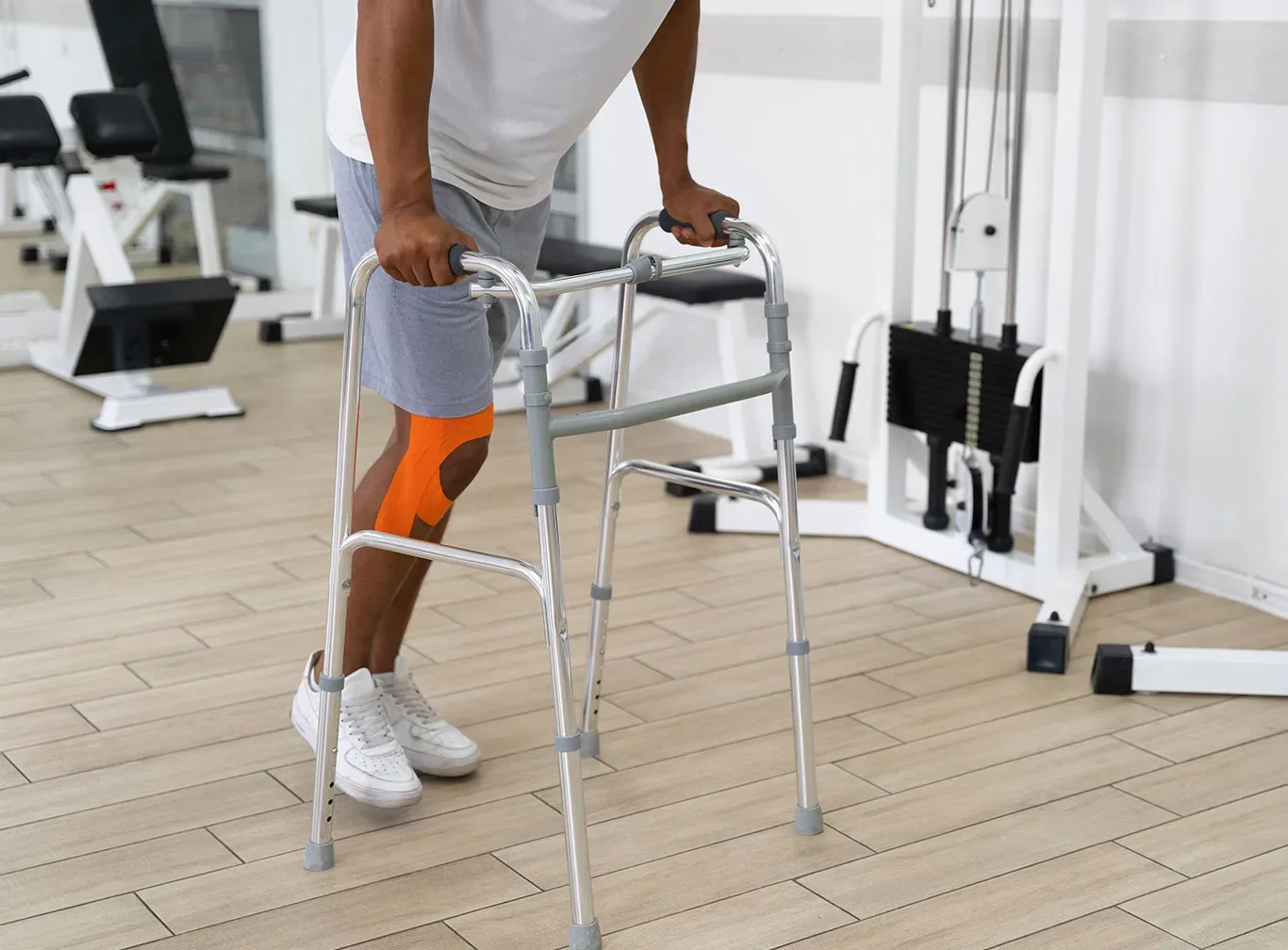
Same-day knee replacement is a full total knee replacement with discharge home in under 24 hours — often the same calendar day. It is for generally healthy, motivated patients with an adult at home. Dr. Morton makes it realistic with a quad-sparing subvastus approach, no tourniquet, robotic precision, and opioid-sparing anesthesia. You walk within hours and go home when you meet safety milestones, not a timer. Individual results vary.
- Facility stay: under 24 hours — often the same day
- Walking: within hours of surgery, with a physical therapist
- Discharge criteria: walking safely, eating and drinking, pain controlled on oral medication
- Backup: an overnight stay is always available; the same surgeon, technique, and implant either way
- Where: The Queen's Medical Center or Adventist Health Castle on O‘ahu; Hilo Community Surgery Center on Hawai‘i Island
What counts as same-day knee replacement?
Same-day knee replacement means going home in under 24 hours — often the same calendar day as your surgery. It is the same total knee replacement, with the same implant and the same precision; what changes is that the protocol removes the reasons patients used to stay in the hospital.
The quad-sparing subvastus approach leaves the muscle that straightens your knee intact, so you can stand safely within hours. No tourniquet means less swelling and thigh pain. Opioid-sparing anesthesia keeps you alert and steady instead of groggy and nauseated. Robotic precision keeps the surgery efficient and the soft tissue protected. Stack those together and, for the right patient, a hospital bed adds little except cost and exposure. It is the flagship of Dr. Morton's broader outpatient joint replacement program, and it reflects a national shift: knee replacement has been moving steadily out of the inpatient ward as techniques have improved. That shift is policy as well as practice: Medicare removed total knee replacement from its inpatient-only list effective January 1, 2018 (CMS CY 2018 hospital outpatient final rule) and added it to the list of procedures covered at ambulatory surgery centers effective January 1, 2020 (CMS CY 2020 outpatient and ASC final rule).
Who qualifies for same-day discharge?
Candidacy comes down to health, home support, and motivation — not toughness. At your pre-operative evaluation, Dr. Morton and the anesthesia team review your heart, lungs, medications, and prior anesthesia history to confirm there is no medical reason you need overnight monitoring. Age by itself is not disqualifying; a well-managed medical condition usually isn't either. What matters is the whole picture. Most candidates share a few things in common:
- Generally good health, with medical conditions well controlled
- A responsible adult at home for the first few days
- A home you can navigate safely — a few stairs are fine
- Motivation to get up, walk, and follow the recovery plan
- Cleared at a pre-operative evaluation with the surgical and anesthesia teams
Is going home the same day safe?
For well-selected patients, yes. Studies of outpatient joint replacement report complication rates similar to overnight hospital stays when candidates are screened carefully — the same evidence that led Medicare to move total knee replacement off its inpatient-only list in 2018 — and recovering at home reduces your exposure to hospital-acquired infections, which is a genuine advantage rather than a marketing line.
Safety comes from structure. Before discharge you must be walking safely, keeping food and drink down, with pain controlled on oral medication — the same criteria a hospital uses. You go home with clear written instructions, medications organized, and a plan for pain and swelling. The care team stays in close contact through the first week, you always have a direct way to reach us with concerns, and the program is backed by full hospital access for the rare situation that needs it. The rapid-recovery protocol explains the before-and-after playbook in detail.
Surgery day, hour by hour
Preparation starts before surgery day: a pre-operative visit to organize medications and equipment, simple home setup — clear walkways, a firm chair, ice ready — and clear instructions on eating, drinking, and which medications to hold. Good preparation is most of what makes discharge day boring, in the best sense. On the day itself, the sequence is the same for nearly every knee:
- Morning
Arrive and check in
You check in, meet the anesthesia team, and the operative knee is marked and confirmed.
- Pre-op
Opioid-sparing anesthesia
A spinal or light general anesthetic with nerve blocks and non-opioid medication already on board, so you wake alert rather than groggy.
- Surgery
About 1–2 hours
Robotic-planned total knee replacement through a quad-sparing subvastus approach, without a tourniquet.
- Recovery
First steps
Within hours a physical therapist gets you up: first steps, a short course with the walker, then stairs if your home has them.
- Discharge
Milestones, not a timer
Home once pain is controlled on oral medication, you are walking safely, vital signs are stable, and you understand your instructions.
- Week 1
Close follow-up
Written plan, medications organized, a direct line to the team, and check-ins in person or by telehealth through the first week.
The first week at home
The first few days are the sorest stretch of the whole recovery, and knowing that in advance is half the battle. Your job is simple and repetitive: short, frequent walks around the house, ankle pumps whenever you are resting, ice and elevation between walks, medication on schedule rather than chased after pain flares, and a daily focus on straightening the knee fully. Physical therapy begins on the first or second day home, and your first follow-up, in the office or by telehealth, lands around one week. The care team stays in close contact, and the program is backed by full hospital access for the rare situation that needs it.
- Walk a short lap every hour or two while awake — short and often, not long and rarely
- Ice 15–20 minutes at a time, several times a day; elevate with the ankle above the heart
- Take medication as prescribed, including the daily aspirin or blood thinner in your clot-prevention plan
- Keep the dressing dry; no soaking, pool, or ocean until cleared at six weeks
- Call the office the same day for fever, spreading redness or drainage, new calf pain, or worsening pain
The cost advantage — and where to read the numbers
Going home the same day generally costs less than an inpatient stay for the same operation, which can lower your share as well. The details — Medicare's outpatient pricing, self-pay packages, and what Hawai‘i patients actually pay — are laid out on the outpatient joint replacement program page and the guide to lowering Medicare knee replacement costs. Transparent self-pay pricing is available for patients paying cash or carrying a high-deductible plan. Either way, the office verifies your benefits and gives you real numbers before anything is scheduled.
Where it happens — and how to find out if you qualify
Same-day knee replacement is performed at The Queen's Medical Center or Adventist Health Castle on O‘ahu; Hawai‘i Island patients have a local option at Hilo Community Surgery Center, where Dr. Morton operates with the Mako robot. Pre-operative planning and follow-up run through his Pacific Bone & Joint clinic in Ala Moana or one of his neighbor-island clinics. Not everyone qualifies, and that is fine — the same surgeon, techniques, and implant are available with an overnight stay.
The starting point for either path is an orthopedic consultation at any of Dr. Morton's four Pacific Bone & Joint clinics — Honolulu (Ala Moana), West O‘ahu (Kunia), Hilo, or Kona — or call (808) 439-6201. Most new patients are seen within one to two weeks. Bring a photo ID, your insurance card, a list of current medications, and any prior imaging or operative reports; if your X-rays were taken in Hawai‘i, the office can usually retrieve them electronically, and new standing X-rays are taken in the clinic at the same visit. Managed-care and Medicaid/Quest plans may need a referral from your primary care physician — the office checks before your visit. When an in-person visit isn't practical — a neighbor island without a nearby clinic, or a patient traveling from across the Pacific — a telehealth visit with existing X-rays can start the process. Neighbor island patients who have surgery in Honolulu typically stay on O‘ahu for a period afterward rather than flying home the same day; the destination program plans fit-to-fly clearance in advance, and travel and lodging coordination can be arranged.
Medically reviewed by Paul N. Morton, MD, FAAOS, FAAHKS — board-certified orthopedic surgeon, fellowship-trained in adult hip & knee reconstruction and orthopedic trauma. Last reviewed: .
This page is for education only and isn’t a substitute for an exam and personalized advice — schedule a consultation to discuss your situation.