

First things first: a recall is rarely an emergency
A recall almost never means your implant must come out. Most orthopedic recalls involve specific manufacturing lots, packaging or labeling issues, or surgical instruments — not every implant of that name, and often not implants that are already working well inside patients. Even when a recall does involve an implant design, the recommendation for patients whose joints are functioning normally is usually monitoring, not removal. That isn't the industry minimizing a problem; it's basic surgical math. Taking out a well-fixed, well-functioning implant is a bigger operation than putting one in, with real risks of its own. Trading a joint that works for those risks only makes sense when there is an actual problem to fix — which is why the first step after any recall notice is identification and assessment, not panic. This page walks through how recalls are classified, how to figure out exactly what hardware you have, and what a sensible monitoring plan looks like.
What a recall actually means
In the United States, recalls are classified by the FDA according to the risk they pose, from issues that could plausibly cause serious harm down to problems unlikely to cause any harm at all — and the majority of device recalls sit at the lower-risk end of that range. Many are initiated voluntarily by the manufacturer after internal quality checks. A recall also isn't a verdict on your specific implant: it's a statement that a defined group of devices, sometimes narrowed to particular lot numbers, needs attention. Some recalls apply only to unimplanted stock sitting on hospital shelves and never touch a single patient; others ask surgeons to monitor patients who already have the device; only a small minority carry recommendations that change anyone's care directly. What matters for you personally is a short list of questions. Is your exact implant — manufacturer, model, size, lot — actually included? Is your joint functioning well? And what monitoring, if any, does the situation call for? Those questions have precise answers, and getting them is straightforward.
The metal-on-metal chapter — and what it taught the field
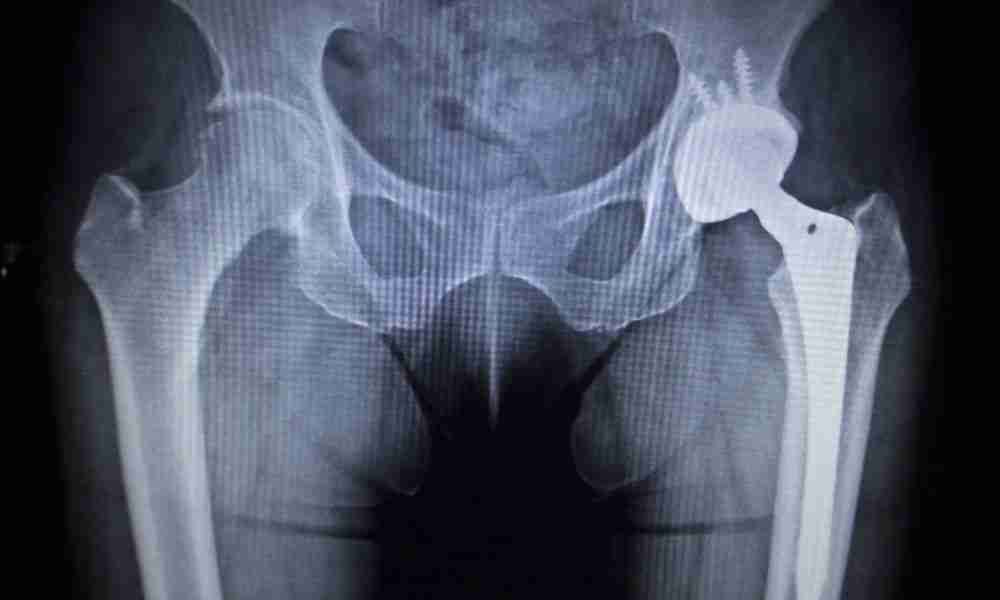
The recalls most patients half-remember from the news involved metal-on-metal hip replacements. A generation ago, hips with a metal ball articulating directly on a metal socket were marketed as a durable option for active patients. In practice, some designs shed microscopic metal debris that could inflame surrounding tissue, and several were withdrawn after higher-than-expected failure rates. Patients who still have metal-on-metal hips deserve structured follow-up — typically periodic symptom checks, X-rays, blood metal-level testing, and specialized MRI when indicated — and many of those hips continue to do well for years under that kind of watch. The episode permanently changed the field for the better: implant registries, longer pre-market evidence, and routine implant surveillance all grew from it. Modern hip replacements use different bearings — highly cross-linked polyethylene and ceramic — precisely because of those lessons. If you have or suspect you have a metal-on-metal hip, that's worth a dedicated visit even without a recall notice in hand: the monitoring pathway is well established, and it works best when it starts before symptoms do.
How to find out exactly what implant you have
You can't act on a recall until you know whether it applies to you, and that means identifying your implant precisely. Start with the implant identification card many patients receive after surgery. If you don't have one, your operative report — available from the hospital where you had surgery — lists the manufacturer, model, sizes, and lot numbers of every component placed. If records are hard to track down because your surgeon retired or you've moved, an experienced arthroplasty surgeon can usually identify an implant's make and model from plain X-rays. Dr. Morton's Revision Hip & Knee Replacement Clinic does this routinely for patients whose surgery was done elsewhere, on the mainland, or overseas. Once identified, keep the details somewhere permanent — photograph the card, save the operative report — so any future notice takes minutes to check rather than weeks of records requests.
- Find your implant card, or request the operative report from your surgical hospital
- Note the manufacturer, model, component sizes, and lot numbers
- Check whether your exact components are included in the recall notice
- Write down any symptoms — pain, swelling, clicking, instability — or note that you have none
- Bring it all to an orthopedic surgeon who handles revisions for an assessment
Surveillance, not panic
If your implant is affected by a recall, the plan in almost every case is structured monitoring. That means a baseline visit with an exam and X-rays, then a schedule of follow-up tailored to the specific issue — sometimes with blood metal-ion testing or Metal Artifact Reduction MRI, both available through Dr. Morton's revision clinic alongside on-site X-ray. Follow-up films are compared side by side with your earlier ones, because trends over time reveal what a single image can't. Most monitored implants never need anything more, and knowing yours is being watched by someone who revises joints for a living is worth a great deal of sleep. Revision surgery enters the conversation only when there is a demonstrated problem: loosening, wear, tissue reaction, or symptoms that a workup ties to the implant itself. If you'd like an independent read on a recall notice — or your current surgeon has retired — a second opinion is a reasonable, low-stakes way to get clarity. And if you live on a neighbor island, the baseline visit can often be arranged around imaging done closer to home. The goal is simple: replace uncertainty with a plan, then get back to your life. Schedule a consultation to start — bring the recall notice, your implant card if you have it, and every question on your mind.

Medically reviewed by Paul Norio Morton, MD, FAAOS, FAAHKS. Last reviewed: . This article is for education only and isn’t a substitute for an exam and personalized advice — schedule a consultation to discuss your situation.