
Why wound care matters after joint replacement
Your incision is the barrier between the outside world and your new joint. Deep infection after hip or knee replacement is uncommon — roughly 0.5% — but it is the complication surgeons work hardest to prevent, because treating an infected implant can mean additional surgery. Nearly every deep infection starts at the skin, which makes the incision the highest-value real estate in your entire recovery.
The encouraging part: most wound problems are preventable, and prevention is split evenly between what happens before surgery and what you do in the weeks after. Dr. Morton's side of the bargain is a layered, watertight closure and a dressing designed to stay sealed; your side is optimization beforehand and disciplined care afterward. This page covers both halves.
Start before surgery: optimize the four big risk factors
How your incision heals is largely decided before the incision exists. Four modifiable factors dominate wound-healing risk, and Dr. Morton addresses each one as part of surgical planning rather than leaving them to chance:
- Nicotine: smoking and vaping constrict the small blood vessels skin needs to heal — quitting well before surgery measurably lowers wound complications
- Diabetes: blood sugar should be under good control before elective joint replacement — many arthroplasty surgeons aim for an A1c below about 8
- Weight: obesity increases wound-healing and infection risk; even modest, steady weight loss before surgery helps
- Nutrition: healing is construction work — adequate protein and key micronutrients matter, and a targeted plan like MEND nutrition can prepare your body to rebuild
Dressing basics and shower rules
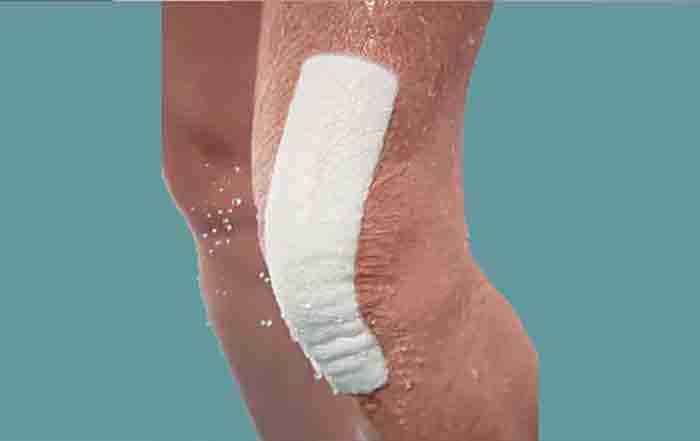
You will leave surgery with a waterproof dressing designed to stay on — usually for one to two weeks, per your specific instructions. Resist the urge to peel it back and peek; every time a dressing comes off early, bacteria get a fresh chance at skin that hasn't sealed.
The everyday rules are simple. Showering is usually allowed early with the waterproof dressing in place — let water run over it, pat dry, no scrubbing. Do not soak the incision: no baths, hot tubs, pools, or ocean until the wound is fully healed and you have been cleared. Skip lotions, creams, and ointments on the incision unless the office tells you otherwise, wash your hands before touching anything near it, and keep pets off the surgical leg. Loose, clean clothing over the site beats anything that rubs.
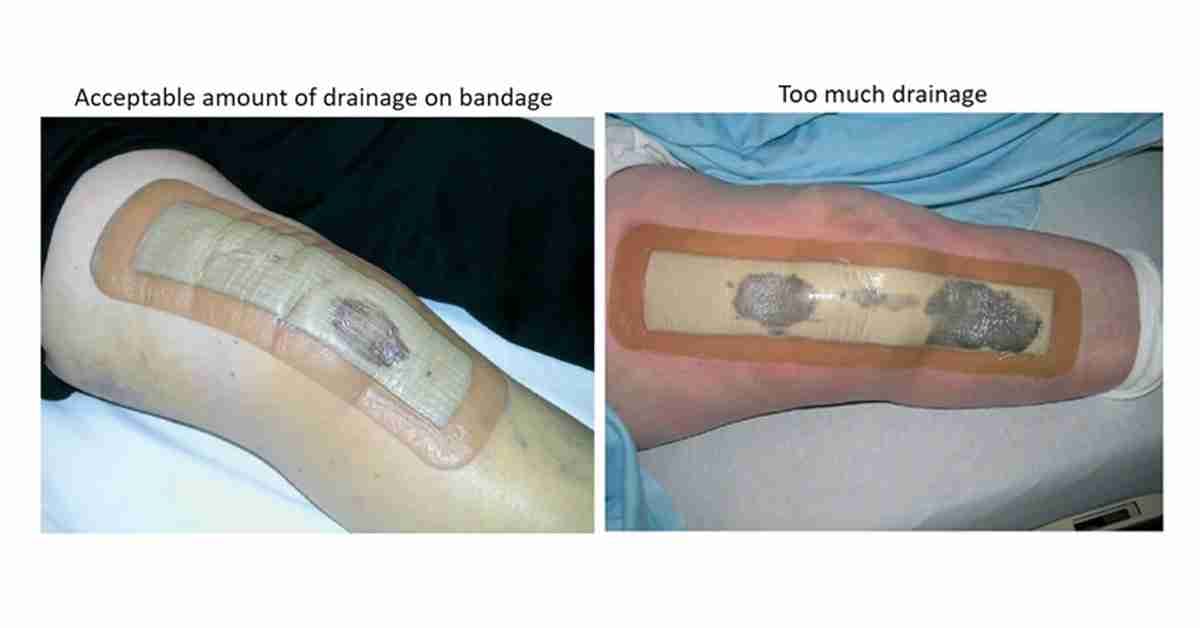
A few things that look alarming but usually aren't: bruising around the incision, mild swelling, and a small edge of the dressing lifting are all common. Elevation and ice control swelling, and less swelling means less tension on the healing skin — the quiet reason the early exercises help your wound as much as your joint. If the dressing lifts enough to expose the incision or fills with fluid, call before improvising a fix.
Warning signs: when to call the office
Call early. A wound concern evaluated promptly is usually a small problem; the same concern a week later may not be. Call (808) 439-6201 during office hours; after hours, call Physicians Exchange, our answering service, at (808) 524-2575 to reach the on-call team. If you feel seriously unwell, call 911 or go to the emergency department. Watch for:
- Redness or warmth that is spreading rather than fading
- Drainage that continues past the first few days, increases, or turns cloudy or foul-smelling
- Wound edges pulling apart, or bleeding that soaks through the dressing
- A fever or shaking chills that develop after the first couple of days
- Pain that gets worse after it had been getting better
- New calf pain or swelling in either leg — a possible blood clot, which is its own emergency
After it heals: protect it for the long haul
Once the incision is fully sealed and dry — typically around two weeks — normal showering resumes, and swimming follows once you are cleared. Protect the new scar from sun for the first year, and moisturize once healing is complete if the skin feels tight. Itching is a normal part of healing, and a patch of numbness next to the scar is common — small skin nerves are unavoidably crossed by any incision, and the area usually shrinks over months.
One rule lasts a lifetime: a joint replacement incision that becomes red, swollen, or starts draining months or years later is never normal — it needs prompt evaluation, and the revision clinic is built for exactly that workup. Dental work is a related long-term question — see antibiotics and dental work. And if you are still in the planning stage, an orthopedic consultation is where risk optimization starts.
Medically reviewed by Paul N. Morton, MD, FAAOS, FAAHKS — board-certified orthopedic surgeon, fellowship-trained in adult hip & knee reconstruction and orthopedic trauma.
This page is for education only and isn’t a substitute for an exam and personalized advice — schedule a consultation to discuss your situation.