
The short answer: most patients no longer need routine antibiotics
For most healthy patients with a hip or knee replacement, routine antibiotics before dental cleanings and procedures are no longer recommended. That is a genuine change. For decades, everyone with an artificial joint was told to premedicate before every dental visit, for life. The evidence never showed that this prevented joint infections in healthy patients, and it exposed millions of people to antibiotic side effects and resistance for little measurable benefit.
The American Dental Association and the American Academy of Orthopaedic Surgeons have both moved away from blanket premedication. Current guidance says the decision should be individualized — based on your health, your immune system, and your joint's history — rather than applied to everyone with an implant. If your last set of instructions dates from years ago, it is worth revisiting the plan. Bring it up at your next visit, or schedule a consultation and we will sort out where you fall.
Why dental work worried surgeons in the first place
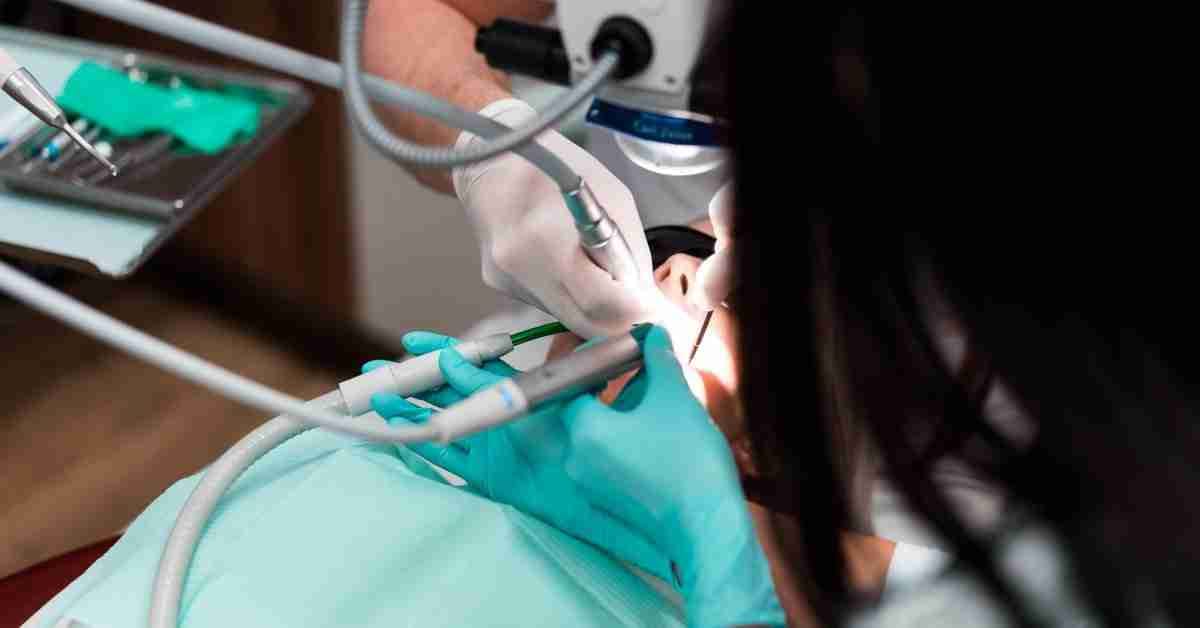
The concern is real, even if the old solution was too broad. Dental procedures — and even vigorous brushing or chewing — briefly push mouth bacteria into the bloodstream. In a native joint, your immune system clears them without incident. An implant is different: bacteria that land on the metal and plastic surfaces of a joint replacement can attach and build a protective biofilm that antibiotics and white blood cells struggle to penetrate. That is called hematogenous seeding, and it is one of the ways a periprosthetic joint infection (PJI) starts.
Here is the context that reshaped the guidance: your bloodstream sees small showers of mouth bacteria constantly — every time you chew, brush, and floss. A single dental appointment adds a small fraction to a lifetime of daily exposure, which helps explain why studies never found that premedicating for that one visit protected healthy patients.
Keep the risk in perspective. Infection after modern primary joint replacement occurs in roughly 0.5% of cases, and only a fraction of those trace back to a dental source. But when a deep infection does take hold, the treatment is significant — often staged surgery through a program like our revision hip and knee replacement clinic. Low probability, high stakes — that is why the question deserves a thoughtful answer.
Timing: hold elective dental work for about three months
After joint replacement, I ask patients to postpone elective dental work — routine cleanings, fillings that can wait, cosmetic procedures — for about three months. The early months are when the tissues around your new joint are still healing and most vulnerable to bacteria circulating in the blood, so we simply avoid stirring the pot until the joint is well established.
Two important exceptions. First, a true dental infection — an abscess, a hot tooth, swelling in the gum — should be treated promptly no matter when your surgery was. An untreated pocket of infection showers far more bacteria into your bloodstream day after day than a supervised dental procedure ever will. Second, the ideal time to handle known dental problems is before joint replacement, not after. If you are planning surgery, see your dentist first; clearing infections ahead of time removes the issue entirely and keeps your surgical date safe.
Bigger dental projects — planned extractions, dental implants, gum surgery — deserve a quick conversation between your dentist's office and ours about timing, so the two procedures stay comfortably clear of each other on the calendar.
Who may still be given antibiotics before dental work
Some patients still benefit from a precautionary dose, and for them the practice continues. Premedication is typically considered when the immune system is compromised or the joint has a history — situations where the odds of seeding are higher and the margin for error smaller. When prophylaxis is chosen, it is simple: a single oral dose of an antibiotic, usually taken about an hour before the appointment. Not a course, not a refillable habit — one dose.
The decision is made jointly between your surgeon and your dentist, and it should be revisited as your health changes. Make sure every dentist you see knows you have a joint replacement, and when in doubt, have their office call ours at (808) 439-6201 — coordinating this takes minutes.
One practical caution: prophylaxis is not something to self-arrange. Taking leftover antibiotics before an appointment, or pressing a dentist for a prescription "just in case," adds allergy and side-effect risk — and fuels antibiotic resistance — without adding protection. If premedication is right for you, it will be prescribed deliberately, with the right drug at the right time.
- Weakened immune system — immunosuppressive medications, chemotherapy, transplant history
- Inflammatory arthritis (rheumatoid arthritis, lupus) treated with biologics or steroids
- Poorly controlled diabetes
- A previous infection in any replaced joint
- Certain major or invasive dental procedures, judged case by case
The daily habits that protect your joint more than any pill
The best infection prevention is not a tablet before your cleaning — it is a healthy mouth every day. Consistent brushing and flossing, regular dental care, and treating problems early keep the bacterial load in your bloodstream low all year, which matters far more than what happens in one appointment. The same logic applies to the rest of your body: skin wounds, urinary infections, and infected toenails deserve prompt attention for the rest of your implant's life, and that implant can serve you for decades — see the data on knee replacement success rates.
Know the warning signs of a joint infection and act on them: new pain in a joint that had been comfortable, swelling, warmth, or fevers — especially in the weeks after an illness or dental infection. Call the office promptly; early evaluation makes every outcome better. Keeping an eye on your implant over the long haul is exactly what our implant surveillance program is designed to do.
- Brush twice daily and floss — a healthy mouth is the real prophylaxis
- See your dentist regularly; don't sit on dental infections
- Tell every dentist and physician that you have a joint replacement
- Treat skin, urinary, and dental infections promptly, for life
- Call the office for new joint pain, swelling, warmth, or fever
Medically reviewed by Paul Norio Morton, MD, FAAOS, FAAHKS. Last reviewed: . This article is for education only and isn’t a substitute for an exam and personalized advice — schedule a consultation to discuss your situation.