
The short answer: stop, get safe, and assess the pattern
If a muscle suddenly tightens, stop walking or exercising and move to a stable seated or lying position. Do not try to push through a painful spasm while standing. Note the location, duration, recent activity, fluid intake, medicines, and whether the area is also swollen, hot, red, weak, numb, or unusually tender.
A simple cramp often eases as the muscle relaxes, but persistent or recurrent spasms deserve a call to the surgical team. A MedlinePlus overview notes that muscle cramps can be associated with overuse, dehydration, low mineral levels, medicines, and other medical conditions. Review the MedlinePlus muscle-cramp guide.
Why muscles may tighten after replacement surgery
Joint replacement changes how the surrounding muscles are loaded. Before surgery, pain may have caused limping, guarding, weakness, or avoidance of certain movements. After surgery, swelling, tissue irritation, altered gait, a new exercise program, and more time in bed or a chair can make a muscle tire or hold tension differently.
Knee replacement can temporarily reduce normal quadriceps activation, while hip replacement changes the demands on the thigh, buttock, and lower-leg muscles as walking mechanics are rebuilt. A recent randomized trial in knee replacement specifically described postoperative muscle spasms as a contributor to acute pain and restricted mobility. Read the PubMed abstract.
Common patterns worth reporting
Patients may describe a sudden calf or thigh cramp, a tightening behind the knee, a brief pulling sensation near the hip, or a muscle that repeatedly “grabs” during an exercise or position change. Nighttime cramps may follow a day with more walking, therapy, or time in one position. A spasm may also appear when getting into bed, standing from a chair, or trying to straighten the knee.
Location matters. So does timing. Tell the team whether the spasm starts only with a specific exercise, wakes you from sleep, occurs at rest, follows a medication dose, or is becoming more frequent. A new pattern is more useful to report than simply saying the leg hurts.
What to do during a brief spasm
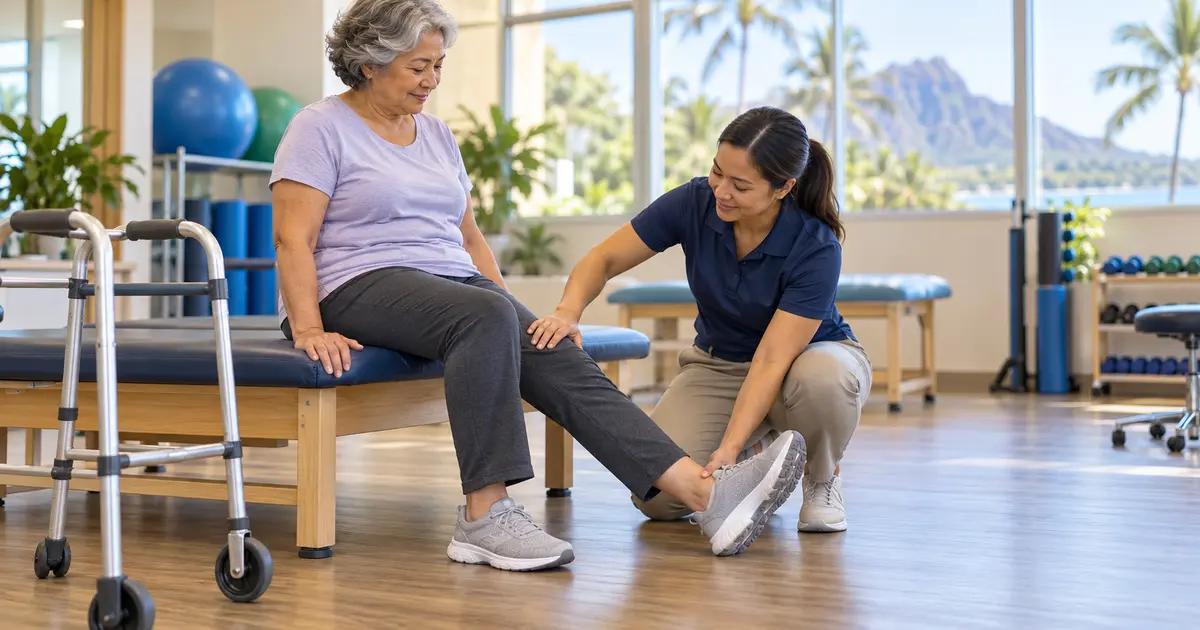
First protect yourself from a fall. Sit or lie down with the walker or another stable support nearby. Relax your jaw and shoulders, slow your breathing, and allow the muscle to release. If your surgeon or therapist has already taught a gentle stretch for that exact muscle, use it within the prescribed movement precautions. Do not bounce, force the operated joint, or ask someone to push hard on the limb.
Gentle hand pressure or light massage over a clearly muscular area may feel helpful, but avoid deep massage over a swollen or tender calf, the incision, or an area with unexplained warmth or redness. If the spasm does not settle, recurs repeatedly, or prevents safe walking, contact the surgical team.
Use the prescribed activity plan—not a pain contest
More exercise is not always better in early recovery. A sudden jump in repetitions, walking distance, stairs, or time on your feet can fatigue healing muscles. At the other extreme, staying in one position for hours can contribute to stiffness and discomfort. Follow the frequency and repetition targets from the surgeon or physical therapist and spread activity through the day.
If a particular exercise repeatedly triggers spasms, stop that exercise and report it rather than changing the technique or resistance on your own. The therapist can check positioning, range, assistive-device height, and whether the program needs to be adjusted.
Hydration matters, but forcing fluid can be unsafe
Dehydration can contribute to cramps, especially with poor appetite, vomiting, diarrhea, fever, diuretic medicines, or warm-weather activity. Follow the fluid plan from the care team and look for thirst, dry mouth, darker urine, reduced urination, fatigue, or dizziness. MedlinePlus lists confusion, fainting, lack of urination, rapid heartbeat, and rapid breathing among signs that require immediate medical help. Review the MedlinePlus dehydration guidance.
Do not force large amounts of water. That can be unsafe for people with heart or kidney disease, fluid restrictions, or abnormal sodium levels. If fluid intake has been limited or symptoms suggest dehydration, call for individualized advice.
Do not guess with potassium, magnesium, or salt
Low or high levels of sodium, potassium, calcium, or magnesium can affect muscles, nerves, and the heart. The cause cannot be determined from the feeling of a cramp alone. Vomiting, diarrhea, kidney disease, endocrine conditions, and some medicines can change electrolyte levels, and unnecessary supplements may create a different imbalance.
Do not start potassium, magnesium, salt tablets, or concentrated electrolyte products unless the care team recommends them for you. A clinician may review medicines and order blood tests when spasms are frequent, severe, or accompanied by weakness, palpitations, confusion, or other systemic symptoms. Learn about fluid and electrolyte balance.
Review medicines instead of adding one on your own
Diuretics, cholesterol medicines, stimulants, and other drugs can sometimes contribute to cramping or muscle symptoms. Pain medicines, sleep aids, and medicines used for nausea or muscle relaxation may also cause drowsiness, dizziness, low blood pressure, confusion, or falls. Provide the surgical team with a complete list of prescriptions, over-the-counter products, vitamins, and supplements.
Do not borrow a muscle relaxer, restart an old prescription, or combine one with opioids, alcohol, cannabis, sleep medicine, or other sedating products without approval. Evidence for perioperative muscle relaxants is procedure- and drug-specific, and a narrative review emphasizes the need to weigh potential benefit against safety for the individual patient. Read the PubMed review.
Heat or ice depends on the problem
Warmth may relax an uncomplicated muscle cramp, while ice may help soreness or swelling after activity. After joint replacement, however, skin sensation may be reduced and the incision must be protected. Use only the method, barrier, and time limits in the care plan. Never sleep on a heating pad or ice pack, and do not place either directly on numb skin or the incision.
The JRH ice-or-heat guide explains how timing, swelling, sensation, and wound status affect the choice. A hot, red, swollen, or unusually tender leg should be assessed rather than repeatedly heated or massaged.
A calf cramp can mimic—or accompany—a blood clot
Deep-vein thrombosis can cause calf or thigh pain, tenderness, warmth, redness, or swelling, but symptoms are not always classic. A new one-sided calf symptom after hip or knee replacement should not be diagnosed at home as “just a cramp,” especially when it persists, the leg is increasingly swollen, or the pain is not linked to a brief muscle contraction.
Contact the surgical team promptly for new calf pain or swelling. Seek emergency care for chest pain, sudden shortness of breath, coughing blood, fainting, or a rapid unexplained heartbeat. Do not deeply massage a calf with possible clot symptoms. The JRH blood-clot prevention guide reviews risk reduction and warning signs.
Watch for infection, nerve, and circulation warning signs
Call the team promptly for increasing redness or warmth, drainage, fever, chills, rapidly worsening pain, or a new inability to bear weight as directed. New numbness, spreading tingling, foot weakness, inability to lift the foot, a pale or blue foot, or a foot that feels unusually cold needs urgent assessment. Severe swelling or pain out of proportion also should not be watched at home.
MedlinePlus notes that leg pain has many possible causes, including cramp, muscle strain, nerve irritation, infection, circulation problems, and deep-vein thrombosis. Review the MedlinePlus leg-pain overview.
When repeated spasms deserve a clinical review
Contact the surgeon, primary care clinician, or rehabilitation team when spasms are frequent, severe, new after a medication change, interfere with sleep or therapy, or continue despite pacing and the prescribed care plan. Report vomiting, diarrhea, poor intake, reduced urination, palpitations, generalized weakness, confusion, or a history of kidney, thyroid, nerve, or circulation problems.
The team may examine gait and muscle activation, check the incision and swelling, review medication interactions, and decide whether laboratory testing or imaging is needed. Treatment should match the cause rather than the symptom name alone.
A practical call checklist
When contacting the team, be ready to report:
- The exact location: calf, thigh, behind the knee, buttock, foot, or another area
- When the spasm began, how long it lasts, and how often it occurs
- Whether it happens at rest, at night, while walking, or during a specific exercise
- New swelling, warmth, redness, tenderness, drainage, fever, numbness, or weakness
- Chest pain, shortness of breath, coughing blood, fainting, or a racing heartbeat
- Recent walking, therapy, stairs, travel, vomiting, diarrhea, fluid intake, and urine output
- All prescription medicines, pain medicines, diuretics, supplements, and recent dose changes
- What helped, what worsened it, and whether you can walk safely with the prescribed device
Hawaiʻi and neighbor-island planning
Warm weather and travel can complicate recovery, but the answer is not automatic electrolyte drinks or forced water. Follow the fluid and medicine plan for your health conditions, pace activity during hot parts of the day, and keep therapy sessions within the prescribed limits. If appetite, vomiting, diarrhea, or dizziness makes hydration difficult, call the team.
Before flying or taking a long drive, discuss new calf symptoms, increasing one-sided swelling, or spasms that limit safe walking. Know the after-hours number and the nearest place able to assess a possible clot, infection, electrolyte problem, or nerve issue. Do not begin travel with unresolved emergency warning signs.
The goal is safe movement with fewer surprises
Many brief spasms improve as activity is paced, positioning changes, swelling settles, and muscles regain endurance. The safest plan combines fall prevention, the prescribed rehabilitation program, sensible fluid guidance, and early reporting of a new or worsening pattern. Avoid guessing with supplements or sedating medicine.
If you are preparing for hip or knee replacement and want an individualized recovery plan, schedule an orthopedic consultation and bring a complete medication and supplement list.
Sources and further reading
Medically reviewed by Paul Norio Morton, MD, FAAOS, FAAHKS. Last reviewed: . This article is for education only and isn’t a substitute for an exam and personalized advice — schedule a consultation to discuss your situation.