
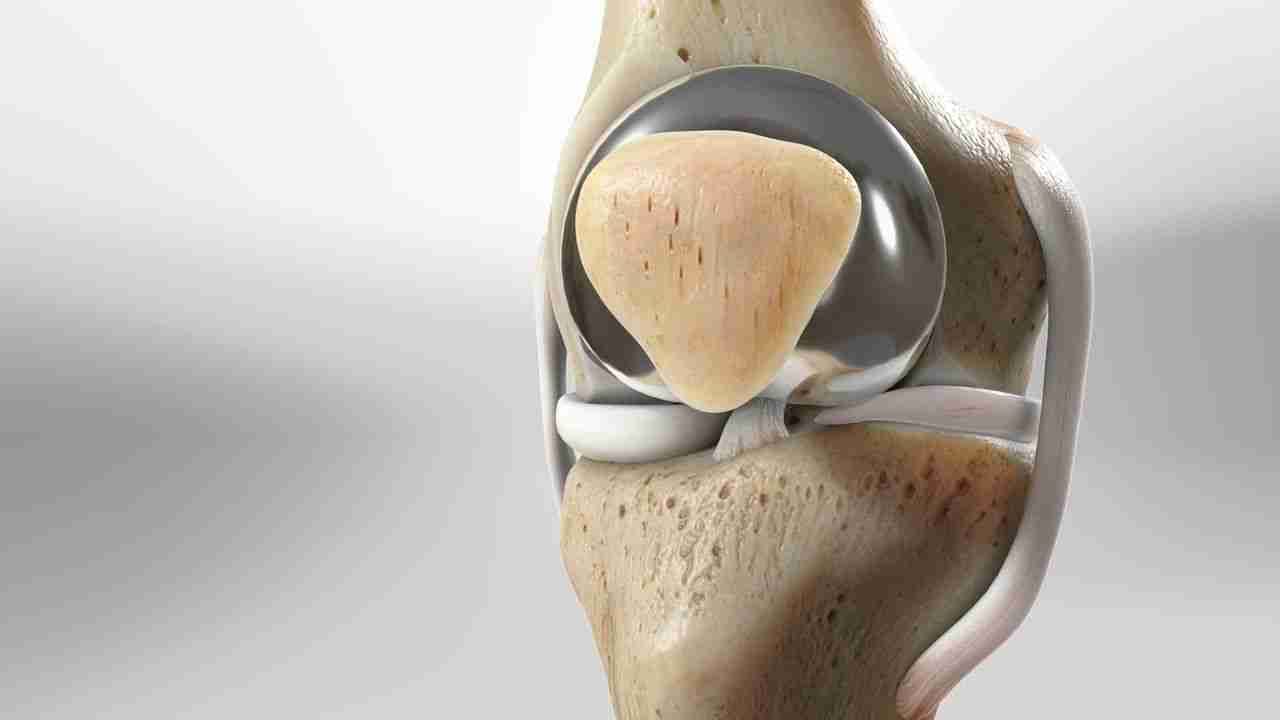
What is patellofemoral arthroplasty?
Patellofemoral arthroplasty is a partial knee replacement for the compartment behind your kneecap. It resurfaces the trochlear groove — the track on the front of the thighbone where the kneecap glides — with a thin metal component, and caps the underside of the kneecap with a smooth plastic button. The weight-bearing surfaces between your femur and tibia are never touched, and every ligament stays.
Compared with a total knee replacement, it removes far less bone and preserves the knee's natural motion. For the right patient — someone whose arthritis truly lives behind the kneecap — it treats the actual problem without sacrificing two healthy compartments. Think of it as resurfacing the one worn lane of a road instead of repaving the whole highway. Modern trochlear components follow the natural shape of the groove far better than early designs did, and careful patient selection has improved results considerably.
Who develops isolated kneecap arthritis?
Isolated patellofemoral arthritis tends to show up earlier in life than typical knee arthritis, and it is more common in women. The usual causes are mechanical: a shallow trochlear groove (trochlear dysplasia), kneecap malalignment, or a history of patellar dislocations and instability that ground down the cartilage over years. A direct blow to the front of the knee or a prior kneecap fracture can produce the same wear pattern through post-traumatic arthritis.
The symptoms are distinctive. Pain sits at the front of the knee and flares with stairs — especially going down — plus hills, squatting, kneeling, and standing up after a long sit, the classic "movie theater sign." Walking on level ground often feels nearly normal. Left alone, the pain quietly shapes daily life — patients stop taking stairs and avoid hills without quite noticing why. That mismatch is exactly why this pattern of knee pain deserves its own workup rather than a one-size-fits-all recommendation.
Patellofemoral arthroplasty vs. total knee replacement
For truly isolated kneecap arthritis, the case for the smaller operation is strong: the tibia is untouched, most of the femur is preserved, all of your ligaments keep working, recovery is faster, and the knee keeps a natural feel. Many healthy patients go home the same day.
The honest trade-off is the same one that applies to every partial knee replacement: if arthritis later develops in the other compartments, you may need conversion to a total knee. Because so little bone was removed the first time, that conversion is usually straightforward. A total knee remains the more predictable choice when arthritis is already widespread — the decision comes down to where your arthritis actually is. For the full side-by-side, read partial vs. total knee replacement.
Are you a candidate?
Candidacy starts with exhausting the simple things. Most patients try quadriceps and hip strengthening in physical therapy, activity modification, and injections before considering surgery. When those no longer control the pain, imaging tells the rest of the story: dedicated kneecap X-ray views and often an MRI to confirm the medial and lateral compartments are healthy.
Dr. Morton will examine your alignment and kneecap tracking, review your images with you side by side, and tell you plainly which operation — if any — fits your knee. Some patients with malalignment need the tracking corrected at the same time; that is part of the surgical plan, not an afterthought.
- Pain and cartilage loss confined to the kneecap compartment
- Healthy medial and lateral compartments on imaging
- Therapy, activity changes, and injections no longer enough
- Stable ligaments and correctable kneecap tracking
What recovery looks like
Most patients stand and walk the day of surgery, and many go home the same day through the outpatient joint replacement program. Because the weight-bearing part of the joint is untouched, full weight bearing is typically immediate, and therapy focuses on rebuilding quadriceps strength and smooth kneecap tracking.
Dr. Morton pairs the operation with opioid-sparing multimodal pain control and a rapid-recovery protocol. Stairs and hills — the movements that hurt most before surgery — are usually where patients notice the difference first. Most patients return to desk work within a couple of weeks and to low-impact exercise — walking, swimming, cycling — over the following weeks as quadriceps strength rebuilds.
Expect structured physical therapy for several weeks and steady gains over months; timelines vary from person to person. Schedule a consultation to find out whether your kneecap pain fits this operation.

Medically reviewed by Paul N. Morton, MD, FAAOS, FAAHKS — board-certified orthopedic surgeon, fellowship-trained in adult hip & knee reconstruction and orthopedic trauma.
This page is for education only and isn’t a substitute for an exam and personalized advice — schedule a consultation to discuss your situation.