
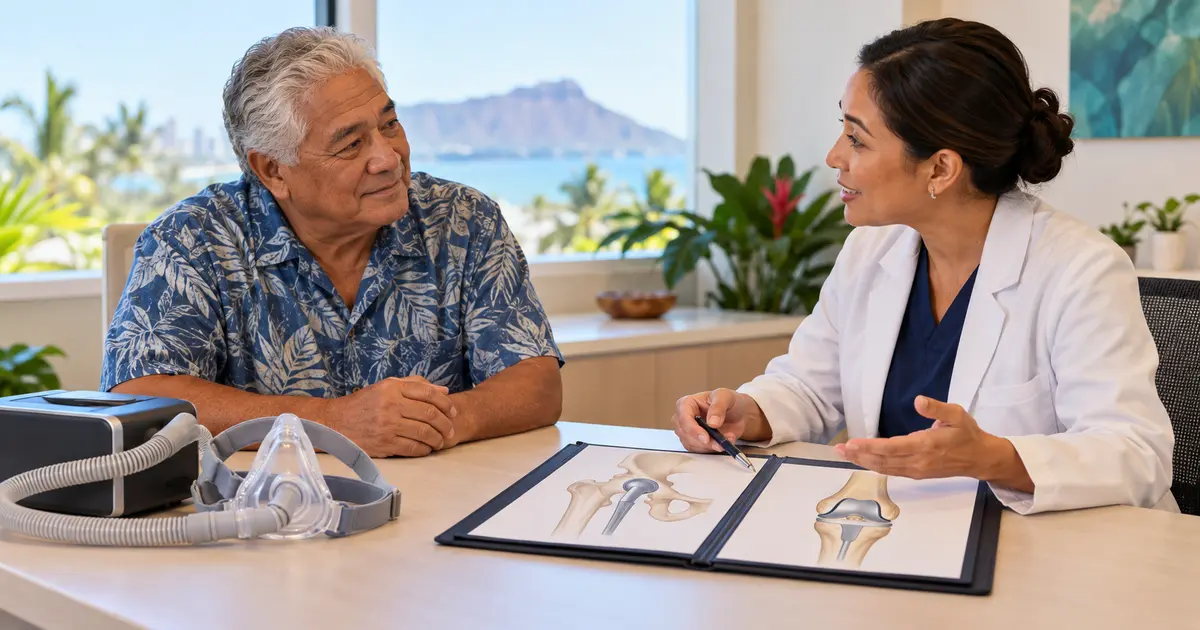
The short answer: disclose it early and plan around it
Most people with known or suspected obstructive sleep apnea can still have elective hip or knee replacement after individualized assessment. The important step is making sure the orthopedic and anesthesia teams know about the diagnosis, symptoms, prior sleep study, and treatment before the day of surgery.
Sleep apnea can increase vulnerability to airway obstruction, low oxygen, and breathing suppression from anesthesia, opioids, and sedatives. A safer plan may include regional anesthesia, opioid-sparing pain control, use of positive airway pressure during sleep, closer observation, or an overnight stay. The right combination depends on apnea severity, other health conditions, the procedure, and how recovery progresses.
What obstructive sleep apnea means
Obstructive sleep apnea (OSA) occurs when the upper airway repeatedly narrows or closes during sleep. Breathing pauses can lower oxygen, fragment sleep, and strain the heart and lungs. Common clues include loud snoring, witnessed pauses, gasping or choking, morning headaches, dry mouth, difficult-to-control blood pressure, and excessive daytime sleepiness.
Not everyone who snores has OSA, and some people with OSA do not recognize symptoms. A formal diagnosis usually relies on a home sleep-apnea test or laboratory sleep study interpreted by a qualified clinician. Central sleep apnea, obesity hypoventilation, and other breathing disorders are different conditions and may require additional planning.
Why sleep apnea matters during joint replacement
Anesthetic medicines, muscle relaxants, opioids, and sedatives can reduce breathing drive or make the airway easier to obstruct. Lying flat and sleeping more deeply after surgery can add to the problem. Risk may persist after the recovery room, especially during sleep and while sedating medicines remain active.
A 2024 systematic review of more than 20,000 hip and knee arthroplasty patients found that OSA was associated with higher odds of medical and pulmonary complications, thromboembolic events, and delirium. These are population-level associations—not a prediction of what will happen to one patient—but they support careful screening and risk mitigation.
Tell the team even if you do not use CPAP
Share a known diagnosis whether your treatment is CPAP, APAP, BiPAP, an oral appliance, prior airway surgery, positional therapy, or no current treatment. Also say if you stopped PAP because of mask leakage, dryness, congestion, discomfort, travel, or another barrier. Do not describe apnea as “cured” after surgery or an appliance unless follow-up testing confirmed control.
If you have never been tested but a partner notices breathing pauses, you wake gasping, or you are very sleepy during the day, report that too. Suspected OSA can be managed with precautions even when there is not enough time to complete testing before surgery.
How preoperative screening works
Many surgical programs use a short questionnaire such as STOP-Bang. It asks about snoring, tiredness, observed breathing pauses, blood pressure, body mass index, age, neck size, and sex. A screen estimates the probability of OSA; it does not diagnose the condition or replace clinical judgment.
Society of Anesthesia and Sleep Medicine guidance supports using validated screening tools before surgery. A higher-risk screen helps the team plan airway management, pain medicine, monitoring, and discharge. It should not be interpreted as a reason to panic or to start someone else's PAP machine.
Does a positive screen delay joint replacement?
Not automatically. Guidance finds insufficient evidence to cancel or postpone surgery solely to obtain a sleep study in every high-risk patient. Many optimized patients with known or suspected OSA may proceed when the team can implement appropriate safeguards.
Additional evaluation may be appropriate when there is resting low oxygen that another condition does not explain, severe pulmonary hypertension, suspected hypoventilation, uncontrolled heart or lung disease, or another problem with ventilation or gas exchange. Surgery timing is individualized around both urgency and the ability to manage risk safely.
What to do with your CPAP, APAP, or BiPAP
Use positive airway pressure as prescribed before surgery. Do not change pressures, stop therapy, or borrow equipment without the clinician who manages your sleep care. Bring the machine, mask, tubing, power supply, and prescribed settings if the surgical facility instructs you to do so. Label the equipment and make sure the mask fits.
Perioperative guidelines encourage patients who already use PAP to continue it at appropriate times during the hospital stay unless the procedure creates a specific contraindication. The facility may use your machine or its own equipment. Bring a copy or photo of the current prescription and sleep-study summary when available.
Anesthesia and pain control can be tailored
Joint replacement often allows spinal or other regional techniques, local anesthetic, acetaminophen, anti-inflammatory medicine when medically appropriate, and additional non-opioid strategies. These methods can reduce—but may not eliminate—the need for opioids. The anesthesiologist chooses the safest approach for the operation and the individual patient.
OSA makes it especially important to avoid unnecessary sedatives and to use the lowest effective dose of breathing-suppressing medicine. Never add alcohol, sleep aids, benzodiazepines, antihistamines, cannabis products, or leftover opioids to the postoperative plan unless the prescribing team specifically approves the combination.
Monitoring after surgery
The recovery team watches breathing, alertness, oxygen level, pain control, nausea, mobility, and the effects of medication. Patients at increased risk may need longer observation, continuous pulse-oximetry, PAP during sleep, nonsupine positioning, or a monitored bed. Oxygen and PAP are different therapies; one does not automatically substitute for the other.
Frequent obstruction, repeated oxygen drops, unusual sedation, difficulty using PAP, or a high opioid requirement may change the discharge plan. These decisions protect the patient and should not be viewed as a failed same-day surgery.
Same-day discharge is a safety decision, not a promise
OSA alone does not make every patient ineligible for outpatient joint replacement. The team considers the severity and treatment of OSA, other medical conditions, anesthesia and opioid needs, events in recovery, ability to maintain oxygen and alertness, mobility, home support, and access to help after discharge.
Severe or poorly controlled apnea, ventilation problems, recurrent oxygen desaturation, or excessive sedation may make an overnight monitored stay safer. Read the JRH outpatient joint-replacement guide for the broader discharge milestones used after hip or knee replacement.
The first nights at home deserve a clear plan
Use PAP every time you sleep if it is prescribed, including naps. Follow the medication schedule exactly and do not take extra doses because pain wakes you. Sleep in the position allowed by the surgical plan; head elevation may help some patients, but it does not replace PAP or medical monitoring.
A responsible adult should know the medication list, how to help with PAP equipment, and whom to call. The JRH guide to sleep after joint replacement covers positions, nighttime discomfort, and common causes of disrupted sleep.
What to bring to the preoperative visit
A short, accurate record helps the team plan:
- The sleep-apnea diagnosis and date of the most recent sleep study
- A copy or photo of the sleep-study summary and prescribed PAP settings
- The brand and mode of PAP therapy, mask type, and how consistently you use it
- Any problems with mask fit, dryness, congestion, pressure tolerance, or equipment
- Whether an oral appliance, prior airway surgery, or positional therapy is part of treatment
- Symptoms such as witnessed pauses, gasping, daytime sleepiness, morning headaches, or difficult-to-control blood pressure
- A complete medication and supplement list, including sleep aids, sedatives, opioids, alcohol, and cannabis products
- Any history of difficult airway management, prolonged sedation, low oxygen, or unplanned admission after anesthesia
Questions worth asking
Turn the diagnosis or screening result into a specific plan:
- Should I bring my PAP machine, mask, and settings to the facility?
- Will regional anesthesia or other opioid-sparing options be appropriate for me?
- Which pain or sleep medicines should I avoid combining?
- What monitoring will I need after surgery and while sleeping?
- What findings would make an overnight stay safer?
- If my screening result is high risk, do I need sleep testing before surgery or after recovery?
- Who should help if my mask no longer fits or I cannot tolerate PAP?
- What symptoms after discharge require an urgent call or emergency care?
When to call before the operation
Contact the surgical or anesthesia team if you develop a respiratory infection, worsening shortness of breath, new resting low oxygen, chest pain, fainting, severe daytime sleepiness, or inability to use prescribed PAP. Also report a new sleep study, pressure change, new oxygen prescription, or hospitalization for a heart or lung problem.
Do not wait until check-in to mention a prior difficult airway, unexpected intensive-care stay, or severe reaction to sedating medicine. Early notice gives the team time to coordinate equipment, records, consultation, and the appropriate site of care.
When to seek urgent help after surgery
Call 911 for severe breathing difficulty, blue or gray lips, inability to awaken, new chest pain, collapse, or stroke symptoms. A support person should also seek emergency help if breathing repeatedly stops and the person cannot be awakened normally.
Call the surgical team promptly for repeated oxygen alarms when home monitoring was specifically prescribed, new confusion, unusual or worsening sedation, inability to use prescribed PAP, repeated vomiting that prevents medication or hydration, or pain medicine effects that feel unsafe. Do not simply add a stimulant or skip all pain treatment without guidance.
The bottom line
Sleep apnea is a planning issue—not an automatic barrier to hip or knee replacement. Tell the team early, use PAP as prescribed, bring records and equipment when instructed, avoid unapproved sedative combinations, and accept monitoring or overnight observation when recovery findings make it safer.
Bring your sleep-study and PAP information to an orthopedic consultation or call (808) 439-6201. Dr. Paul Morton can coordinate the joint-replacement plan with anesthesia, primary care, sleep medicine, and other clinicians.
Sources and further reading
- Society of Anesthesia and Sleep Medicine guideline: preoperative OSA screening and assessment
- American Society of Anesthesiologists practice guideline: perioperative OSA management
- Society of Anesthesia and Sleep Medicine: perioperative OSA recommendations
- Systematic review and meta-analysis of OSA complications after total joint arthroplasty
- American Society of Anesthesiologists patient education: sleep apnea and anesthesia
Medically reviewed by Paul Norio Morton, MD, FAAOS, FAAHKS. Last reviewed: . This article is for education only and isn’t a substitute for an exam and personalized advice — schedule a consultation to discuss your situation.