

How the nickname happened
Dr. Morton was an early adopter of robotic knee replacement in Hawai‘i. So when he performed Hawai‘i's first robotic-assisted total hip replacement in 2022, patients took notice — and “The Robot Doc” is what they started calling him. The nickname spread the old-fashioned way: patient to patient, referral to referral. Local television followed. KHON2's Living 808 brought cameras into the operating room; KITV's Aging Well featured him explaining joint care for active seniors. The features live on the videos page.

What the robot actually does
Demystified: the robot is a precision instrument, not a decision-maker. Before any bone is cut, your joint is mapped into a personalized 3D plan — implant size, position, alignment, soft-tissue balance. During surgery, the robotic platform executes that plan with sub-millimeter accuracy and gives live feedback as Dr. Morton works. Why it matters: implant position drives everything patients care about — how natural the joint feels, how long it lasts, dislocation risk, leg length. Humans are good at judgment; robots are good at millimeters. Modern surgery uses both.
Fluent in all four robotic platforms
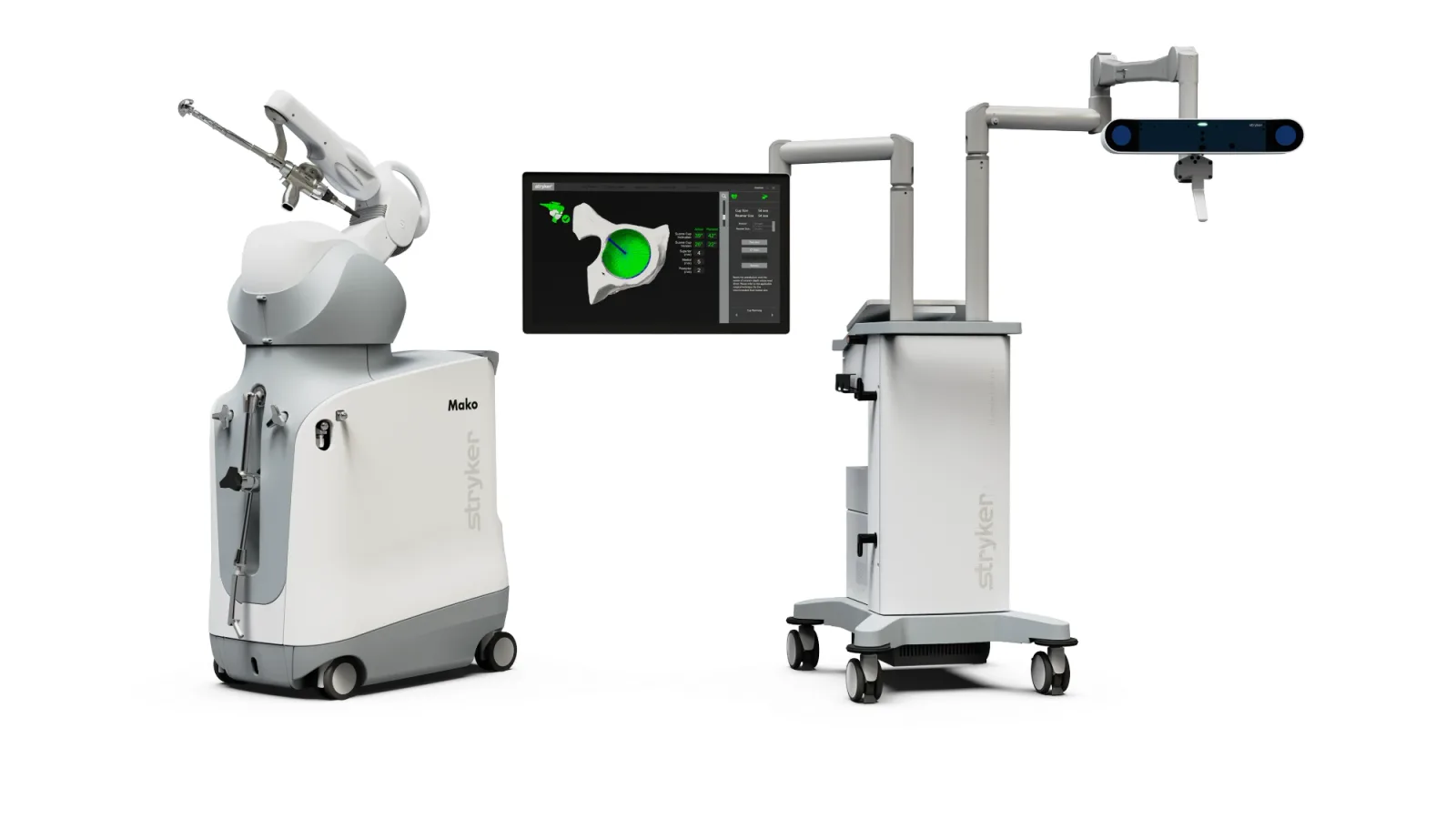
Most robotic surgeons know one system. Dr. Morton is certified on ROSA®, MAKO, CORI, and VELYS — and was the first surgeon in Hawai‘i fellowship-trained in robotic joint replacement. Platform fluency let him bring robotic surgery to each of his venues — today, for knees on O‘ahu, primarily ROSA at The Queen's Medical Center and CORI at Adventist Health Castle. It also made him the natural first call when new systems — and the Persona IQ smart knee — arrived in the islands. On Hawai‘i Island, hip and knee replacements at Hilo Community Surgery Center are Mako cases, planned from a CT scan of the patient's own joint — and Mako is the platform for his robotic hips.
The firsts, in sequence
It started with knees: Dr. Morton was an early adopter of robotic knee replacement in Hawai‘i — and the state's firsts followed. The record, in sequence:
- Early 2022 — ROSA robotic program launches in Hawai‘i; Hawai‘i's first robotic total hip replacement follows
- March 3, 2022 — first robotic joint replacement on Hawai‘i Island, at Kona Community Hospital — a homecoming for the Kea‘au-raised surgeon
- October 4, 2022 — Hawai‘i's first Persona IQ® smart knee, placed with robotic assistance
- Today — robotic assistance is simply how eligible knee cases are done, at no extra cost to patients: ROSA (primarily) at Queen's and CORI at Castle on O‘ahu; on Hawai‘i Island, Mako for hips and knees
Medically reviewed by Paul N. Morton, MD, FAAOS, FAAHKS — board-certified orthopedic surgeon, fellowship-trained in adult hip & knee reconstruction and orthopedic trauma. Last reviewed: .
This page is for education only and isn’t a substitute for an exam and personalized advice — schedule a consultation to discuss your situation.