
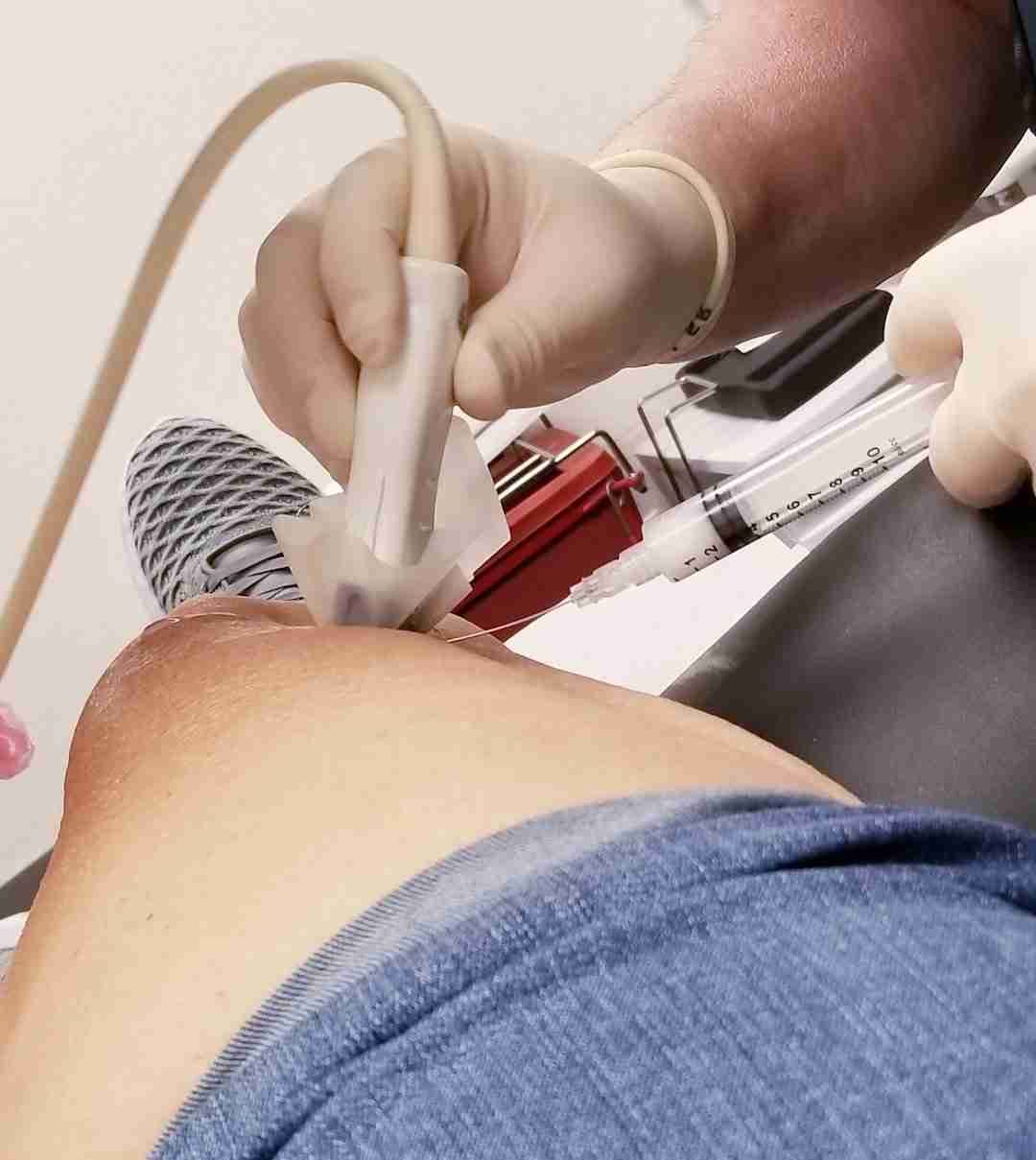
What is a nerve block?
A nerve block is an injection of numbing medication placed around a specific nerve or group of nerves. Rather than medicating your whole body, it quiets pain signals at their source. It is a form of regional anesthesia, administered by an anesthesiologist rather than the surgeon.
For total knee replacement surgery, the numbing medication is injected into the adductor canal of the thigh before the operation begins — so pain stays low from the first incision through the early recovery period.
What is the adductor canal?
The adductor canal is a natural passage that runs through the adductor muscles of the inner thigh, alongside the femur (thigh bone). The adductors are the muscle group on the inner side of the thigh — including the pectineus, adductor brevis, and gracilis — with the sartorius muscle crossing over the canal itself.
Traveling inside this canal are several important structures:
- The femoral artery, and the femoral vein just behind it
- The nerve to the vastus medialis, one of the quadriceps muscles
- The saphenous nerve — the longest skin-sensation (cutaneous) branch of the femoral nerve, which carries much of the feeling from the knee region
Because these nerves pass through one well-defined corridor, the canal makes an ideal target: numbing medication injected into this passage before surgery means little or no pain from the tissues around the knee when the operation is performed.

Why it anchors rapid recovery knee replacement
The adductor canal block is a key ingredient in Dr. Morton's rapid recovery knee replacement protocol. By preventing severe pain before it starts, the block lets patients begin moving sooner after surgery and lean less on stronger pain medication — the foundation of an opioid-sparing approach and of going home the same day when appropriate.
The adductor canal catheter: pain relief for days, not hours
A single injection eventually wears off. For patients who are candidates, the block can be extended into a continuous infusion lasting up to 3–4 days.
The anesthesiologist threads a tiny, flexible catheter into the adductor canal and connects it to a small, round pump filled with local anesthetic — often called a pain pump. The pump steadily delivers numbing medication around the nerve, carrying pain control through the most uncomfortable first days of knee replacement recovery.
Risks of an adductor canal block
The adductor canal block is a very successful and reliable way to combat knee replacement pain, but like any procedure it carries some possible risks:
- Infection at the injection site
- Bleeding in the tissue surrounding the adductor muscles
- Injury to nearby nerves — with symptoms that can extend down toward the foot or up toward the groin
- An allergic reaction to the block medication
- Bruising or soreness where the needle was placed
- Rarely, if the numbing medicine enters an artery or vein, it can cause abnormal heart rhythms or seizures
In practice, adductor canal blocks reliably reduce pain without significant side effects for most patients, and the vast majority cause no notable long-term complications — nothing that would affect future surgeries or other medical procedures.
Going home with a pain pump: what to watch for
If you are discharged with a nerve block catheter, your discharge instructions will include contact information for the anesthesiology team — reach out to them with any questions about the catheter or pump.
Seek help immediately if you notice signs that the anesthetic may be reaching your bloodstream:
- Ringing in your ears
- A metallic taste in your mouth
- Numbness around your lips
- Trouble seeing
- Confusion
- Seizures
If any of these occur, clamp the pump catheter as directed in your instructions and seek immediate medical attention.
Medically reviewed by Paul Norio Morton, MD, FAAOS, FAAHKS. Last reviewed: . This article is for education only and isn’t a substitute for an exam and personalized advice — schedule a consultation to discuss your situation.