
What arthroplasty actually means
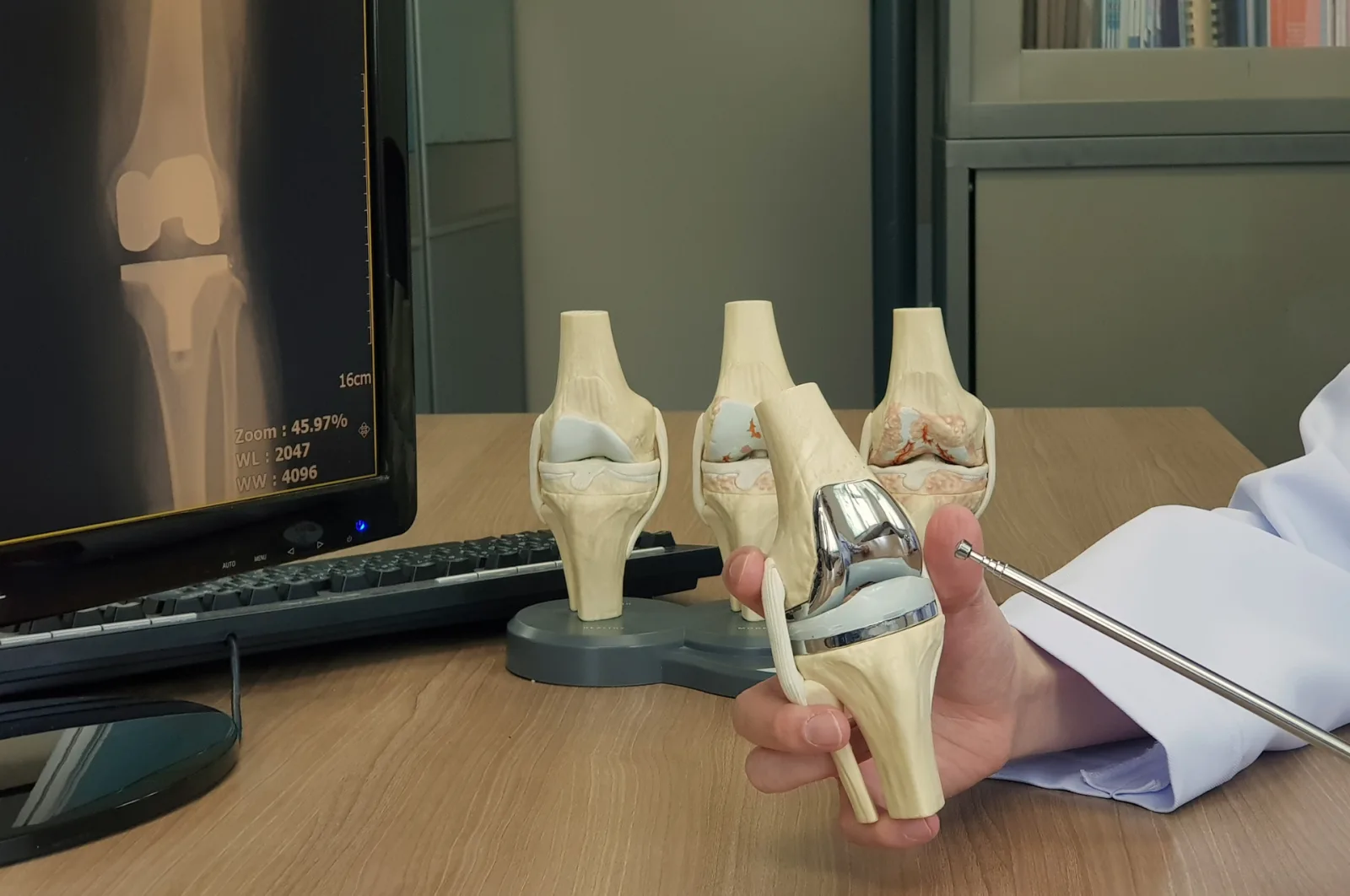
Arthroplasty means surgically rebuilding a joint. The word joins the Greek arthro (joint) with plasty (to reshape or reconstruct). In practice it almost always refers to joint replacement — removing the damaged, arthritic surfaces of a joint and replacing them with an artificial implant that restores smooth, comfortable movement.
The goal is not to make you bionic; it is to relieve pain and give back the function you have lost to arthritis or injury. When cartilage — the slick coating that lets bones glide — wears away, bone grinds on bone, and that is what hurts. Arthroplasty resurfaces those bare bone ends with materials engineered to slide against each other the way healthy cartilage once did. The hip and the knee are the two most commonly replaced joints, and both are among the most successful operations in all of medicine, reliably turning disabling joint pain into restored mobility for the large majority of patients. Understanding the vocabulary helps you make sense of your options — so here is how the types break down.
The main types of arthroplasty
Arthroplasty isn't one operation — it is a family of them, scaled to how much of the joint is damaged. Which one is right depends entirely on your joint, and the less of it that is worn, the less you should have replaced.
- Total joint replacement — the entire joint surface is resurfaced; a total hip or total knee is the workhorse for advanced arthritis
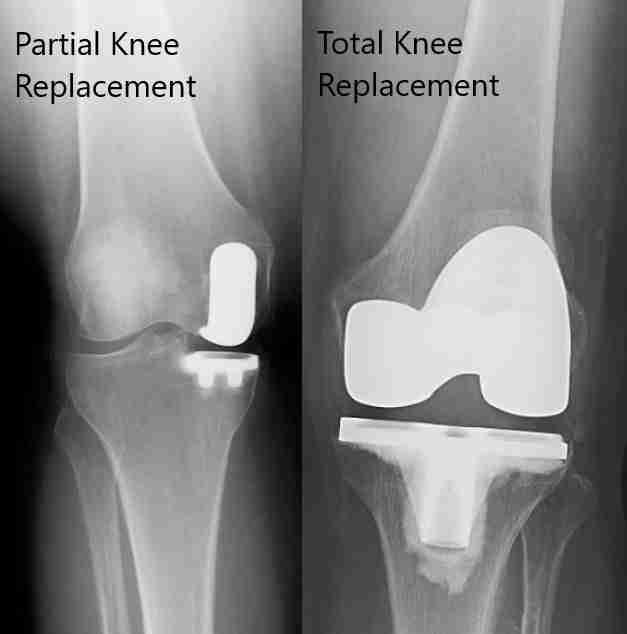
- Partial (unicompartmental) replacement — only the damaged portion is resurfaced; a partial knee replacement spares your own ligaments and the healthy compartments
- Revision arthroplasty — a previous replacement that has worn, loosened, or failed is rebuilt, best handled at a dedicated revision clinic
- Resurfacing — the ball of the joint is capped rather than removed, preserving bone but carrying important caveats covered next
A word on hip resurfacing
Hip resurfacing deserves an honest word, because you will see it marketed as bone-preserving and the story is not that simple. In resurfacing the femoral head is capped rather than removed, which does preserve more of the patient's own bone. The problem was the bearing: most resurfacing implants paired a metal ball against a metal socket, and metal-on-metal joints can shed tiny metal ions as they wear.
In some patients those ions triggered adverse local tissue reactions and raised blood metal levels, leading to pain, implant failure, and in some cases the need for revision. Those concerns — along with several high-profile implant recalls — led most surgeons to step away from metal-on-metal resurfacing, and it is now a niche procedure done, if at all, in a narrow group of patients by a few specialized surgeons. For the vast majority of people, a standard total hip replacement with a modern bearing is the safer, better-proven choice. If you are worried about reactions to implant metals, the discussion of metal allergy in joint replacement is worth reading. The lesson is not that all metal implants are dangerous — they are not — but that newer or flashier is not automatically better.
What implants are made of
Modern joint implants are built from a small set of well-proven materials, each chosen for a specific job. The structural parts — the stems, sockets, and baseplates anchored to bone — are typically metal alloys, most often titanium or cobalt-chromium, prized for strength and biocompatibility. Titanium in particular bonds well with bone, which is why it is used in cementless implants designed for bone to grow into.
The bearing surface — the part that actually glides — is where the engineering gets interesting. Most knees and many hips use a highly cross-linked polyethylene, a specialized medical plastic that has become dramatically more wear-resistant over the past two decades, a major reason today's implants outlast their predecessors. Many hips pair a ceramic ball against that polyethylene, or against a ceramic liner, for an exceptionally smooth, hard-wearing surface. These material improvements — better plastic, better ceramics, better fixation — are quietly responsible for much of the durability gain in modern replacements. The implant matters, but as the next section explains, the surgeon who chooses and positions it matters more.

How to choose a surgeon
The single most important decision in a joint replacement isn't the implant brand or the robot — it is the surgeon. Research consistently associates higher surgeon and hospital volume with fewer complications and lower revision rates, which is why it is fair, and smart, to ask how many of your specific operation a surgeon performs each year. A fellowship-trained adult reconstruction surgeon has spent a dedicated year training specifically in hip and knee replacement beyond general residency.
Beyond volume and training, look for a surgeon who offers the full ladder of options rather than one favorite operation — someone who can talk you out of surgery when it isn't needed, do a partial when a total is overkill, and handle a revision if one is ever required. Ask who manages complications if they arise, and whether the surgeon follows their implants over the long term. Technology like robotics can improve the precision of implant positioning, but it is a tool in skilled hands, not a substitute for them. When you are ready to weigh your own joint against these questions, an honest consultation is the place to start.
Medically reviewed by Paul Norio Morton, MD, FAAOS, FAAHKS. Last reviewed: . This article is for education only and isn’t a substitute for an exam and personalized advice — schedule a consultation to discuss your situation.