
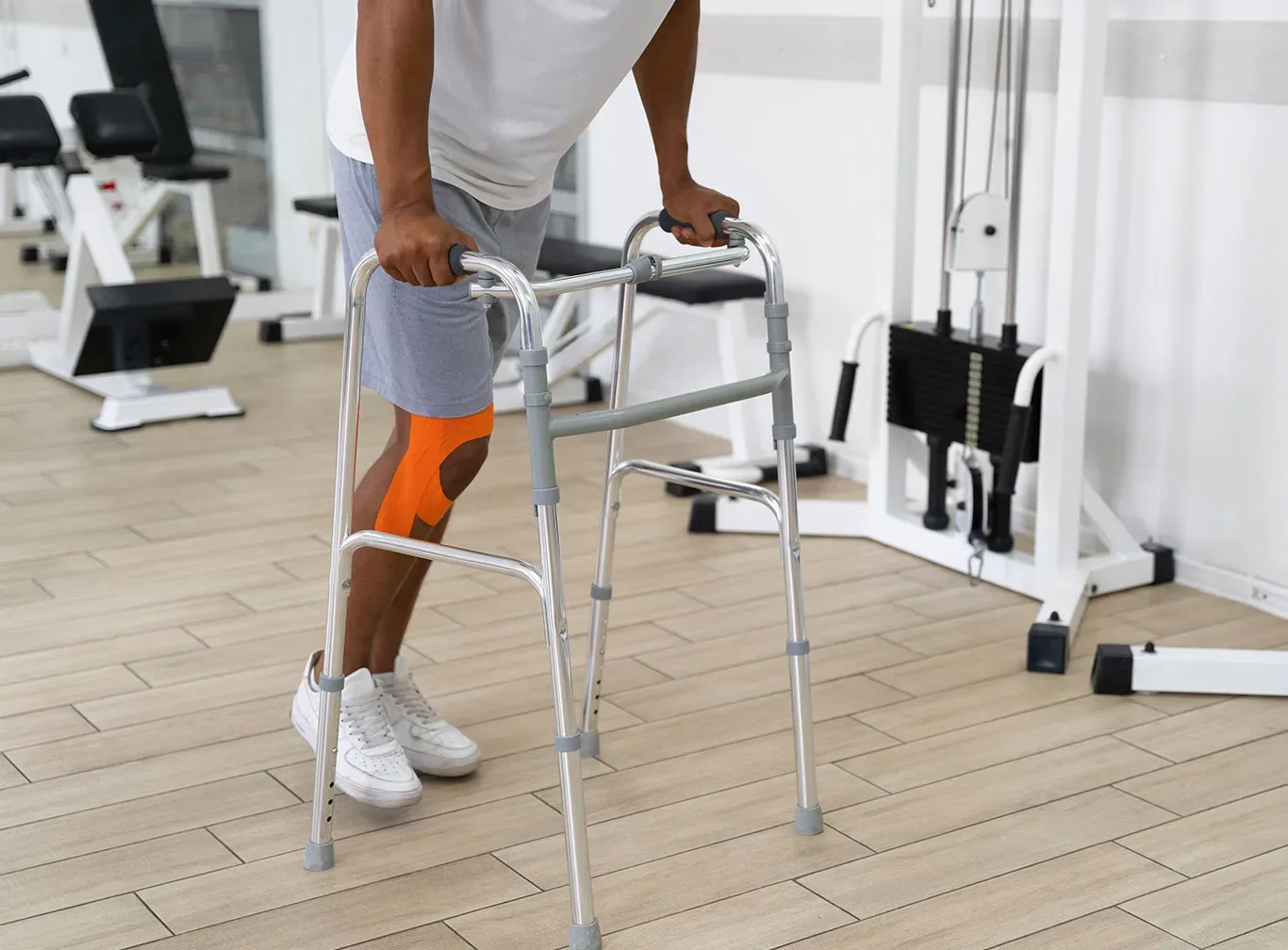
Your recovery options at a glance
After hip or knee replacement, there are several places you can recover: at home starting the day of surgery, in the hospital for one to three days, at a hotel before a flight home, at a post-acute care facility, at a rehabilitation hospital, or at a skilled nursing facility. Each setting suits a different kind of patient — and each carries different costs and insurance rules.
Whichever setting fits your situation, Dr. Morton encourages the facilities he works with to provide three things: single-occupancy rooms, intensive rehabilitation programs, and patient-focused care.
| Setting | Daily therapy | Best suited for |
|---|---|---|
| Home (often same-day discharge) | Home health and outpatient physical therapy | Most patients with a recovery coach at home; lowest cost, lowest infection risk |
| Hotel | Home health services can come to the hotel | Interisland and out-of-state travelers before the flight home |
| Hospital (1–3 days) | Inpatient therapy with multi-specialty medical care | Medically complex patients and revision surgeries; the most resource-intensive option |
| Post-acute care facility | 2 hours of physical therapy daily | Patients without family support at home or who need physician supervision |
| Rehabilitation hospital | 3 hours of physical therapy daily | Patients who can tolerate an intensive program; insurance approval is difficult |
| Skilled nursing facility | Lower-intensity rehabilitation | Patients who cannot tolerate intensive rehab or need more medical supervision |
Home: the first choice for most patients
Many patients are safely discharged home on the day of surgery — the standard pathway for modern outpatient joint replacement. Going home does require preparation: you'll need a hip and knee replacement coach — a friend or family member who can help with your recovery in the first days after surgery.
For patients with a coach lined up, home offers real advantages:
- Lower risk of infection than any facility stay
- Higher patient satisfaction
- A familiar environment — your own bed, bathroom, and routines
- Lower cost to you than institutional care
Costs are typically lowest for patients discharged home or to a hotel immediately after surgery. Patients in rural areas may not have access to every facility described on this page, so discuss your discharge plan with Dr. Morton well before your surgical date.
Hotel recovery for traveling patients
Patients who travel for surgery — whether interisland or coming to Hawai'i as a destination joint replacement patient — can recover at a hotel before their flight home. Interisland travelers who do not require acute rehabilitation often recover comfortably at a hotel in Waikiki or Kailua-Kona before returning to their home island.
A few practical points if a hotel is part of your plan:
- Confirm the hotel is ADA compliant — accessible rooms and bathrooms make the first days far easier.
- Home health services can come to your hotel to provide nursing and physical therapy during your stay.
- If you're returning home outside the state of Hawai'i, Dr. Morton usually recommends staying at least two weeks before flying home.
- Big Island patients having same-day surgery far from home — for example, a Hilo-side resident having surgery in Kona — may prefer a nearby hotel for the first night rather than a long drive across the island. Many Big Island patients can now have robotic-assisted surgery closer to home at Hilo Community Surgery Center.

Hospital stay: one to three days for complex care
Depending on your medical history, insurance plans will cover extended hospital care for one to three days after surgery. Hospitals bring multiple medical specialties under one roof, and their primary role after joint replacement is caring for complex patients. Patients with a history of serious medical problems such as organ failure, and patients undergoing revision joint replacement, are excellent candidates for a hospital stay.
Dr. Morton performs hospital-based joint replacement at The Queen's Medical Center in Honolulu and at Adventist Health Castle. Keep in mind that hospital stays require the highest level of resources and are the most expensive recovery setting.
Rehabilitation hospital: three hours of therapy a day
Rehabilitation hospitals are acute care facilities for patients who need a prolonged stay with an intense rehabilitation course — they require three hours of physical therapy every day. For patients who want an intensive postoperative rehabilitation program and can tolerate that workload, this can be very helpful.
The catch is coverage: because these facilities cost more, insurance authorization is often difficult to obtain, and many insurance companies no longer cover rehab hospital stays at all. Admission requires all three of the following:
- Prior authorization from your insurance company
- Space availability at the rehabilitation hospital
- Your ability to perform rehabilitation for three hours per day
Post-acute care and skilled nursing facilities
Post-acute care facility
Post-acute care facilities are intermediate facilities that provide more intensive care than traditional skilled nursing facilities, including two hours of physical therapy daily. They are an excellent solution for patients who do not have family at home to care for them, or who require physician supervision during recovery.
Skilled nursing facility
Skilled nursing facilities serve patients who are unable to follow an intensive rehabilitation course, require more medical supervision, or do not have adequate support at home. Therapy is gentler and the pace is slower — the right fit for some patients, but not a shortcut to faster recovery.
How Dr. Morton supports recovery at home
Regardless of when you are discharged home, Dr. Morton provides a full set of supports to make sure your recovery succeeds.
Outpatient physical therapy
The best physical therapy sessions happen in dedicated therapy clinics, which offer supervised care with exercise machines and equipment not available in a hospital or at home. Physical therapy is available at the practice's Kunia and Honolulu offices, and Dr. Morton's rehabilitation protocols guide each phase of recovery.
Home health
Home health services bring nursing and physical therapy to you — an excellent way to resume normal activities of daily living in your own environment.
Preoperative optimization
Before surgery, you will undergo an evaluation with Dr. Morton's peri-operative team to make sure medical problems such as diabetes, high blood pressure, or heart disease are fully worked up before your surgical date. You may also be evaluated by a physical therapist before surgery, so the plan starts at your first consultation — not on surgery day.
A recovery app on your phone
Dr. Morton's patients use mymobility, a pre- and post-operative iPhone and Android application that connects you to your care team through a text messaging service, an online physical therapy course, and post-operative outcome measurements that track your progress.
Physician assistant and nurse navigator check-ins
During your recovery, you will receive phone check-ins from your nurse navigator or physician assistant, and postoperative visits with one of Dr. Morton's physician assistants to confirm you are on the road to recovery. These physician assistants know his practice well and work directly under his supervision. It's a team — and you always have the right to see or speak with Dr. Morton himself.
Medically reviewed by Paul Norio Morton, MD, FAAOS, FAAHKS. Last reviewed: . This article is for education only and isn’t a substitute for an exam and personalized advice — schedule a consultation to discuss your situation.