

The feature
In March 2021, MidWeek published "Utilizing Robotics in Orthopedics", a feature on Dr. Paul Morton and his work bringing robotic-assisted joint replacement to patients in Hawai‘i. For a fellowship-trained hip and knee surgeon who had made precision technology the centerpiece of his practice, the piece was a chance to answer the question patients ask most: what does the robot actually do?
More Hawai‘i coverage of Dr. Morton — including his television features — lives on the videos & media page.

What "utilizing robotics" actually means
The robot is a precision instrument, not a decision-maker — and certainly not the surgeon. Before any bone is cut, the patient's joint is mapped into a personalized 3D plan: implant size, position, alignment, and soft-tissue balance, all worked out before the first cut. During surgery, the robotic platform executes that plan with sub-millimeter accuracy and gives Dr. Morton live feedback as he works.
His favorite way to explain it: think GPS and power steering for a surgeon who already knows the road. Dr. Morton performs every step of the operation — the robot makes sure the surgery he planned is exactly the surgery the patient gets.
Why precision matters for patients
Implant position drives nearly everything patients care about after a joint replacement:
- How natural the joint feels — alignment and soft-tissue balance determine whether a new knee or hip moves like your own.
- How long it lasts — components placed a few degrees outside the safe zone wear faster.
- Dislocation risk and leg length — in hips, a few millimeters is something patients feel with every step.
Humans are good at judgment; robots are good at millimeters. Modern joint replacement uses both — which is why Dr. Morton pairs robotic guidance with muscle-sparing surgical approaches rather than treating the technology as a marketing flourish. And robotic assistance bills as standard joint replacement: no technology surcharge.
Fluent in four robotic platforms
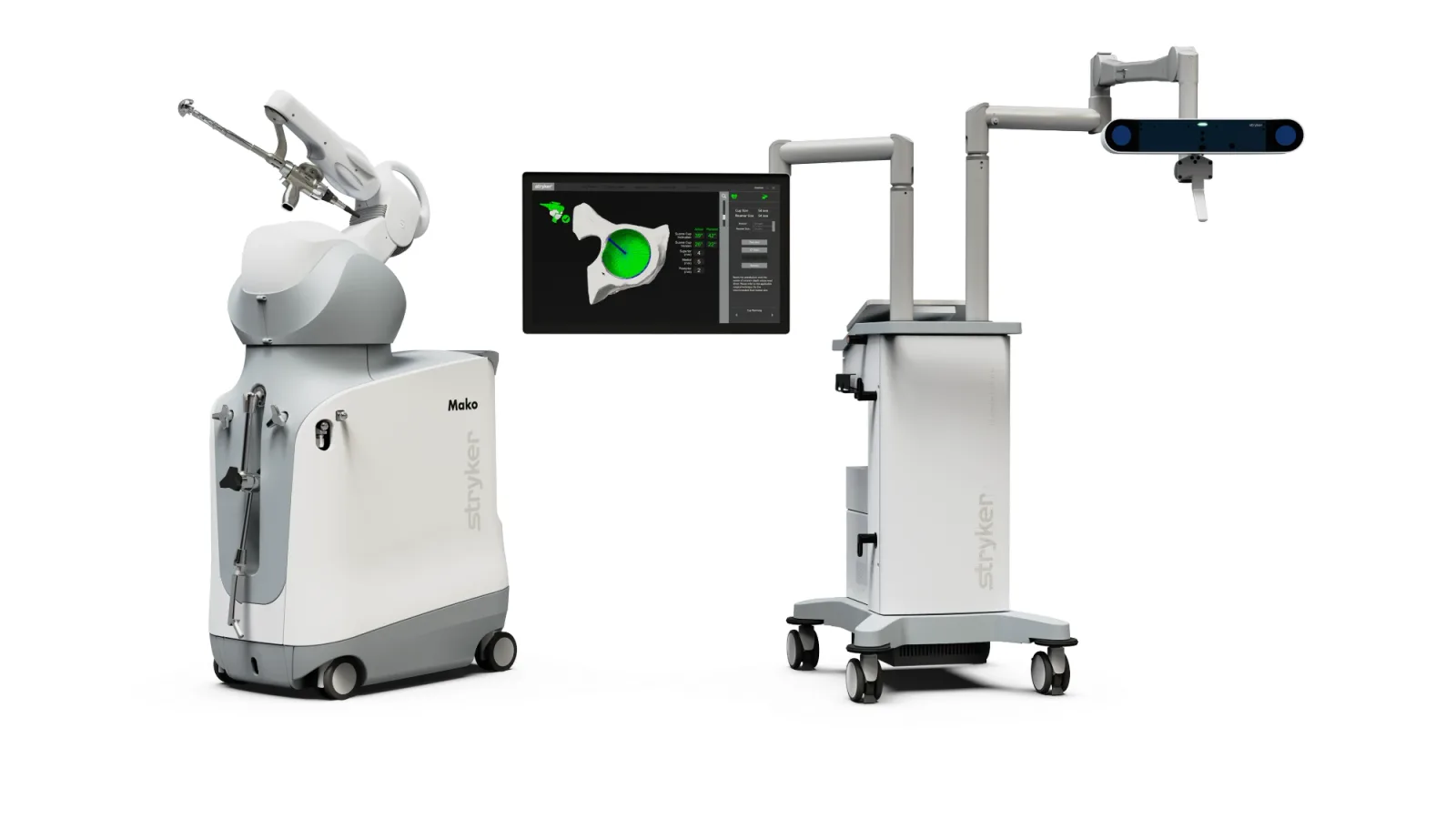
Most robotic surgeons train on a single system. Dr. Morton is certified on all four major platforms — ROSA®, Mako, CORI, and VELYS — and was the first surgeon in Hawai‘i fellowship-trained in robotic joint replacement. That fluency lets robotic precision travel with him across his surgical venues.
Today that means ROSA, primarily, at The Queen's Medical Center and CORI at Adventist Health Castle for knees on O‘ahu, and the Mako robot — hips and knees — at Hilo Community Surgery Center for his Big Island patients. Curious how the systems differ? See the deep dives on ROSA® and Mako SmartRobotics™.
What happened after the feature ran
The MidWeek story caught Dr. Morton early in a run of documented Hawai‘i firsts:
- 2022 — Hawai‘i's first robotic-assisted total hip replacement, on the ROSA platform.
- March 3, 2022 — the first robotic joint replacement on Hawai‘i Island — a homecoming for the Kea‘au-raised surgeon.
- October 4, 2022 — Hawai‘i's first Persona IQ® smart knee, placed with robotic assistance.
Somewhere along the way, local media started calling him "The Robot Doc" — and today, robotic assistance is simply how his eligible knee cases are done, while his robotic hips are Mako cases at Hilo Community Surgery Center.
Medically reviewed by Paul Norio Morton, MD, FAAOS, FAAHKS. Last reviewed: . This article is for education only and isn’t a substitute for an exam and personalized advice — schedule a consultation to discuss your situation.