
Built to stay — so why would it ever come out?
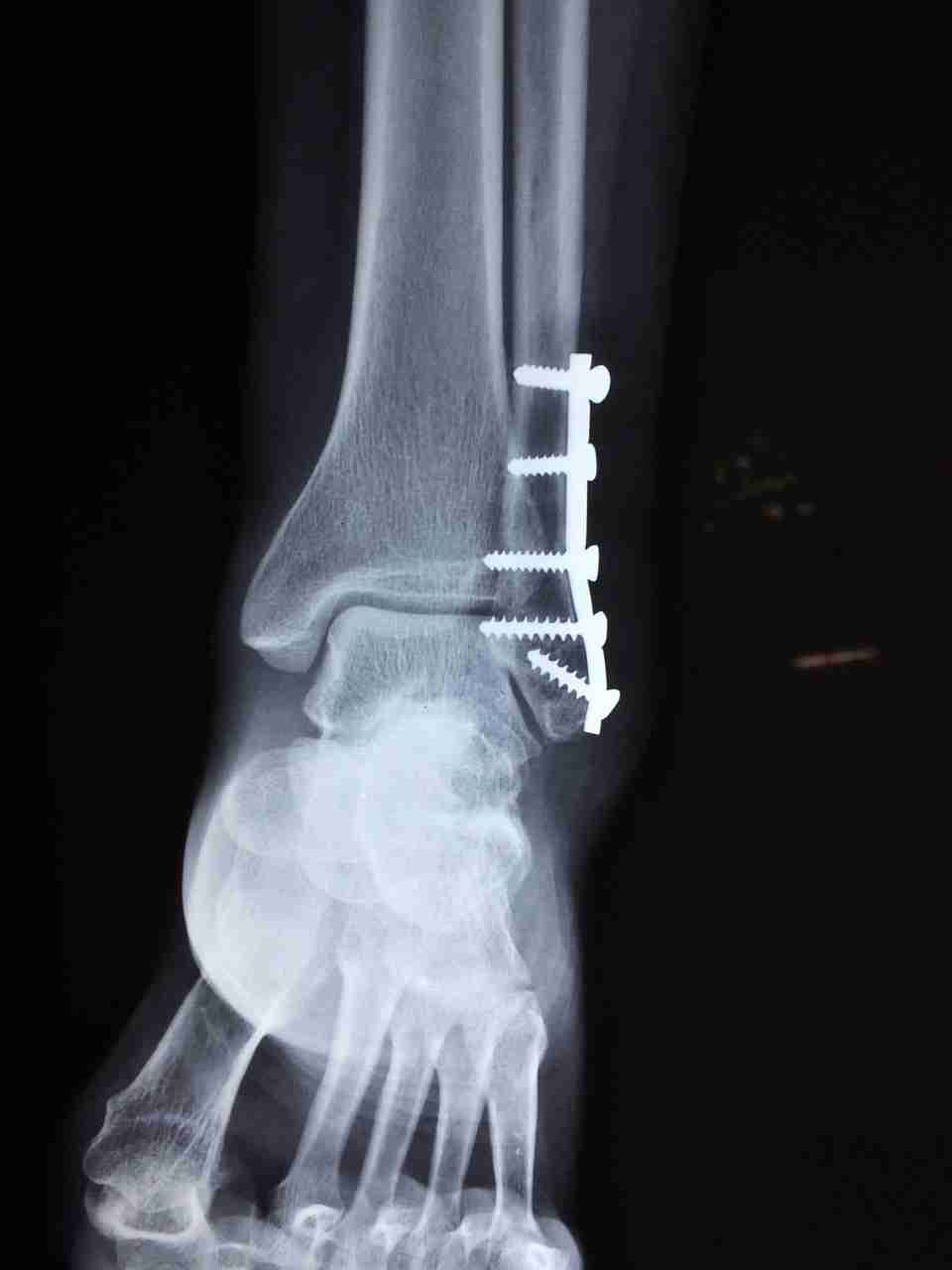
When a fracture is fixed or a deformity corrected, the hardware's job is to hold everything perfectly still while bone heals. Once healing is complete, the implant is usually just a quiet passenger — most people carry their plates and screws for life without ever thinking about them.
The decision to remove orthopedic hardware is never automatic. It is a complex judgment built on patient-specific and clinical factors: what symptoms the hardware is causing, whether the bone has fully healed, what removal surgery would involve, and what the patient wants. Five situations account for the vast majority of removals.
The five main reasons hardware is removed
| Reason | How it's evaluated | What treatment looks like |
|---|---|---|
| Pain and discomfort | A thorough examination of the pain's character — typically tenderness directly over the hardware — plus X-rays or CT to evaluate implant placement and confirm the bone has healed | Conservative care first (physical therapy, medications); removal is recommended only if that fails |
| Infection | Confirmed through blood tests, imaging, and clinical examination | Antibiotics and surgical debridement, often with hardware removal to eliminate the infection entirely |
| Implant prominence | Physical assessment of whether hardware you can see or feel under the skin significantly affects quality of life | Removal is advised when real discomfort or functional limitation arises |
| Hardware failure | Imaging to assess the implant's integrity — breakage or loosening — and its effect on the surrounding bone | Surgical removal, sometimes with a new implant to restore structural support |
| Patient preference | Counseling and education on the potential risks and benefits of removal | Shared decision-making, case by case — preferences are weighed against clinical recommendations |
Pain is the most common indication. Studies show mechanical symptoms — implant prominence and soft-tissue irritation — are the complaints patients report most often, and the tenderness usually sits exactly where the hardware lies. That physical finding, matched against imaging, is what separates hardware pain from other causes.
Infection is uncommon but serious. When an implant becomes infected, bacteria can shelter on its surface where antibiotics struggle to reach, which is why treatment often requires removing the hardware itself in addition to antibiotics and surgical cleaning of the tissue. A published review of 83 hardware-removal cases identified infection as one of the most significant reasons for the procedure.
Failed hardware can't do its job. A broken or loosened implant compromises the stability of the bone it was meant to protect, so these cases are less elective than the others — and may require fresh fixation, not just removal.
Preference alone is a legitimate conversation. Some patients simply want the implant out — psychological discomfort and lifestyle limitations are real, even when removal isn't medically necessary. Those requests deserve honest counseling about what a second operation involves, and a decision made together.
The risks of taking hardware out
Hardware removal is generally a safe procedure — but it is still surgery, and it carries the risks that come with any operation. That is precisely why removal is not offered reflexively: the expected benefit has to justify another trip to the operating room.
Proper planning and surgical expertise minimize these risks and improve outcomes. Reviewing the original operative records, confirming complete bone healing on imaging, and having the right extraction instruments on hand before the first incision all matter more than patients might expect.
Recovery after hardware removal
Compared with the original fracture surgery, recovery from hardware removal is usually far easier. Timelines vary with the implant's location and the patient's overall health, but three themes hold:
- Pain management: Pain is usually mild and managed with over-the-counter analgesics.
- Activity restrictions: A temporary period of modified activity protects the bone while the old screw tracks and soft tissues heal.
- Physical therapy: Rehabilitation may be recommended to restore strength and function in the affected area. Dr. Morton's patients have access to physical therapy at both the Honolulu and Kunia offices.
Where hardware is removed most often
Some parts of the body are simply more likely to need hardware removal — usually because the implant sits close under the skin, interferes with function, or stays tender after healing:
- Ankle and foot: Plates and screws often irritate here because the soft-tissue coverage is thin.
- Wrist and forearm: Prominent plates and screws can rub and irritate soft tissue during everyday activities.
- Knee: Screws from fracture-repair surgery can cause discomfort or sit prominently.
- Hip: Fixation hardware — the pins and screws used in hip fracture repair — can become symptomatic after the bone heals.
- Clavicle (collarbone): Hardware here is often removed because it sits prominently just under the skin.
The numbers back up that pattern: statistical studies report that hardware removal is most common in the lower extremities (47%), followed by the upper extremities (32%).
Dr. Morton's surgical practice focuses on the hip, knee, and SI joint, so symptomatic hardware around the hip and knee is squarely his territory. For hardware in the shoulder, wrist, ankle, or foot, he can evaluate the problem and connect you with the right specialist.
Deciding whether your hardware should come out
Hardware removal is a decision, not a default — one that requires careful weighing of the clinical indications, the surgical risks, and your own preferences. If an old plate or screw is bothering you, the first step is an orthopedic consultation: an examination, fresh imaging, and an honest conversation about whether removal will actually solve the problem. If you've been told removal is or isn't an option and you're unsure, a second opinion costs you nothing but time.
Dr. Paul Morton sees patients at four clinics across Hawai'i — Honolulu, West O'ahu (Kunia), Hilo, and Kona. Call (808) 439-6201 to schedule.
Medically reviewed by Paul Norio Morton, MD, FAAOS, FAAHKS. Last reviewed: . This article is for education only and isn’t a substitute for an exam and personalized advice — schedule a consultation to discuss your situation.