
Why CBD is part of a multimodal pain strategy
Managing pain effectively — and helping patients recover well after surgery, especially joint replacement — is a top priority in orthopedics. With the opioid crisis still unfolding, finding safer alternatives isn't optional; it's imperative. Dr. Morton continually evaluates innovative, evidence-based approaches to pain management, and incorporating cannabidiol (CBD) into the practice marks a significant step toward a more holistic, multimodal medication strategy that minimizes reliance on opiates.
The goals are concrete: reduce opioid use, enhance recovery after surgery, improve sleep, and provide effective relief for chronic conditions like arthritis. CBD is not a replacement for a well-planned operation or rehabilitation — it is one more evidence-based tool layered into a patient-centered treatment plan.

What the clinical evidence shows
CBD's role in orthopedic care rests on a growing body of published research. Four findings are especially relevant to joint patients:
| Concern | Evidence | Key finding |
|---|---|---|
| Arthritis pain | Hammell et al., 2016 — European Journal of Pain | Topical CBD significantly reduced joint swelling and pain, without adverse side effects, in a preclinical arthritis model |
| Post-surgical pain | Argueta et al., 2020 — Frontiers in Pharmacology | CBD can attenuate post-surgical pain and reduce dependence on opioids |
| Sleep | Shannon et al., 2019 — The Permanente Journal | CBD improved sleep quality, supporting overall recovery |
| Chronic pain | VanDolah et al., 2019 — Mayo Clinic Proceedings | CBD can significantly alleviate chronic pain with minimal side effects — a useful adjunct to, or replacement for, traditional opiates |
Arthritis: relief at your fingertips. Arthritis — joint pain and stiffness — profoundly affects quality of life, and CBD has emerged as a promising alternative for symptom relief. The reduction in swelling and pain seen with topical CBD is attributed to its interaction with the endocannabinoid system, which modulates pain and inflammatory responses.
After joint replacement: aiding recovery. Post-surgical pain management is crucial in joint replacement. CBD's multimodal mechanism of action — anti-inflammatory and analgesic at once — aligns well with postoperative care, pairing naturally with the scheduled non-opioid medications that anchor recovery. Less opioid dependence tends to mean a faster, more comfortable recovery.
Sleep: the overlooked half of healing. Quality sleep is vital for recovery, yet postoperative pain routinely disrupts it. By improving sleep quality, CBD supports the healing process on a second front — patients who sleep recover better.
How CBD relieves pain
Three mechanisms explain most of CBD's effect on orthopedic pain:
- Modulating the endocannabinoid system (ECS). The ECS regulates many bodily functions, including pain. CBD does not bind directly to the cannabinoid receptors (CB1 and CB2); instead it influences the system indirectly, altering pain signals and responses to provide relief.
- Anti-inflammatory action. Chronic pain — especially in arthritis — is often driven by inflammation. CBD reduces inflammatory cytokines and inhibits immune-cell migration, easing inflammatory pain at its source.
- Neuroprotection. For neuropathic pain caused by nerve damage, CBD's neuroprotective effects help stabilize nerve cells and prevent or minimize further nerve injury and the pain that follows.
How CBD improves sleep
Sleep benefits come through several complementary pathways:
- Reducing anxiety. Anxiety and stress are common causes of sleep disturbance. CBD has anxiolytic properties, primarily through its interaction with serotonin receptors — a calmer mind falls asleep faster and sleeps more soundly.
- Regulating the sleep-wake cycle. Studies suggest CBD may increase daytime wakefulness, which leads to more consistent sleep at night and a more natural, restful sleep rhythm.
- Relieving pain. Pain is a major sleep disruptor. By easing discomfort, CBD indirectly protects sleep — patients are less likely to be woken by their joint.
- Calming REM sleep behavior disorder (RBD). For people who physically act out their dreams, CBD has shown potential in reducing symptoms, allowing more uninterrupted rest.
Why quality matters: the case for clinical-grade CBD
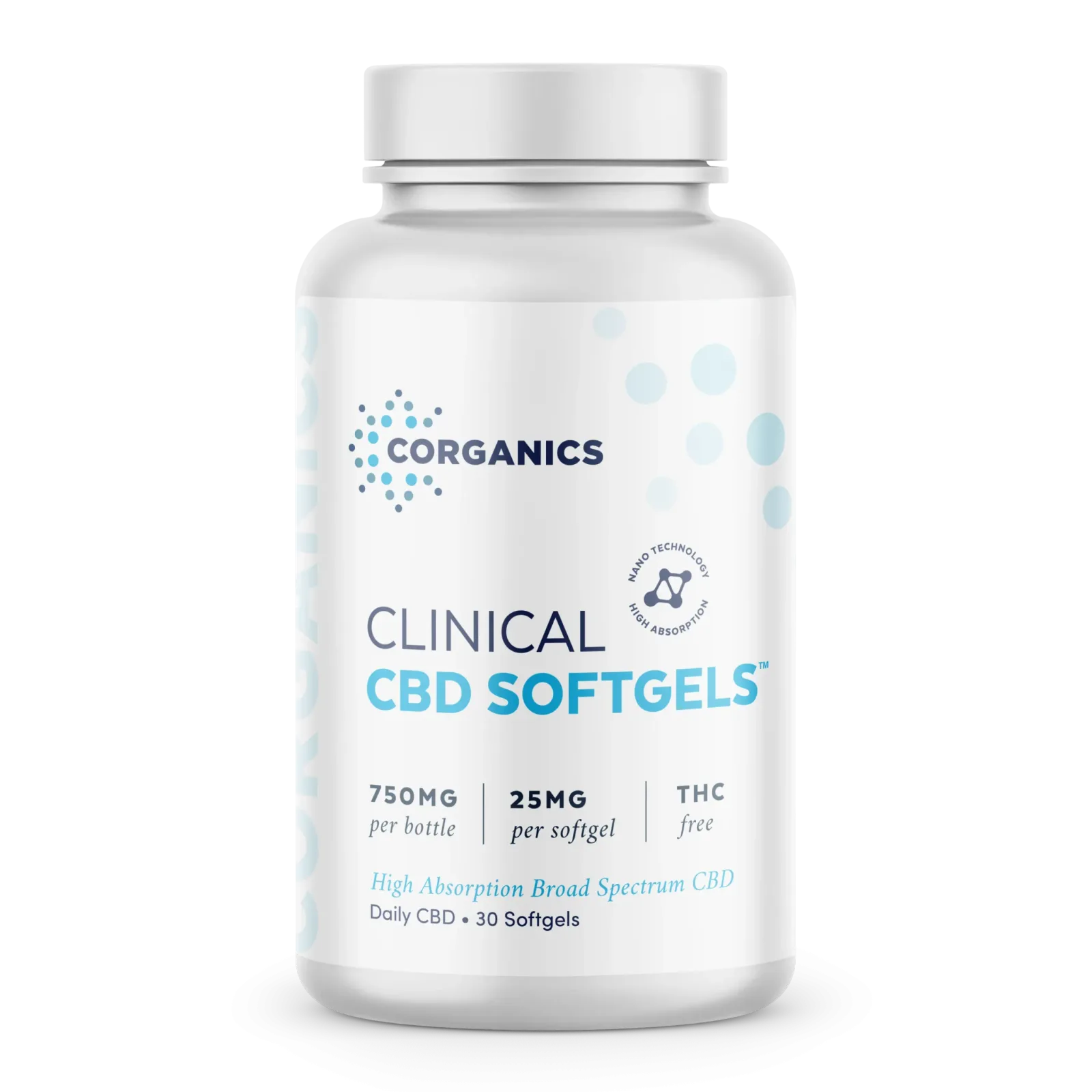
CBD products are not created equal — and the retail market is genuinely unreliable. In one retail market study that potency-tested 4,384 products from 188 different CBD brands, 88% of the products were mislabeled. That is why Dr. Morton's practice recommends only clinical-grade CBD from Corganics, whose products undergo rigorous testing at every stage of production.
Here is what separates clinical-grade CBD from inferior retail products:
- Purity and potency. Low-quality products often misstate their CBD content, delivering doses that are ineffective — or excessive. Clinical-grade products carry precise labeling and consistent potency, so patients receive the intended therapeutic effect.
- Freedom from contaminants. Substandard cultivation and extraction can leave pesticides, heavy metals, or solvents in the final product — real health risks. Rigorous stage-by-stage testing minimizes them.
- Consistent concentrations. Batch-to-batch variability makes cheap CBD unpredictable. Strict quality control produces uniform concentrations and reliable results.
- Third-party testing. Independent verification of composition and safety is essential — and many retail products skip it entirely.
- Honest, evidence-based claims. Some low-quality brands make unverified or exaggerated health claims. A trustworthy product sticks to what the evidence supports.
- Regulatory compliance. Inferior products may not meet legal and regulatory standards; clinical-grade products comply with all applicable guidelines.
In short: for safety, efficacy, and consistency, the brand on the bottle matters. An inferior product can pose health risks while failing to deliver the therapeutic benefit that brought you to CBD in the first place.
How patients order CBD through the practice
To keep dosing precise and use responsible, the practice provides CBD through a controlled process rather than pointing patients at the open retail market:
- Consult with Dr. Morton. Discuss CBD as a treatment option during your appointment, in the context of your full pain-management plan.
- Receive an access code. If CBD is appropriate for you, you'll be given an exclusive practice access code.
- Place your order. Use the code to order clinical-grade CBD products through the authorized platform or partner pharmacy.
This process ensures CBD use is tailored to your individual needs and integrated safely into your treatment plan — one more evidence-based, patient-centric tool for reducing opioid use, improving sleep, and easing arthritis pain.
Always consult your healthcare provider before starting any new treatment, including CBD products.
Medically reviewed by Paul Norio Morton, MD, FAAOS, FAAHKS. Last reviewed: . This article is for education only and isn’t a substitute for an exam and personalized advice — schedule a consultation to discuss your situation.