
PRP in meniscus repair — the short answer
PRP is an optional add-on to a meniscus repair, not a replacement for one: your blood is concentrated and placed at the suture line during surgery to deliver growth factors to poorly vascular tissue. Meta-analyses disagree: two found lower repair-failure rates, one found no difference, and function-score gains have been small or absent. Dr. Morton offers it in Honolulu for borderline repairs as a cash-pay option. Individual results vary.
- Works with a repair, not instead of one — PRP does not knit a torn meniscus together on its own
- Best fit: a repairable tear in or near the vascular zone, in an active patient committed to the repair
- Evidence is mixed: lower failure rates in two meta-analyses, no difference in a third; function-score gains small or absent
- Cost: usually not covered by insurance; quoted transparently as an optional add-on
Why the meniscus is so hard to heal
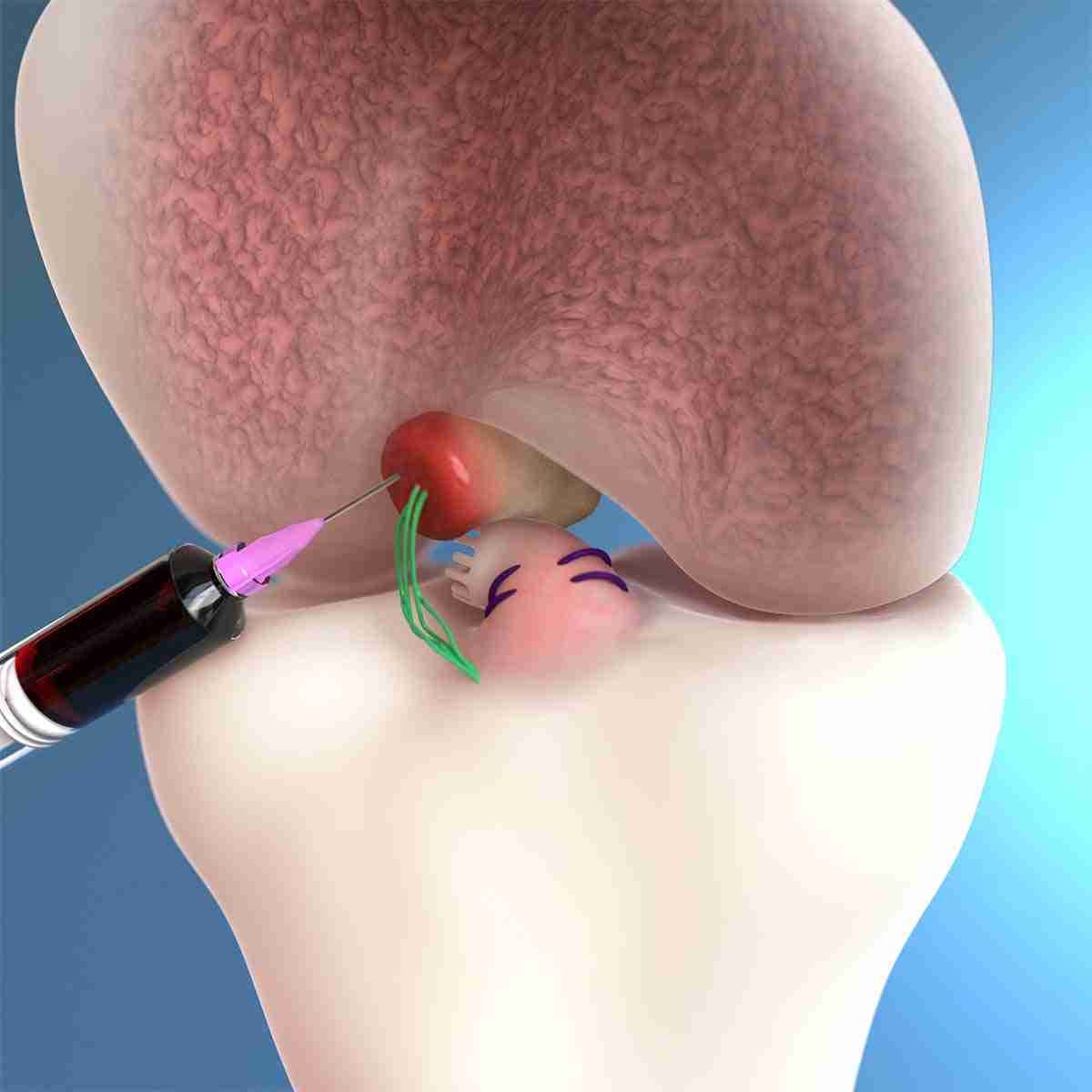
A torn meniscus heals only where it has a blood supply — and most of the meniscus barely has one. Anatomists divide it into zones. The outer third, the red-red zone, carries blood vessels and heals reliably when repaired. The inner two-thirds, the red-white and white-white zones, receive little or no blood, and a tear there struggles to knit together on its own.
That single fact drives the whole decision. A tear in the vascular outer rim of a young, active patient is a strong candidate for meniscus repair, because the biology is on your side. A tear stranded in the avascular center may not heal no matter how neatly it's sewn — which is exactly the situation where surgeons have looked for a way to bring healing signals to tissue that can't supply its own. That is the gap platelet-rich plasma is meant to fill.
What PRP adds at the repair site
PRP delivers a concentrated dose of your own healing signals directly to the repair. Platelets do far more than clot blood — their granules are packed with growth factors, including platelet-derived growth factor (PDGF), transforming growth factor-beta (TGF-β1), and vascular endothelial growth factor (VEGF). These molecules recruit repair cells, stimulate new tissue matrix, and encourage small blood vessels to grow in.
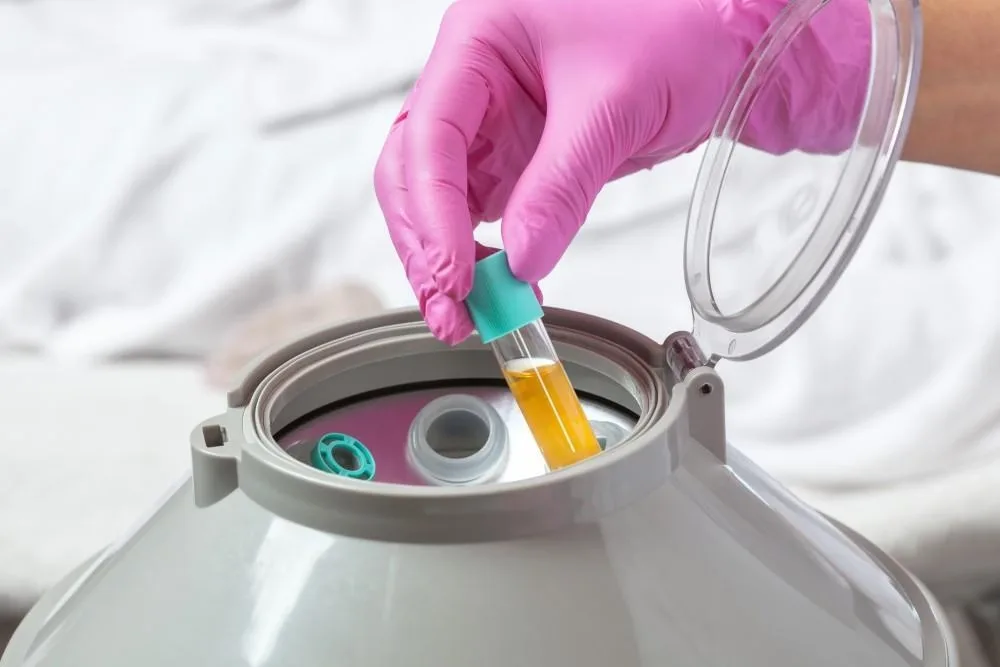
To make PRP, a small sample of your blood is spun in a centrifuge to separate and concentrate the platelets. During meniscus surgery that concentrate can be placed at the tear — often built into a clot and sewn into the repair site — so the growth factors release right where healing needs to happen. The theory is straightforward and biologically sound: give poorly-vascular tissue a burst of the signals it normally can't get, and you may tip a borderline repair toward healing rather than failure. The theory being sound, however, is not the same as the results being guaranteed.
What the evidence actually shows
Here is the honest version: the evidence for PRP in meniscus repair is promising but not settled. A 2021 meta-analysis of five comparative studies (286 patients, Orthopaedic Journal of Sports Medicine) reported a repair-failure rate of about 10% with PRP augmentation versus about 26% without. A 2025 meta-analysis of eight comparative studies (354 patients, Journal of Orthopaedics) likewise found fewer re-tears with PRP — roughly 18% versus 31% — but no difference in patient-reported function, re-operations, or complications. Between them, a 2022 meta-analysis of 837 patients in the Journal of Orthopaedics and Traumatology found no significant difference in failure, revision, or function scores at all. The studies vary in how the PRP was prepared, which tears were treated, and how healing was measured — which makes it hard to draw a single clean conclusion.
What that means for you
What that means for you is worth stating plainly. PRP is a reasonable, low-risk add-on that may improve the odds of a repair healing — not a treatment that turns an unrepairable tear into a repairable one, and not a guarantee. Because it is drawn from your own blood, the safety profile is favorable and the downside is small. But anyone who promises that PRP will make your meniscus heal is overselling it. The purpose of PRP is to nudge the biology in your favor, and honest surgeons frame it exactly that way. That is how Dr. Paul Norio Morton, MD, FAAOS, FAAHKS offers it at Pacific Bone & Joint in Honolulu: as one tool inside a repair-first meniscus practice, not as a product.
When PRP makes sense — and when it doesn't
PRP makes the most sense when you are already repairing a meniscus worth saving. That usually means a younger, active patient with a tear that has a fighting chance — in or near the vascular zone — where a modest boost to healing can be the difference between a repair that holds and one that fails. In those cases, adding PRP is a small, sensible investment in a repair you are committing to anyway.
It makes far less sense in an older, degenerate meniscus inside an arthritic knee. Those frayed, worn tears are usually not repaired at all, and the knee's real problem is arthritis rather than the tear the MRI happened to find. Pouring PRP onto that situation treats the wrong problem. If your knee keeps catching or clicking, the first job is an accurate diagnosis at a consultation — because whether PRP helps depends entirely on which of these two knees you have.
- Good fit: a repairable tear in or near the vascular zone, in an active patient committed to the repair
- Good fit: a borderline repair where a healing boost could tip the balance toward success
- Poor fit: a degenerate, frayed tear in an arthritic knee — that is an arthritis problem, not a repair problem
- Poor fit: any plan sold as PRP instead of a needed repair or a needed arthritis plan
How it fits into the repair itself
PRP is an adjunct, not the operation — the repair itself is what matters most. A meniscus tear that is a candidate for saving is fixed with precise sutures that hold the torn edges together while the body heals them, using modern all-inside and inside-out techniques through small arthroscopic incisions. Getting that repair anatomic and stable is the foundation; PRP is a layer added on top to support the healing that follows.
Dr. Morton's approach is to preserve meniscus tissue whenever the tear allows, because a knee that keeps its meniscus is far better protected against arthritis over the decades that follow. When a repair is borderline — the kind where healing is not a sure thing — augmenting it with biologics like PRP is a low-risk way to give it every advantage. The decision is always made in the operating room, based on what the tear actually looks like. What you are choosing is not a shot; it is a surgeon committed to saving the meniscus and willing to use every reasonable tool to make the repair last.
Torn meniscus and want it saved? The next step
Torn meniscus and want it saved? Book a consultation or call (808) 439-6201 — bring your MRI. Dr. Morton sees patients in Honolulu (Ala Moana), Kunia, Hilo, and Kona; a twisted knee that swelled or locked can be seen the same week, and Wiki Wiki Orthopedics in West O‘ahu takes walk-ins with X-ray on site. The full picture — repair vs. removal, recovery, risks, and cost — is in the meniscus repair surgery guide.
References
- Biologic augmentation reduces the failure rate of meniscal repair: a systematic review and meta-analysis. Orthop J Sports Med. 2021;9(2). Source
- Platelet-rich plasma (PRP) augmentation does not result in more favourable outcomes in arthroscopic meniscal repair: a meta-analysis. J Orthop Traumatol. 2022;23:8. Source
- Sakti M, et al. The use of platelet-rich plasma augmentation in meniscus repair results in a lower failure rate than in the control group: a systematic review from meta-analysis. Arthrosc Sports Med Rehabil. 2024;6(4):100934. Source
- Dave U, et al. Platelet rich plasma augmentation for meniscus repair reduces failure but not complication rates or outcomes: a systematic review and meta-analysis. J Orthop. 2025;73:62–71. Source
Medically reviewed by Paul Norio Morton, MD, FAAOS, FAAHKS. Last reviewed: . This article is for education only and isn’t a substitute for an exam and personalized advice — schedule a consultation to discuss your situation.